Sandy Molnar
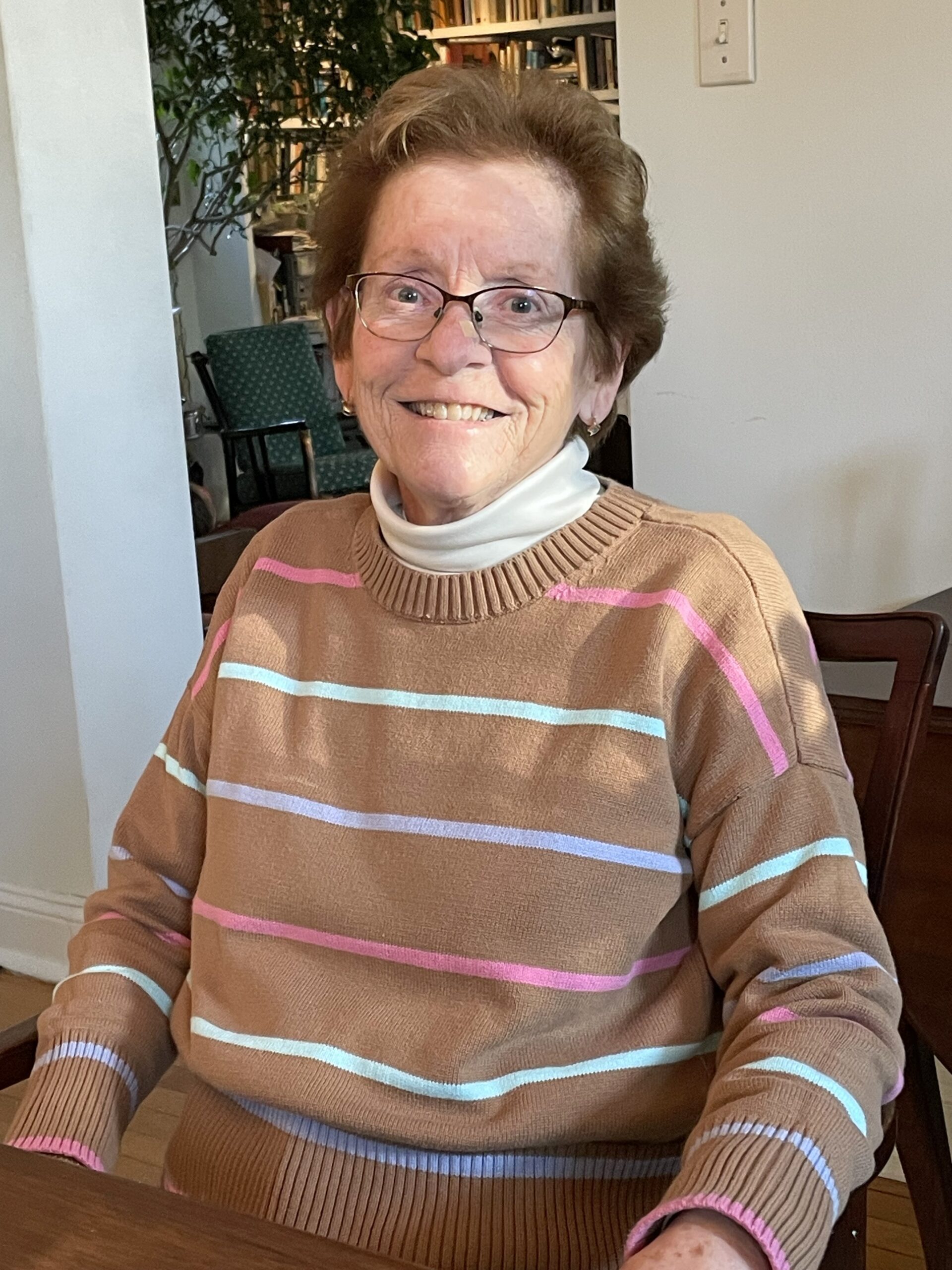
East Falls Oral History Project
Interviewee: Sandy Molnar (SM)
Interviewers: Wendy Moody (WM) and Frankie Jueds (FJ)
Date of Interview: January 21, 2026
Transcriber: Wendy Moody
WM: It’s January 21, 2026. Wendy Moody and Frankie Jueds are in Frankie’s house interviewing Sandy Molnar. Thank you, Sandy.
SM: Thank you.
WM: We’re hoping today to focus on your years at Pep Boys, but why don’t we start by asking you telling us when and where you were born.
SM: Ok, I was born in Roxborough Memorial Hospital June 10, 1958, and we lived in Roxborough for my first two years and then we moved out to the suburbs – East Norriton.
WM: Can you add another sentence or two about your life – where you went to school and your career up to when you went to Pep Boys?
SM: I went to Bishop Kendrick High School in Norristown, Pennsylvania. I went to Swarthmore for two years, and then I received a job offer from an industrial gas company and I took that.
WM: What company was that?
SM: Messer Griesheim Industrial Gases, a German company. And from there, I went to Pep Boys.
WM: So why don’t we talk about your years at Pep Boys. What were your years at Pep Boys?
SM: I started there in 1987 and I left in 2011.
WM: Starting way back with your interview there, what do you remember about getting the job?
SM: I was very much interested in the position itself. I was even more interested and attracted that they were going to be moving their corporate headquarters out into the suburbs, so it wouldn’t have been such a long ride for me. And that did not happen during my tenure.
WM: So when you interviewed, it was on Allegheny?
SM: Yeah, 32nd & Allegheny.
WM: And what position were you interviewing for?
SM: Assistant buyer for automotive parts.
WM: Can you tell us what that entailed?
SM: I had the responsibility to make sure that the retail stores were supplied with, gosh, several hundred automotive parts.
FJ: Did you know about automotive parts?
SM: I did not.
FJ: So you had to learn on the job?
SM: I learned on the job. But it was – what they were really looking for was just to make sure that the product was available in the retail stores.
WM: Did they train you on these automotive parts?
SM: No, there was not much training. It was interesting.
WM: How many people did what you did?
SM: There were probably four Assistant Buyers and maybe ten Buyers?
FJ: Was it unusual for a woman to be a Buyer?
SM: It was. I was the first female Buyer at Pep Boys.
WM: So, okay, we can go back to what you actually did, but do you know anything about the history of Pep Boys?
SM: I do.
FJ: When it was founded and all that stuff?
SM: Yeah, it was founded in 1929, excuse me, 1921 by three Navy buddies. Emmanuel (“Manny”) Rosenfeld, Maurice (“Moe”) Strauss, and W. Graham (“Jack”) Jackson. So we have “Manny, Moe, and Jack.” They all chipped in $200 to start the company. And originally, they called it At the Pep. And there were policemen in the neighborhood who were talking to neighbors and whatnot, said, “Just go down and see the boys at Pep.” So then the new name became The Pep Boys.
WM: And I had read that they got the word PEP off some kind of jar of valve fluid or something?
SM: That’s true. Valve grease. That’s true.
WM: Who was the main guy? Strauss? I heard he liked the name Pep. So it was first located in West Philly before it moved to Allegheny?
SM: I’m not sure of that.
WM: I have an earlier address as North 63rd Street in West Philadelphia and then it moved here in 1947.
SM: Yes, that’s true.
WM: Do you happen to know if the building where it moved to was something else before, or did they build it for Pep Boys?
SM: No, it was an existing building, and I don’t know who occupied it prior to the Pep Boys.
FJ: Did office space and sales space was all in one building? I can’t picture it.
SM: 80% of it was office space. And on the first floor, on the left-hand corner, there was a store.
WM: Oh, with auto supplies?
SM: Yes.
WM: So this was the corporate headquarters?
SM: It was not. The corporate headquarters were originally in Los Angeles. And it was soon after I joined Pep Boys, I believe it was 1989, that Philadelphia became the corporate office.
WM: So was it an enormous space there?
SM: Yes. It was a huge building. Huge. A block or two. It was huge. All Pep Boys.
FJ: What kind of product lines were you the buyer for?
SM: There were tires, there were mufflers, and that sort of thing, and batteries, starters, and then accessories, – floor mats, car fresheners, the whole thing.
FJ: They didn’t actually repair cars though, or did they?
SM: Yes.
WM: Right at that location?
SM: Yes. It was a retail store. It was right at the left corner, and it was a small retail store and then a service station.
WM: Okay, and then the rest was an office building?
SM: I mean, all the human resources was there, all the IT people were there. That took up a good portion of the building, the technology folks.
WM: Oh, so I guess at the point when you came, there were computers.
SM: There were.
FJ: Did you use one?
SM: Yeah, we did. It was old-fashioned.
FJ: Fairly early on, though.
SM: It was. And they had – there was a major conversion between the Los Angeles office, because that had its own computer system, and then the Philadelphia office had their own computer systems, and they wanted to merge them.
WM: Of course, yeah.
SM: They have, and at that point, I guess, I can’t remember the year, but I was asked to get involved in that conversion process, which was most interesting.
FJ: Had you used computers before?
SM: I had. I was a young woman and, primarily working with older men. The one man that they hired was younger, in his 30s, very well educated. And I reported directly to him, and he asked me to be on the conversion team.
FJ: And that was interesting?
SM: That was interesting. It’s very interesting.
WM: Were they on two different types of computer systems?
SM: Yes.
WM: So you had to get them on the same language, so to speak.
SM: Exactly. It was like one was speaking French, one was speaking German. We needed to get them to speak English.
WM: That must have been a huge advancement when you did that.
SM: It was. It was. And they actually, were trying to decide the most efficient way to make these systems work. And they hired a consultant -British American Consulting Group, BACG. They were in London. Got to spend some time in London working with them. But the conversion was – it took years. It took two years.
FJ: So that was a major thing.
SM: It was major, major, major.
FJ: And you traveled for it.
SM: Yes, I did.
WM: Going back to the physical building, what else was there? Was there a cafeteria?
SM: Not until, gosh, it was maybe early 2000s. They put a cafeteria in.
WM: What did you do until then?
SM: Well, honestly, when I was interviewed, they said ”We would encourage you to pack your lunch, and if you do go out to buy lunch, leave your purse in the office.” I guess because there was crime.
WM: Was it a rough neighborhood?
SM: It was because of the crime, yeah.
FJ: So what did you do?
SM: I packed my lunch, yeah.
WM: And then would you eat right at your desk?
SM: Yeah. There wasn’t a true cafeteria in the early 2000s.
WM: Did they do anything to promote staff unity? Have any parties or events for you? Or if you didn’t have a cafeteria, was there any way to get to know people out of your office?
SM: We did that on our own – it wasn’t like company-sponsored. We would, on a Friday night, go to have a bite to eat.
FJ: So there was a little bit of social interaction.
SM: Oh, yeah, there was quite a bit.
FJ: Oh, good.
SM: Yeah, but nothing company sponsored.
WM: Was the office space comfortable?
SM: No.
WM: Can you describe what the working conditions were like?
SM: Well, it was a very, very, very old building. It was actually a very cold building.
WM: Hot in the summer?
SM: Very hot, very hot in the summer, chilly in the winter. I always had an extra sweater.
FJ: And no air conditioning?
SM: No, not until later. Not until later.
WM: Did you share an office?
SM: I did. I shared an office with another gentleman when I first started as Assistant Buyer.
WM: Were there elevators?
SM: There were elevators, yes. Two elevators.
FJ: Did you have another job there other than Assistant Buyer?
SM: Well, once I got involved with the conversion to bring all the systems into Philadelphia, after that was done, that took several years, then I was promoted to Director of Inventory for the distribution centers. And we had distribution centers in New Jersey, Connecticut, Georgia, Los Angeles, Phoenix, and then Puerto Rico.
FJ: Did you travel to all those cities?
SM: I did. Once a month, I’d have to go to one of the distribution centers.
FJ: Puerto Rico too?
SM: Yes.
WM: So as Director of Inventory, that’s a big job. Did you have to figure out what these different distribution centers were low on?
SM: What they needed. And depending on the geographic location, you had to be in tune with that. It was interesting. And I was just Director of the distribution centers’ inventory throughout the country and Puerto Rico, ok, and then I had a counterpart, Glenn, who was Director for the Inventory for the stores. And we had, you know, computer-generated reports that we worked from, based off of sales in certain stores.
WM: So were there products you mentioned different for different locations? What would be something that was bought more in the north or more in Puerto Rico? Or couldn’t you generalize that way?
SM: I have to think.
WM: I mean, was there a hot or a cold climate item?
SM: More batteries in the cold weather areas. We’d sell ice melt. We sold spray cans of de-icers – it varied by the regions.
WM: And over the years, did the product line change as cars changed?
SM: Yeah, absolutely. As the cars became more computerized, so did the parts that we provided and sold.
WM: Can you remember some of the products that you eliminated and new ones that took over?
SM: Nothing was eliminated because there were still older cars on the road. We just had to get up to speed with the newer technology.
WM: So who was in charge of the company when you worked there?
SM: When I worked there, Benjamin Strauss was the chairman of Pep Boys.
WM: How was he related to Moe Strauss?
SM: He was his son.
WM: His son. What was his personality?
SM: Very, very business-like. Very business-like.
WM: A good leader?
SM: He was a very good leader. He was very goal-oriented. He was an interesting, interesting man. And then next to him was Mitch Leibovitz. He was not related to any of the original founders. And then next under him was Stuart Rosenfeld – and he was a grandson to Manny Rosenthal.
FJ: Were there competitors to the Pep Boys?
SM: The biggest competitor we had was AutoZone.
WM: Oh, were they around then?
SM: They were.
WM: How did you fare against AutoZone?
SM: We were head and shoulders above them.
WM: And why do you think that was?
SM: When the corporate offices came to Philadelphia – when the new computer systems were put in, Pep Boys had a very aggressive expansion of retail stores. It was almost 350 stores in one year, and two new distribution centers, so I think we just outnumbered them, basically.
WM: Were you in every state?
SM: Yes. No, wait a second, not every state. Not Alaska.
FJ: Hawaii?
SM: We had stores in Hawaii. And we had one in Fajardo, Puerto Rico. It was the first distribution center and store for Puerto Rico. So they started with one distribution center, one store, and then it grew to five stores in Puerto Rico.
FJ: Did you have a union?
SM: We did not. There was no union.
WM: Was there talk of the union?
SM: There had been, and that got squelched pretty quickly.
WM: Were the salaries and benefits acceptable to everyone? Did it seem generous? Fair? Maybe
fair would be a better word.
SM: I was always very comfortable with my severance package, and most of corporate was. I don’t think it filtered down into the retail stores, into the distribution centers.
FJ: But there weren’t things like strikes.
SM: No. No. No.
FJ: No. OK. Were there other women? I know there weren’t sales people.
SM: Eventually there were. There were other women in management positions. Once the offices in Philadelphia were corporate, more women were hired.
WM: Can you talk a little bit about being a woman there early on?
SM: It was difficult. There was a lot of misogyny. After I was hired, one of my coworkers said “We were surprised that they hired you because you were demanding a man’s salary.”
WM: Good for you.
SM: Now, what is a man’s salary?
FJ: Better than a woman’s.
WM: How many women ultimately were there by the time you left? There were just a few when you started.
SM: There were many, many, because the operation just expanded greatly.
FJ: Did you feel appreciated by your boss?
SM: I did. I did, very much so.
FJ: Good, That’s so important.
SM: Because I was doing the buying, and then he asked me to get involved with this computer conversion, and I was doing both jobs. And I was working very, very long hours. One night he came into my office and he said, “Oh, you’re burning the midnight oil.” And I said, “I’ve got this to do and I’ve got this other job to do too.”
FJ: Well, was he surprised when you said your long hours and what a lot you had to do?
SM: No. He said “I appreciate it.” And then I said, “Don, I’d like to speak to you about that. I’m basically doing two full-time jobs. And my salary is not commensurate with that.” And he said, “What do you think you should be making? Go home, and come back tomorrow, we’ll talk.” And I did. And I went into his office the next morning and I said, “I think my salary should be XYZ.” And he said, “Okay.” And I said, “Well, why was that so easy? I said, “If you think I’m worth that, why weren’t you paying me that?” And he said, “Well, we’re not in a habit of just opening our checkbook to write checks.”
WM: Well, but he clearly was impressed with you. I don’t want to pursue this, but can you talk a minute about your experience with the misogyny? What types of things, in general, would happen? I mean, one clearly was a salary differential.
SM: Salary. Just language that was used towards me.
WM: Sexist?
SM: Sexist, very sexist. Just the treatment was not, it was not good. Again, I was a younger female, and these were middle-aged, a little older, men. And I don’t know if they felt threatened, or they thought I wasn’t qualified, or that a woman doesn’t belong here.
WM: Did that change over time where these same people grew to respect you more, or did it change because the personnel changed?
SM: The personnel changed. The personnel changed.
WM: And the political climate probably changed.
SM: Exactly. Once the Philadelphia office was corporate – once that conversion took over and they had to hire lots of people – that’s when it changed.
FJ: That’s interesting.
SM: And I, you can add this or not, but the one man that gave me the most difficult time, I eventually became his boss. And he continued to still give me a hard time. And I would counsel him, counsel him, “go to HR.” I said, “Ed, this is it. The next time, I said, I won’t tolerate this.” And he did, and he got fired.
WM: Wow, how interesting.
SM: Ed Germscheid, I’ll never forget him.
WM: Wow. How many employees were there in this building?
SM: There had to be, when I left, 120, between 100 and 120 people.
WM: Was it racially diverse? You said it was sexually diverse.
SM: No, not in the offices. It was not.
WM: And the stores?
SM: The stores were somewhat racially diverse, but primarily no.
WM: Was there interaction with other industries along that corridor? Did you ever have, say, a baseball team that played TastyKake or Penn Reels or any interaction with the other companies?
SM: No, there wasn’t.
FJ: What about vacations? Did you have vacation time?
SM: Yeah. They were very generous with vacation time, personal time off, sick time. And again, salary, I thought was fine.
FJ: Consolidating the two computer models and then also getting Philadelphia to be the central office – did anything else happen that changed things?
SM: The growth of the retail store, that was very significant.
WM: Can you talk about that?
SM: There were, I think, 350 retail stores opened. There was a Real Estate Department at Pep Boys because of this drastic growth.
WM: You mean they were trying to find new sites?
SM: New retail locations. It all just kind of exploded. It just really took off with the store openings.
FJ: Why did they move the headquarters to Philadelphia in the first place?
SM: Because the majority of the stores and the distribution centers were on the East Coast.
WM: Did you have a big learning curve – learning about cars and names of parts? Was that something you were familiar with?
SM: I was not familiar when I first started there, but I became very familiar.
WM: How would one do that? Like, do you know what an alternator is for? Did you need to know anything beyond what the part was?
SM: I did not. Okay. I did not. I just had to make sure it was in the distribution center so that it was going to get to the stores.
WM: I see. Right.
SM: Yeah, but you learn as you go, of course. But no, I had no…
FJ: Did you have a feeling of pride in what you’ve accomplished, like with the computer system?
SM: I did. Absolutely. Absolutely. And Pep Boys was very generous with their stock options.
WM: Oh, they had stock?
SM: They had stock options.
WM: They were publicly held?
SM: They were publicly held. And I would get, you know, shares of $3, $6, $9, and then when I left, they were worth $34.
WM: Great.
FJ: And your boss clearly was pleased with you.
SM: He was, yeah. He was a really good man. And he understood some of the struggles I had as a woman, because he was younger, he was in his 30s.
WM: Can you describe a typical day? What time did you start? How did you get there?
SM: I would usually leave the house at 6.30. And, typically, I would use the Expressway, the Schuylkill Expressway, or I would come down Ridge, straight down Ridge. Usually be in the office by 7:10am, 7.15am. We would get half an hour for lunch.
WM: Breaks?
SM: Well, at that level, you could take a break, but once at a certain management level….
WM: Right; you were more like an administrator.
SM: I know what you mean. But all the other employees got their break time – one in the morning, one in the afternoon.
WM: Then what time did you leave work?
SM: I worked long days. I would probably leave by 7, 7:30 in the evening.
WM: So when you went to work, nobody told you what you had to do that day. You knew your job and you were self-starting.
SM: Correct, yeah. I knew it had to be done.
WM: Do you think there was good morale among all the employees?
SM: Not in the beginning, there was not. But as newer, different people came in, morale, improved.
WM: People more broad-minded people.
SM: More broad-minded.
WM: Was there a parking lot?
SM: There was a parking lot. It was a very large parking lot. It was fenced in. It had a huge water tower at the back of it.
WM: Was that from a previous business? You didn’t use it?
SM: We didn’t use it. We didn’t use it. But a funny story, I’d just gotten a new car and parked in the parking lot. And for some reason they decided, let’s paint this water tower to match this building. And the wind just took the spray paint and one of my cars was a victim.
WM: So because they were in that business, did they re-detail your car?
SM: I took it to the dealer and they paid for it. They weren’t in the “detail” business.
WM: I see. Did you get discounts on products?
SM: We did. Yes, we did. And also, as a buyer, you have vendors from different companies coming in to try to sell you your mufflers or whatever. So, initially, we were allowed to take gifts from these vendors. And some of them were very nice gifts.
WM: Like what sort of gifts?
SM: Jewelry. Cash. Monroe Mufflers flew us one night – the Eagles were playing in Chicago – and they had their private company jet, and took us out to Chicago for the Eagles game. We stayed overnight.
FJ: What fun!
SM: But when Mo Strauss found out about that, was the end of all the gifts, all the gift giving.
WM: But did you represent, say, more than one brand of mufflers? You would take Monroe – would a customer be able, if he bought a Pep Boys muffler, would it be just the one company you picked, like Monroe, or a whole variety of them?
SM: It would be the one brand muffler and then the Pep Boy muffler, which was the same exact muffler as Monroe, but it had the Pep Boy name on it, and it was cheaper.
WM: Exactly the same!
FJ: Like a generic thing.
WM: Did most people go for the Pep Boys brand? They didn’t assume that the brand name was better?
SM: No, it was a marketing strategy. It worked very well. Same thing, you know, with brakes.
FJ: These 3 guys sound very smart.
SM: Yeah.
FJ: Were the vendors surprised to see you, a woman, selling this stuff?
SM: They were; absolutely.
FJ: It certainly was a male sort of world that you were in.
SM: It was. And again, early on, it was difficult. Even some of the vendors would say, “Well, I’ll ask Charlie about it.” I said, “Well, you can ask Charlie about it, but it’s my decision.”
WM: Good for you, Sandy.
SM: Yeah, it was either sink or swim, right?
FJ: That was quite a thing for you to get into. Were you prepared for that ahead of time?
SM: I wasn’t. No, I wasn’t. I didn’t come from that environment. No, but I thought “I can’t let them bully me.”
FJ: No. Fascinating. So when you were there, what was it, 44 years? How many years?
SM: 1987 to 2011.
WM: Why did you leave?
FJ: Had you had enough?
SM: No, I left because my sister died in January of breast cancer. And I’ve probably mentioned this to you before, but I just thought there’s got to be more to life than working 12 to 14 hours a day. So I resigned.
WM: How old were you when you left? Do you remember?
SM: I don’t.
WM: Okay. So you said you didn’t have much interaction on Allegheny Avenue. Did you use anything or go anywhere outside the company?
SM: No. There was a little mom and pop sandwich shop across the street. I didn’t use it, but other folks did.
WM: Do you remember the name?
SM: I don’t. I’m sorry, I don’t.
WM: Were there any funny things that happened, or any noteworthy things like fires or robberies, in all those years? Any memorable moments, good or bad?
SM: I think my favorite would be when the corporate offices were coming to Philadelphia and that massive expansion. They hired a man from Arkansas, and he did not dress well. He, I don’t know, this is silly. He had terrible teeth, but, apparently, he was brilliant at what he did, so The Pep Boys sent him to like a finishing school.
WM: Oh my.
SM: Got his new teeth, went to Brooks Brothers and got a whole new wardrobe.
WM: Wow. He was an administrator?
SM: He was a Vice President. And my secretary, Christine – she was a very, very lovely young lady. Well, he would come to my office just to chit-chat, and I later realized that he was interested in Christine.
WM: So this is after his teeth were fixed?
SM: Well, so I said to her, I said, “Christine, I think he’s sweet. He’s sweet on you.” And she said, “Oh my God, I could never kiss him – his teeth!” So anyway, he got his teeth fixed. And at one of these socials we had – we were all going to meet for a drink after work – I said, “Wendell, why don’t you join us?” And he did. And they got involved, and she ended up marrying him.
WM: Really? What did you say his name was?
SM: Wendell Province.
FJ: Wendell Province. What a lovely story.
SM: I mean, it’s probably not interesting to you, but I just got a kick out of it.
WM: That they would groom their employee like that, I think is keenly interesting.
FJ: I do too.
WM: Did they have any other sort of in-service training, or anything to give educational training to the employees?
SM: Later on, they would have – I’m trying to think what year it started – they would have days when we would just, as a group, go off-site. Like, one time we did paintball. We went to paintball, things like that. Once they had a really good HR department, then there was a lot more structure and you have rights of people and that type of thing.
WM: Do you think that helped build some unity and a staff spirit doing things like that?
SM: It did. It did. Towards the last couple of years, you could see the people really enjoyed what they did, and working with each other.
WM: So how long did Pep Boys stay in that location? Are they still there?
SM: They’re not. They’re out on the Main Line now somewhere. They’ve closed just about all of their retail stores.
WM: It’s more of a service?
SM: It’s automotive service now.
WM: What do you think of that? Was that a good move?
SM: Apparently, this explosion of retail stores was a great failure. It was a financial disaster.
WM: Really? So, you said their stock went up, but it was a profitable company?
SM: The growth, I think, the growth was too much. in such a short time. And if you read any articles about it, they say it was a very bad decision.
WM: Too much outlay of money for properties and inventory?
SM: And product.
WM: So they figured they made more money from the service component? I wonder if people were buying these things off the web.
SM: Well, see, the do-it-yourselfers, came into play too. But what you said about just the outlay of all that money, that quickly. If you look at the stock now, it’s, I think, $10 or $11. if that. A lot of people lost a lot of money.
WM: They were bought out in 2016 by a company named Icon Enterprises. So do you think they were losing money before then?
SM: I do. I do.
WM: I wonder what this new owner did to preserve the company; do you know?
SM: I think they got rid of – sold out – the retail stores.
FJ: I think there’s one on Germantown Avenue, isn’t there?
WM: There’s one on Ridge Avenue going out towards Lafayette Hill.
SM: A couple years ago, I needed wiper blades, and I went in, and I thought, I couldn’t buy them here. And that’s when I found out they were just strictly service. They had no retail items. They had tires and service. That was it.
FJ: I’m just curious, but did you keep up with Christine and other employees? Wendell and all?
SM: I have. Yeah, I did. I did.
FJ: I hope they’re doing well. It’s a nice story.
SM: Actually, he took a job at Midas.
FJ: The fellow who was President of Jefferson University for a while, or actually before Jefferson, I guess, it was Textiles, made his money by founding Midas, I think.
WM: Really? Do you remember other stories of things that happened? Were there robberies?
SM: There were. There was a store in West Philadelphia that got robbed, and one of the employees was shot. I do remember that. I remember my boss at the time, the younger, the newer boss, had his car in the service station at 32nd Allegheny for an oil change. And on the way home, the car seized because they forgot to replace the oil back in the car.
WM: Oh dear. Anything else you’d like to tell us about your time there?
SM: Overall, it was, I enjoyed it very, very much. I got to travel. I learned a lot – learned a lot about business and how to run it. And I financially made out well.
WM: Can you share some of those lessons you learned, business lessons?
SM: I think one of them was not to bite off more than you can chew.
WM: Yeah, that’s clear.
SM: That was huge. Just how to handle money was another. But overall, I made out very well when I left.
FJ: Good.
WM: Thank you, Sandy. You gave us a lot of insights. And Frankie, also, thank you.
END


