East Falls NOW – 2025
Go Top January February March April May June July August September October November December
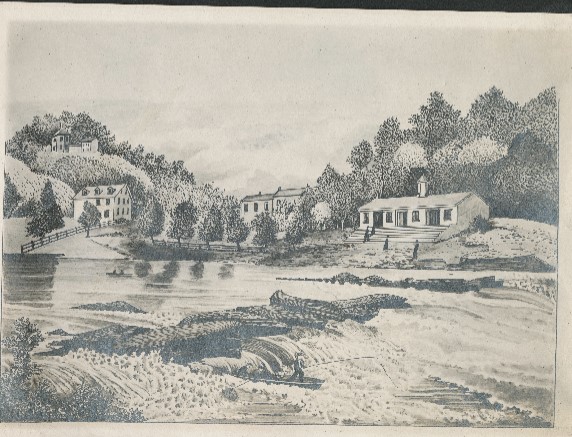
ANOTHER SIDE OF THE REVOLUTIONARY WAR: OCCUPIED EAST FALLS
By Donna Husted Levy for the East Falls Historical Society
Last month’s issue of East Falls NOW included a long article about the sale and likely redevelopment of a property that was once part of the Garret farm, arguably the earliest European settlement in this area. This same property figured in a little-remembered occupation that occurred during the Revolutionary War.
Remember the Hessians? They are the German mercenaries who were routed by Washington’s troops in Trenton after the famous “Washington’s Crossing” on Christmas night, 1776. With the current Christmas season winding down, perhaps someone might wonder what became of the Hessians after 1776.
Very simply, they didn’t go away. Just nine months after their rout in Trenton, they were part of the British force that captured the city of Philadelphia on September 26, 1777. Most of the Hessians moved on to Falls of Schuylkill, living in huts that stretched along School House Lane, then called Bensell’s Lane, beginning at the Schuylkill and reaching all the way to Germantown. As the Hessians settled down in East Falls, Washington’s army kept moving, eventually setting up camp on December 19, 1777, the start of their miserable winter there.
The Hessians were not good or welcome visitors to Falls of Schuylkill. For instance, one battalion of Hessians encamped near the Garrett cabin (around modern-day Tilden and Vaux Streets), where Hessian Colonel Von Donop, it is told by family lore, made his headquarters. A handwritten ledger containing estimates of damage done by the enemy forces includes losses incurred on Garrett’s land, a farm that also included established orchards, livestock, and a cider mill. These losses are listed at 497 pounds, 9 shillings, 6 pence (roughly $89,000 at 2024 currency levels.)
British Major John Andre kept a diary account of the Hessians’ plunder: This quote appears in the book The Life of Major Andre: “With the English privates, the Hessians did not get along pleasantly; arrogant, full of the idea of immediate allotments of land, and of living in free quarters with unlimited license to plunder. They incensed the inhabitants to such a degree that many a farmer thought little…when they had the opportunity to shoot a Hessian as a hawk.”
All around the Falls, there was damage done by the troops. The beloved fishing club, Fort Saint David’s, was empty during the occupation of Philadelphia, with many members involved with the war. By 1778, the club was a pile of ruins, the Hessians having used its materials for their winter huts. They then burned the rest of the building to the ground. This may have been the first time a building of historic significance would be destroyed in East Falls, but certainly not the last.
The Hessians were ruthless, but within the group one Major Burmeister found honor in the American fighter. He writes in his letters, “The American’s are bold, unyielding and fearless. They have an abundance of something which urges them on and cannot be stopped. Then their indomitable ideas of liberty, the mainsprings of which are held and guided by every hand in Congress. With little show the Americans will exert themselves to the utmost to gain complete freedom and they are by no means conquered.”
Roughly four years after the Hessians occupied East Falls, Cornwallis surrendered following the Battle of Yorktown, and the colonies were truly independent – a reminder that determined people can achieve great victories in four years.
About the author: The family lineage of Donna Husted Levy traces back to a Swedish family named Garrettson, later Garrett, who were among the first European settlers of East Falls.
By coincidence, some 300 years after Donna’s ancestors were granted this land, she and her husband purchased their first home on the 3400 block of Queen Lane, less than a thousand steps from where the Garrett cabin once stood. Donna is a member of the Swedish Colonial Forefathers and the Daughters of the American Revolution, and she and her husband currently reside in Wynnewood.
Do you have questions about East Falls history, or want to know more? See our growing website at www.eastfallshistoricalsociety.org or contact us at eastfallshistory@gmail.com. And join! You can do so on our website, eastfallshistoricalsociety.org.
MEDICAL STUDENTS IN EAST FALLS FIFTY YEARS AGO
By Alan Schindler, MD for the East Falls Historical Society
They sang for their supper. Every week or so the two young women would go down to Pete’s Cafe on Midvale near Ridge, walk down the alley to the “Ladies’ entrance”. Once inside, one would play the guitar and the other would sing for the patrons, and their reward would be dinner.
They were just two of the 64 recent college graduates or second-career women in the Class of 1970 at The Woman’s Medical College of Pennsylvania, located on Henry Avenue. These women were happy to be in what many remember as the warm, supportive atmosphere of WMC at a time when the number of women admitted to medical school was severely limited. While some came expecting to be in East Falls for only a short time and then to move on, some ended up staying almost forever. None of them knew in 1966 that they were destined to be in the last WMC class to graduate only women.
Recently I contacted as many of my former classmates as I could, and they responded with memories of how they lived outside of class, mostly in the late 1960’s. This column recounts some of their memories.
Long-time Fallsers might remember Pete’s Café on Midvale near Ridge, now Taqueria Cresta, but what else was there nearby where students could live, eat and shop? A survey of those women, now mostly retired and scattered across the country, stirred memories of that earlier time when, for example, there were trolley tracks, a movie theater (the Alden), and gas stations on Midvale where now stand apartment buildings.
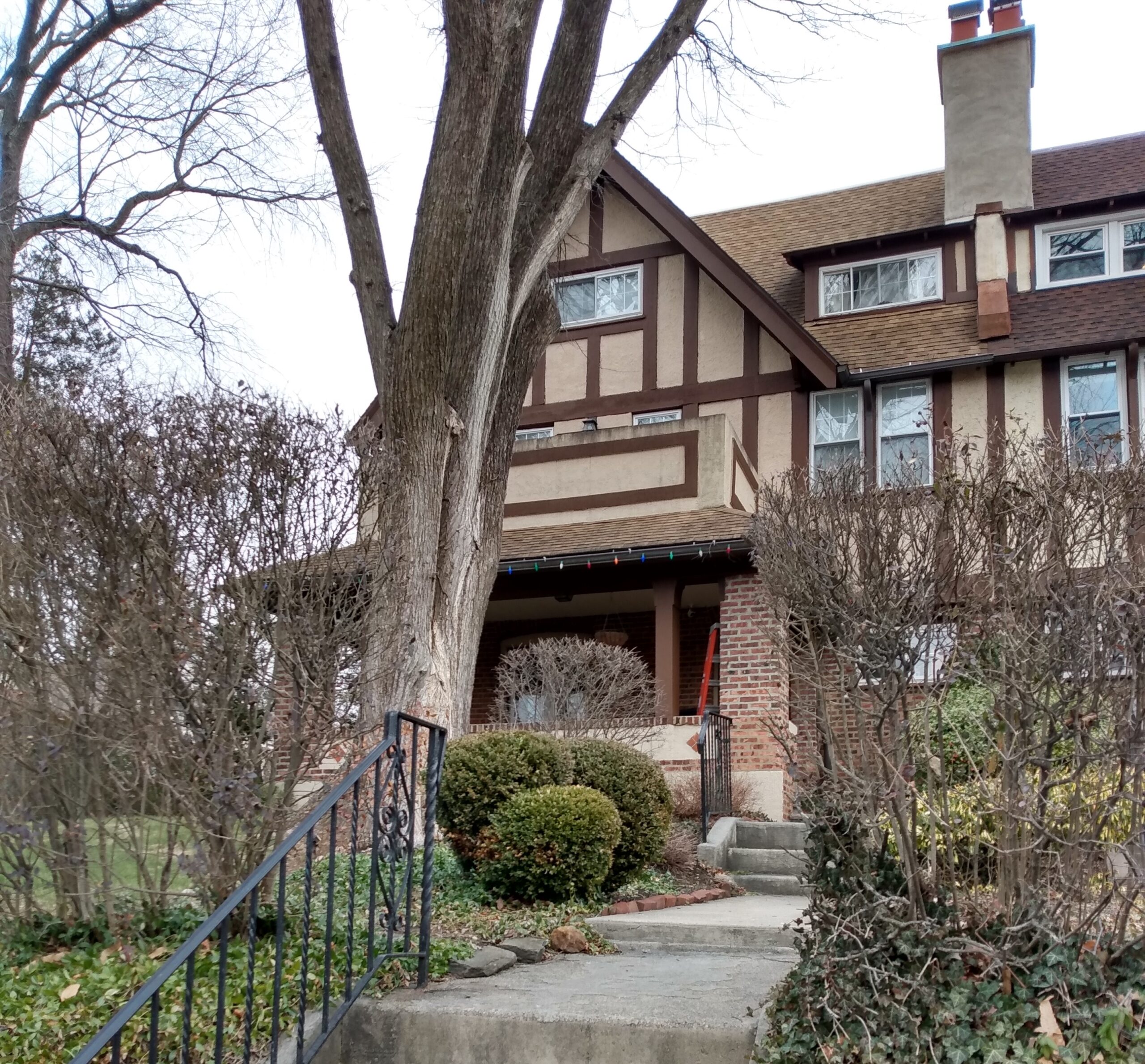
Those young students rented apartments on Indian Queen Lane, School House Lane, elsewhere throughout the Falls, and across Wissahickon Avenue in Germantown. (A lot of East Falls property was owned by the barber Joe Michetti who, some might remember, would go up to WMC Hospital to give haircuts to patients.) Many women shared apartments. According to recent recollections, one had a “crummy apartment with a very small bathroom”; another lived in “an unheated basement apartment”. Some students lived in the sorority-owned Zeta Phi house, one half of a twin on Fox at Penn Street, with its extensive house rules, including “don’t use the third floor shower because it leaks into the second floor.” At least one student would sometimes stay all night in the library to avoid a one-hour commute home. Many lived within walking distance of the school, some drove, and some hung onto the backs of their friends’ scooters.
They occasionally ate out, and remember eating at Pete’s — 25 cents for a mug of beer — or Murphy’s (yes, our same Murphy’s), at the Pub at Henry and Allegheny, at Horn and Hardart’s in Germantown, or at the Chinese take-out Hung-Hing on Queen Lane . “Fine dining” when affordable, or when being treated by someone’s parents, could be had at the Open Hearth at Alden Park (where men had to wear ties and jackets, and which burned down mysteriously years later), Crane’s on Queen Lane, or Green Hedges on Greene Street. “Faculty were great at entertaining students with dinners at their homes.” Students would sometimes shop for food at the Tilden Market (now NouVaux), but mostly they would go to supermarkets in Roxborough or Bala. One, missing New York, would run home on weekends to stock up on food.
For spiritual and religious needs, institutions mentioned were St. Bridget’s Church, St. Mary’s Hamilton Village on the Penn campus, and the Germantown Jewish Centre. For entertainment, people reported the occasional movie or party with classmates, with some events at the Zeta Phi sorority. Or students would get together to hang out and listen to their own self-generated music. One reported just sharing tea with a classmate, while watching their cats stare at each other. And some who were married, and maybe not, remember engaging in various extracurricular, but not reportable, private activities.
And would you believe that the total tuition for four years was $6000? Even so, while a few students had parents or others who helped with their tuition and some got scholarships, many struggled, taking loans or getting jobs — one as “house mother” for a year at Zeta Phi; one as a church organist playing at weddings and funerals — to make their way through. Most worked during the summers after first and second year. Some had taken a year off before medical school and had saved up some money for tuition.
Most of East Falls, especially the residential areas, looks much as it did back in the mid-1960s. So, when they return, the familiar surroundings bring back fond memories to those women who became doctors here and went on to serve others for many years. But Woman’s Medical College, the center of their lives in those days, lives on only as remnants within Drexel University College of Medicine.
“ON ST. PATRICK’S DAY, EVERYONE IS IRISH, RIGHT?”
By Rich Lampert for the East Falls Historical Society
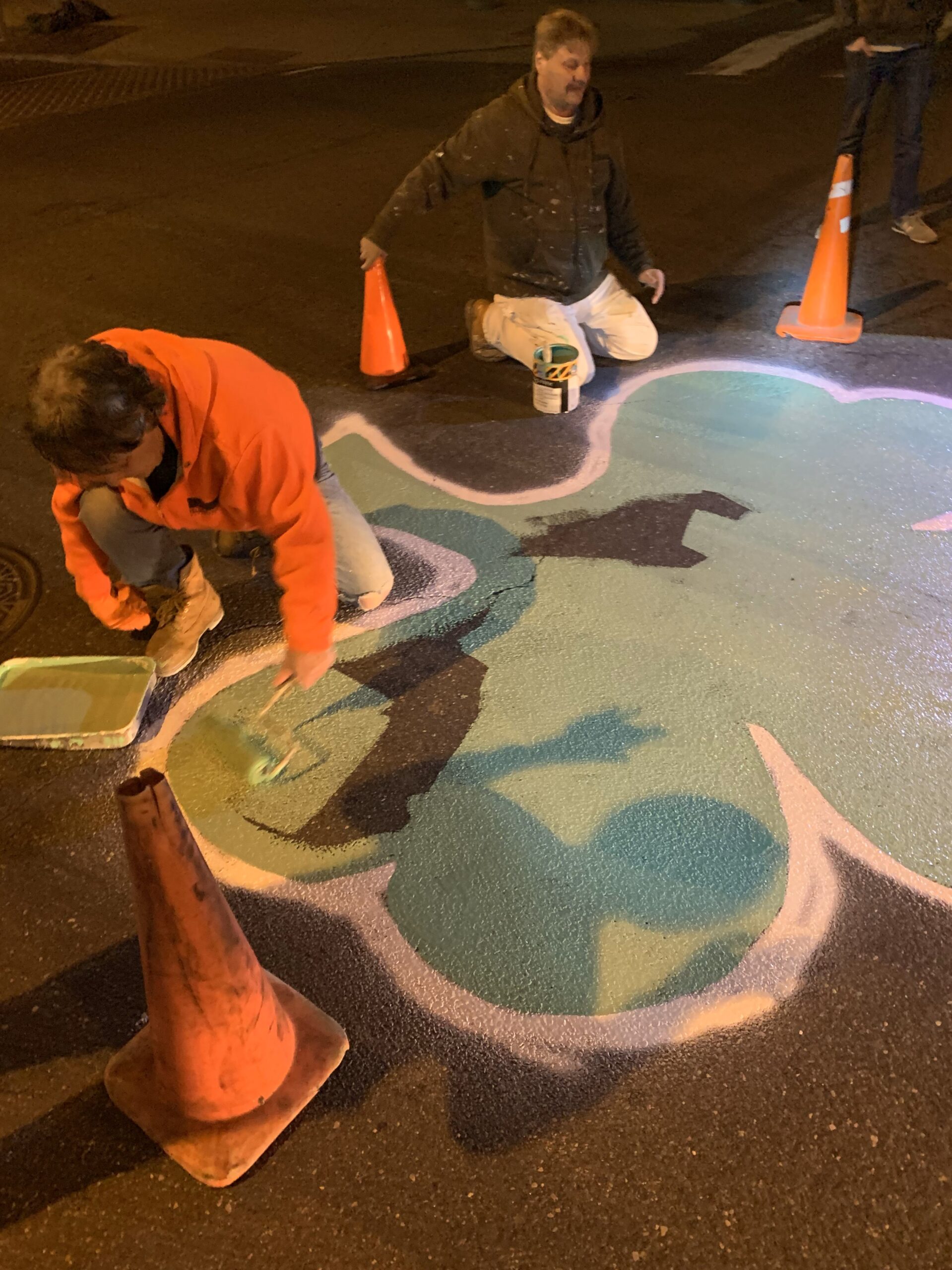
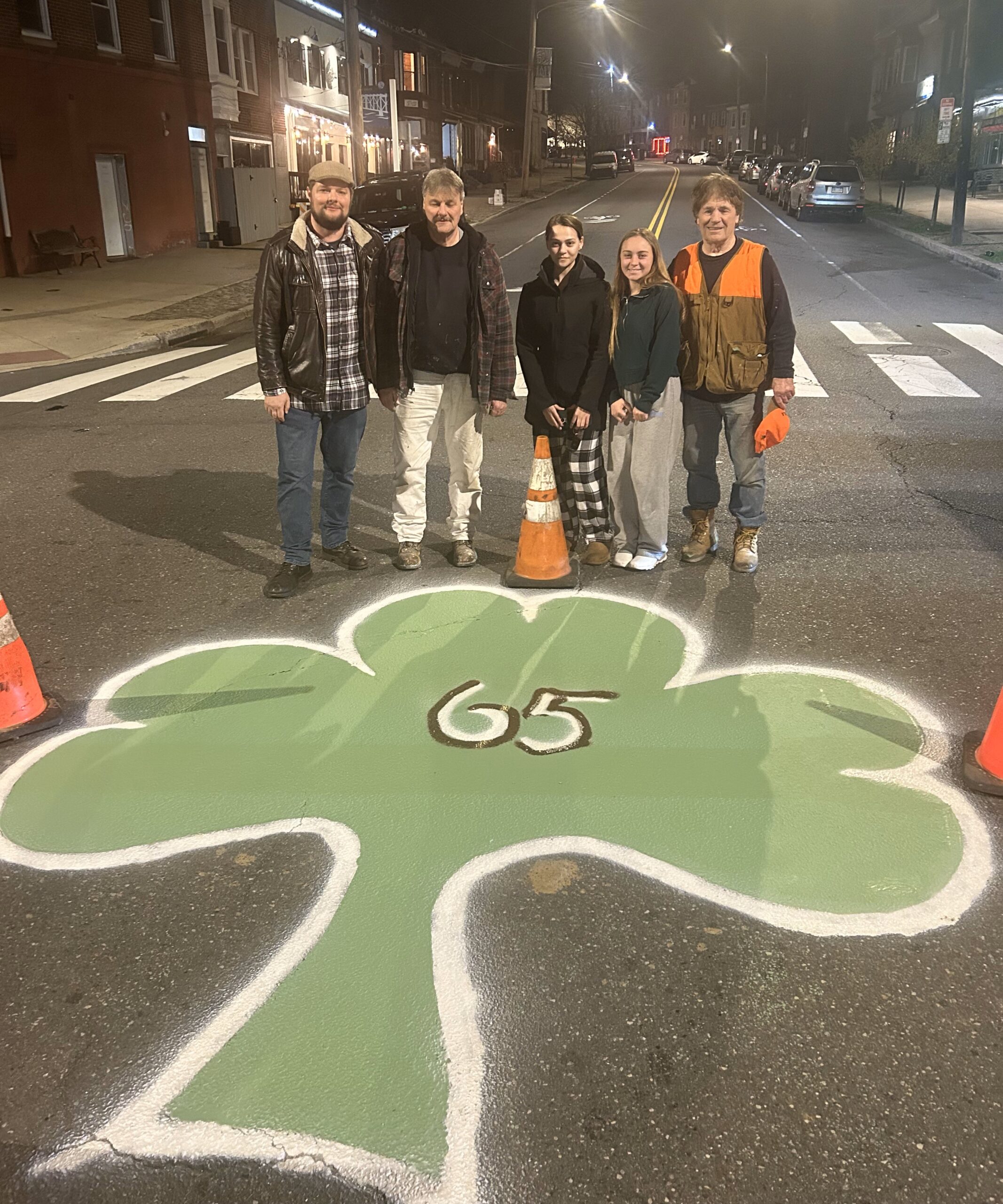
That’s what Tom Doyle says, and that explains why a large painted shamrock appears every year around this time in the intersection at Ridge and Midvale. At press time, Tom, who participated in painting the very first shamrock, is making preparations for the 66th consecutive annual job. Although Tom has moved north to Andorra, he remains loyal to his roots in the lower Falls, starting from his boyhood house on Laboratory Hill with no running water.
If the shamrock appears to be a more polished product than it was some years ago, that’s because it is. In the early days, paint was applied with ordinary brushes, a laborious process. To reduce the amount of labor, the shamrock creators tried spray paint – good results, but too expensive. Then came paint rollers, the method used today. Also, the materials have evolved, and currently the shamrock is created with durable highway paint. The painters have learned that going over the pavement with propane torches before painting heats the surface and helps the paint dry more quickly. Also, the size and shape of the shamrock are more consistent from year to year, as well: Tom created a durable template to define the shape, and painting the outline around the template is now the first step in the process. Once the supplies are in place, the actual painting takes about an hour.
Traffic issues aside, this isn’t an easy job. It’s tough to do in unfavorable weather conditions – not just rain or snow, but also on very windy nights. Road salt is the worst enemy of the shamrock. If the city has applied salt in a recent snow storm and it hasn’t been washed away in a subsequent rain, the paint doesn’t adhere as well to the paving, and the shamrock fades away too quickly.
Painting the shamrock started in 1960 with an idea by brothers Danny and Skip Grimes and their close friend Bernie Winters. Tom was younger – he was only 14 — but they agreed that he could come along, too. Tom now thinks of this effort as “the first graffiti,” but it became an annual effort that involved an evolving cast of characters. A few years after the shamrock custom started, Skip Grimes was the manager of the Spartans, an East Falls-based baseball team who for a time were the core of a group that sometimes grew to 30 or 50 people. In the early days, the crew drew the shamrock literally at midnight on March 17 itself. The effort quickly grew to putting out traffic cones and having people stand around the work site with flashlights to keep traffic away. Over time, the timing evolved, and the work now takes place in the middle of the night over a weekend, when traffic is lighter.
This has been going on for many years, and naturally participants in the painting have come and gone. Sometimes other groups have attempted to do the work: Once the shamrock was a well-established tradition, in some years people other than the original crew would take it upon themselves to paint it. According to Tom, they generally did a pretty rough job, so members of the original crew would show up later to fix it up.
Time has gone by, and the older originators – Danny and Skip Grimes, along with Bernie Winters – have passed away. For a couple of years after Danny Grimes died in the 1990’s, aged well into his 90’s, his in-laws, the LaPorte family, painted the shamrock in Danny’s memory before Tom and his family could get to it. Unlike other interlopers, Tom said, they did a beautiful job.
For the last 25 years, painting the shamrock has become an annual event for the Doyle family. At one time or another, all of Tom’s children have participated, and now some of his grandchildren as well. Currently, most of the painting is done by Tom Doyle, his brother Michael, and his nephew Michael Junior, with other members of the family holding flashlights and directing traffic.
The shamrock started out as a prank and has evolved into a community tradition. To that, all of us in East Falls can hoist a Guinness and say, “Slainte!”
Do you have questions about East Falls history, or want to know more? See our growing website at www.eastfallshistoricalsociety.org or contact us at eastfallshistory@gmail.com. And join! You can do so on our website, eastfallshistoricalsociety.org.
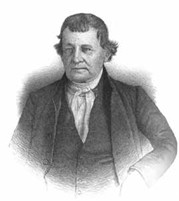
JOSIAH WHITE: THE FIRST BIG BUSINESSMAN IN FALLS OF SCHUYLKILL
by Clare McCabe for the East Falls Historical Society
If you’ve lived in East Falls for any length of time, you’ve heard about John and James Dobson, the proprietors of the enormous Dobson Mills complex along Ridge Avenue that has been partly converted into apartments.
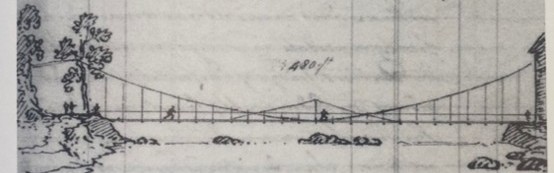
The Dobson brothers may have been the largest industrialists in East Falls, but they weren’t the first. That distinction belongs to Josiah White, who came to Falls of Schuylkill in 1810, nearly a half century before the Dobsons. White and Erskine Hazard, his business partner and lifelong friend, purchased more than 10 acres of land near the Falls of Schuylkill. The two men, and a third partner, John Gillingham, owned and operated a nail and wire factory on the land, and employed twelve wire drawers at the mill. As White and Hazard owned land on both sides of the river, in 1816 the two built an iron wire suspension bridge over the Schuylkill, connecting their parcels. Though it was always meant to be a temporary structure, and it collapsed not long after, White’s “spider bridge” is thought to be the first wire cable suspension bridge in the world. It was one of six bridges that failed before the current Falls Bridge was built in 1895.
White was known in the neighborhood as an entrepreneur and an inventor – he applied for and received three patents for machines to roll iron and cut nails during his time in East Falls. White would continue to experiment with streamlining the work at his mills. But it was his experiments with anthracite coal that would bring him his greatest success and point him beyond the Falls to his next business venture.
White experimented with anthracite in his iron mill at the Falls and discovered that anthracite required less oxygen to burn than bituminous coal while nonetheless generating more heat. Before White’s experiments, the seemingly unburnable but plentiful anthracite was used to line gravel paths at the Philadelphia Water Works. In the second decade of the nineteenth century, the country was in the grips of its first true energy crisis: the war of 1812 had disrupted supply chains of bituminous coal, previously sourced from Virginia or England. But White’s successful experiments meant plentiful fuel lay within Pennsylvania’s mountains. It also meant that there was money to be made off anthracite, if only one could bring it to market.
White saw potential in the waterpower of the Schuylkill River to bring anthracite coal from the coalfields in or near Reading and Pottsville into Philadelphia. He and Hazard petitioned the Pennsylvania Assembly to begin incorporating a company to develop the Schuylkill River into a navigable channel of commerce. The Pennsylvania Assembly chartered the Schuylkill Navigation Company in 1815. But the process to raise capital for works along the river was slow, and White, the founder of the company, did not get a seat on the board because they considered his mills in the Falls of Schuylkill a conflict of interest.
Nevertheless, the Schuylkill Navigation Company contracted with White to build the first artificial works on the river — a canal, locks, and dam — to allow boats to pass by the feature which had most stymied river navigation: the falls at the Falls of Schuylkill. White completed the works in 1816 and collected the first tolls on the Schuylkill. But despite the progress White made, the process for completing the system of river works was long and arduous, and plagued by disease and delays.
In 1818, Josiah White, feeling snubbed by the Schuylkill Navigation Company, left the Falls of Schuylkill and turned north to the Lehigh River. But before he left, he and Hazard got one last boon from the falls: they owned the rights to the falls’ waterpower, which they gave to the city of Philadelphia in 1818 in exchange for $150,000 worth of bonds. White’s largely unsuccessful experiments at the Falls of Schuylkill had finally given him some capital which he could use to start another company in the Lehigh Valley.
The Lehigh Coal & Navigation Company, founded in 1818, built a canal system along the turbulent Lehigh River and also acquired anthracite mines before others realized the value of the material. The company became a great business success, controlling both coal fields and the most efficient way to get the coal to market. White also established the town of Mauch Chunk (now Jim Thorpe) and dominated its civic life, including banning alcohol in accordance with his Quaker faith.
By the 1840s, White was semi-retired from the Lehigh Coal & Navigation Company, although he still consulted on canal projects in the region. Upon his retirement, he and his family settled at 7th and Arch streets in Philadelphia. He died on November 15, 1850, and his remains are buried in the Quaker Southwestern Burial Ground, in Upper Darby.
Do you have questions about East Falls history, or want to know more? See our growing website at www.eastfallshistoricalsociety.org or contact us at eastfallshistory@gmail.com. And join! You can do so on our website, eastfallshistoricalsociety.org.
STEAMBOATS ON THE SCHUYLKILL
by Lyda Doyle and friends for the East Falls Historical Society
Wouldn’t it be nice to spend a long summer evening cruising up the Schuylkill? For many years, we could. Verdent scenery along the park contrasted with impressive industrial sites for those of more varied tastes. During the late 1800’s, people throughout Philadelphia would board steamship excursions on the Schuylkill River in season, with multiple trips each night starting from just above the Fairmount Dam.
The excursions were made possible by the Fairmount Dam, which was completed in 1821. The dam, familiarly present today, enabled conversion of the city’s water provision system at “the Water Works” from dangerous and limited steam pumps to a complex and powerful water-driven apparatus. In addition, the Fairmount Dam created the “Schuylkill Pool,” a seemingly calm and navigable stretch of about five miles upriver which fostered recreational use, including steamboats which ran from Fairmount to the Wissahickon Creek, with stops along the way including Falls of Schuylkill. The dam, however, had raised the water level, inundating the boulders which created the Falls—making large boat passage possible while destroying a widely-known spectacle and tourist and fishing attraction. It also limited the usefulness of the several Schuylkill tributaries in the Falls, (eg Falls, or later Dobsons’ Run) as sites for water-powered mills.
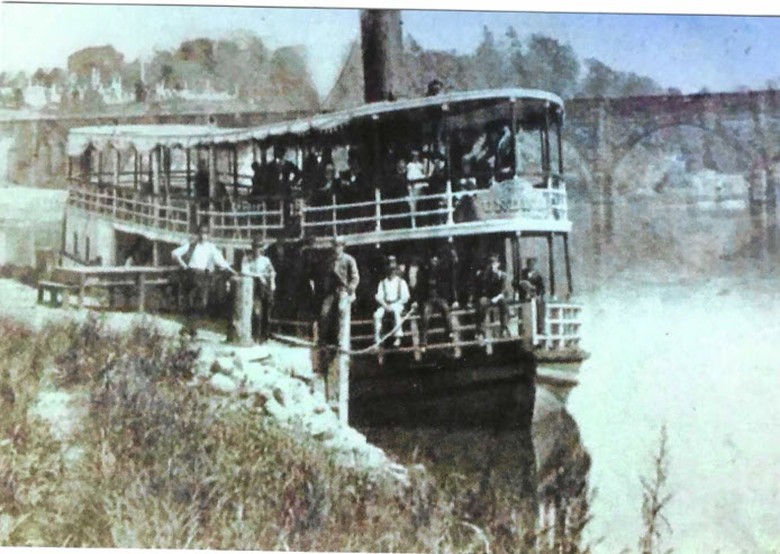
According to accounts written later in the 19th Century, the first steamer was a little side-wheel boat called the Mount Vernon, which ran daily from Fairmount to the Falls of Schuylkill as early as the 1820’s. (Another account recalls this as the Washington, operated by John Schronk, a scion of a prominent Falls of Schuylkill family.) Later in the 19th Century, the Fairmount Steamboat Company ran a fleet of steamers. An article from 1881 in the Manayunk Chronicle & Advertiser tells us that it comprised five boats, running hourly from Fairmount to Riverside Mansion at the mouth of the Wissahickon. In mid-summer, the last trip back from Riverside to Fairmount departed at 9 p.m. – or 10 p.m. on “moonlight nights.” Fares were 20 cents round trip. Moving downstream, the stops were Falls of Schuylkill, Laurel Hill, Strawberry Mansion, Rockland, Belmont (Exhibition Grounds) on the west bank, and Zoologic Gardens (also on the west bank), then Fairmount. These were substantial boats; an 1882 article announced that a new vessel would hold up to 350 passengers, with a top speed of 12 miles per hour. A later lesser stop was Cooksockey (spelling varies) a town across the river from East Falls (with rail station West Falls). It adjoined the massive Simpson’s Washington Print Works (printing on textiles). Both the town and printing plant vanished with no trace with the creation of west Fairmount Park.
Falls of Schuylkill, while a thriving industrial village that included the huge Dobson Mills complex, was a significant recreational stop as well. From a little wharf at the Falls of Schuylkill, a small bridge crossed a small stream called Mifflin Run (above which would be built Mifflin Street/Midvale Avenue).
The open-air boats operated from April until the weather became too cold. We don’t know exactly when and why the steamboats stopped running. The latest newspaper account we could locate was a brief mention of a special excursion in late 1896, Is there any chance that 21st-century Philadelphians will ever again take a moonlight cruise on the Schuylkill?
FROM INDUSTRIAL HUB TO “EDS AND MEDS” IN ONE GENERATION: THE TRANSFORMATION OF EAST FALLS
by Rich Lampert for the East Falls Historical Society
Almost as soon as the earliest European settlers found their way to the area we now call East Falls, a productive community formed along the Schuylkill River. By the early 1700’s, lower East Falls was an established industrial village, and industry remained central to the community’s identity well into the 20th century.
Two especially large industries built just above the river in the early to mid-1800’s came to dominate the identity of East Falls and also provide thousands of jobs. Dobson Mills, the largest woolen mill complex in Philadelphia, occupied the hill south of Midvale Avenue. About a half-mile farther north, the chemical company Powers & Weightman occupied “Laboratory Hill.”
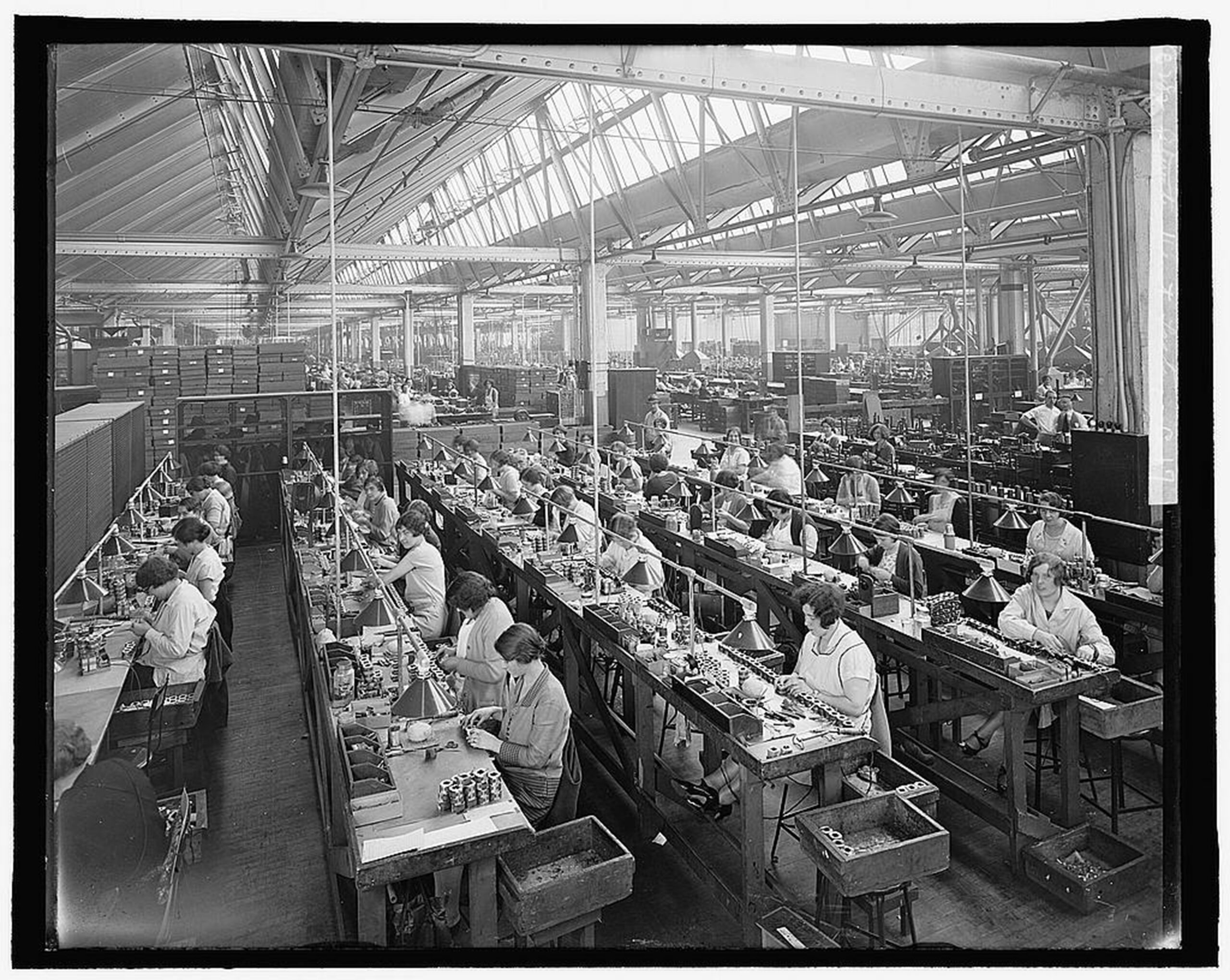
Eventually, railroads and the highway grid made the higher ground in East Falls attractive, too. Along Wissahickon Avenue, between 1923 and 1929, the Atwater Kent Manufacturing Company constructed two enormous buildings. Atwater Kent was the largest manufacturer of radios in the United States, employing over 12,000 people at its peak.
The confluence of three major manufacturers in this small community was fated to be very brief, with 1927 as a pivotal year. Atwater Kent company, still only in one huge building, produced one million radios. Down by the river, the situation was less vigorous.
Dobson Mills had been struggling against national, brand-name carpet manufacturers, and the challenges became more acute in the 1920’s. John Dobson, the elder brother, had died in 1911, and his younger brother James in 1926. With no male heir and a floundering business, Dobson Mills closed its doors in 1927.
The year 1927 was also critical for Powers & Weighman. The two namesakes of the company had died by the early 20th century, with sole control of the company passing to Weightman’s daughter in 1904. But she soon contrived to give up managing the company. At the start of 1905, she merged it with a rival from South Philadelphia, Rosengarten & Sons, which dominated management. In the pivotal year 1927, the firm was sold to Merck & Company, which led to less and less work on Laboratory Hill.
Adding insult to injury, as quickly as Atwater Kent grew, it fell apart. Competition increased, the Depression strained finances, and the labor movement became increasingly assertive. In 1936, faced with what he saw as unreasonable demands from his employees, Atwater Kent simply shuttered his company.
What would become of the East Falls area without these three anchor institutions? The answer emerged as new types of institutions eyed the combination of ample land for development and convenient access via road and rail. Collectively, institutions of this kind came to be called “eds and meds.”
The first development had been in the works for some time. William Penn Charter School had owned property along School House Lane since 1903, used only for athletic fields while educational activities continued at its campus in Center City. The Overseers of Penn Charter resolved to move their educational activities out to “the county” as well, but only after they could raise construction money by selling their current campus. They sold it in 1924, and opened the new school in East Falls in September 1925. As an educational institution (for boys only at that time), it joined public elementary schools, St. Bridget (Catholic) elementary school, Ravenhill Academy, a Catholic-run high school for girls, and the Lankenau School, another school for girls.
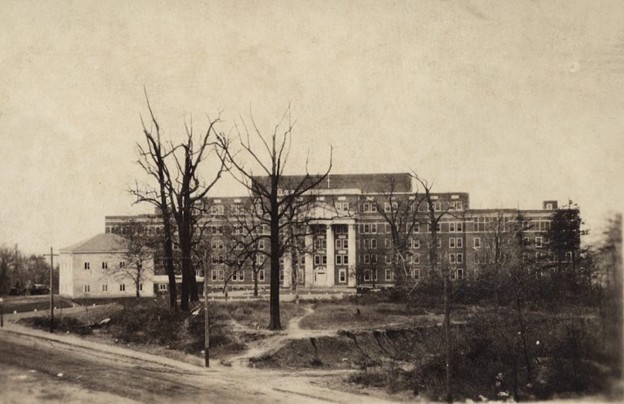
Not long after this, the Woman’s Medical College of Pennsylvania and its Hospital, faced with dilapidated facilities and steep competition at its location near Girard College, decided to move its operations to East Falls. In 1930, just three years after the demise of Dobson Mills and the sale of the chemical company, Woman’s Med engaged the prestigious firm Ritter and Shay to build a new medical school and hospital in one building, graced with a “colossal portico.”
The third development awaited the end of World War II. The institution known as Philadelphia Textile Institute (PTI) had outgrown its space at Broad and Spruce, and in 1946 it purchased the grounds of an estate at Henry Avenue and School House Lane. By 1949, the campus welcomed its first students.
Within a generation, then, East Falls was transformed from a manufacturing community into the site of education from kindergarten through medical school, as well as an important locale for health care (especially of women and children) and research.
Full de-industrialization was still a generation into the future. Many blue-collar workers from East Falls could still find employment nearby at the Budd Company, Midvale Steel, Tastykake, Nice Ball Bearings, and other large industries; while others used their cars to commute to jobs most anywhere. Other Fallsers traveled to Center City, to work in the many white-collar and pink-collar jobs that emerged after World War II.
Even with this dispersal of employment, East Falls remained unusual. East Falls, with institutions providing public, private, and Catholic K-12 education, bachelor’s degrees, medical and nursing education, and a general hospital, was unrivaled among Philadelphia neighborhoods – quite a distinction for just two square miles. Though the sum of employment likely did not match that from the vanished factories, the coming of the schools brought many young persons who would rent rooms, appear at stores, babysit, etc. And some bonded to East Falls and never left (eg, the Schindlers). As noted already, WMCP brought a new source of health care. And the new schools tended to preserve open space (though some old buildings were lost).
And, by the way, where did this space come from? Its availability resulted from another historical change in East Falls: the gradual exodus of the owners of suburban estates along School House Lane and elsewhere. Thus Penn Charter acquired the Waln estate along School House Lane from family, and WMCP purchased Charles F. Abbot’s famed Abbotsford house and property on what became Henry Avenue. This was good high ground, still cherished by medical theory of the day.
(Steven Peitzman contributed to this article.)

September
KEEPING OUR SENSE OF PLACE: NCOs VERSUS HISTORIC DISTRICTS
by Nancy Pontone for the East Falls Historical Society
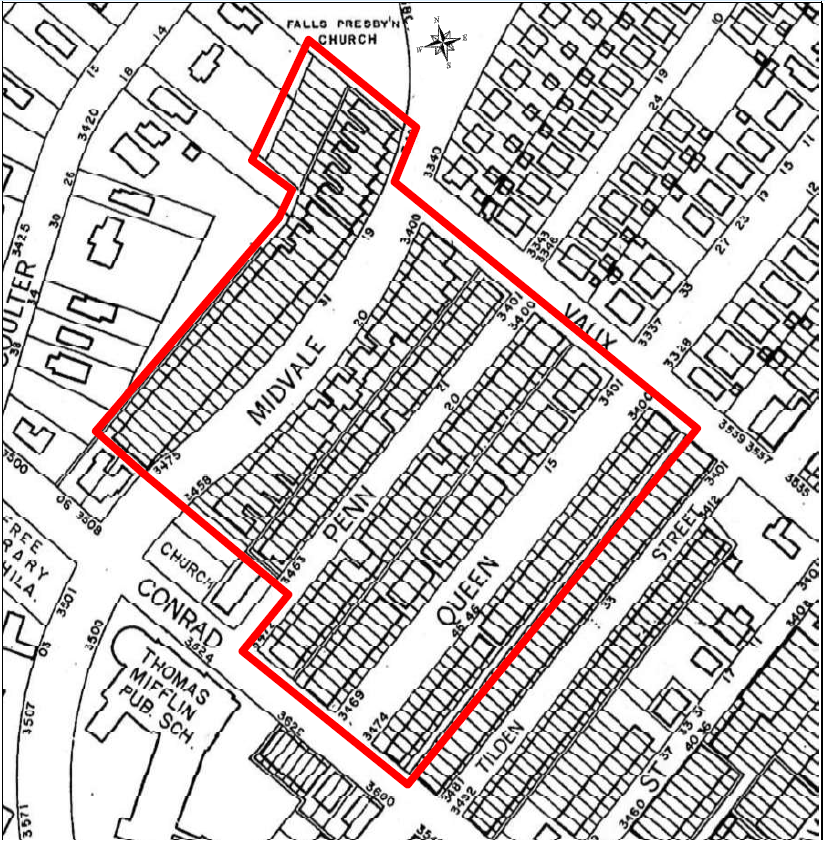
In recent East Falls NOW articles, Community Council zoning chair Hilary Langer has commented on inappropriate new buildings in East Falls incompatible with neighboring properties and lacking setbacks. He has suggested Neighborhood Conservation Overlays (NCO) to assist neighborhoods that want to protect their own unique character, which is often historic. This can be an attractive option, but an historic district approved by the Philadelphia Historical Commission (PHC) is another mechanism to preserve historic and/or architectural distinction. It may seem odd that the city would provide for two processes with similar objectives, but they differ in important ways. Let’s compare the two methods used to protect the character of neighborhoods.
Historic Districts preserve and protect buildings, sites, and districts with historic, architectural, cultural, and aesthetic value in the public interest, according to an ordinance approved in 1963, updated in 1988, and recently modified.
Created by City Council in 2004, NCOs recognize “that a particular neighborhood has integrity of form and streetscape that warrant conservation” according to a Philadelphia City Planning Commission (PCPC) fact sheet. NCOs “can help guide changes and new development”.
Historic Districts need PHC approval for work that requires a building permit or alters the exterior appearance of the building when the change would be visible to the public.
NCOs require Certificates of Compliance from PCPC for exterior work on properties within the district based on criteria set by the community.
Neither option restricts interior changes to buildings.
Historic District buildings are protected from demolition but NCO buildings are not.
Proposed Historic Districts must meet any of ten criteria such as “exemplify the cultural, political, economic, social, or historical heritage of the community” or “reflect the environment in an era characterized by a distinctive architectural style.” There is no restriction on the eligible area.
NCOs “must possess a consistent architectural character as a result of a concentration of residential buildings of similar character.” They must be 70% residentially zoned and cannot overlap with an existing or proposed historic district. The minimum size is 2 blocks by 2 blocks and the maximum size is 25 blocks.
Anyone can submit an Historic District nomination but the application process requires time to research and document. An argument for the selected criteria must be presented. PHC reviews the nomination for accuracy and completeness then mails notifications to owners identifying dates of committee meetings. The Committee on Historic Designation (CHD) holds a public meeting to consider if the nomination meets at least one of the ten criteria. The CHD makes a recommendation to PHC which votes on the nomination in a subsequent public meeting. Interested persons may speak at these meetings and/or provide written comments. Owner approval is not required.
Neighbors or a community group can initiate the NCO process and must provide proof of interest by affected residents supported by minutes from a public meeting or signatures of 30% of affected owners. The process requires a background survey of the proposed NCO with descriptions of the neighborhood’s attributes. Community based design guidelines are developed with PCPC addressing materials, setbacks, massing, etc. for new construction. “Once guidelines and boundaries are set, City Council introduces legislation and votes to create the district.”
PHC staff are available for historical and technical assistance in Historic Districts. An Architectural Committee reviews substantial changes (such as building additions) requested by owners based on the Secretary of the Interior’s standards for historic properties. PHC approval is subsequently needed. But PHC staff approve most change requests.
PCPC staff help to draft NCO design guidelines that they subsequently administer.
A PCPC representative for East Falls recommended historic district designation when asked what option would work best for preserving what exists and preventing inappropriate development. There are many areas where historic district designation would work, such as Ridge Avenue or the original Falls Village, Indian Queen Lane, and The Oak Road to name a few. There are almost 20 buildings in East Falls already on the Philadelphia Register of Historic Places which is great. But historic districts such as Tudor East Falls Historic District (2009) are more effective for maintaining the integrity of entire neighborhoods. Still, both options can play a positive role in regulating change.
Do you have questions about East Falls history, or want to know more? See our growing website at www.eastfallshistoricalsociety.org or contact us at eastfallshistory@gmail.com. And join! You can do so on our website, eastfallshistoricalsociety.org.
ORAL HISTORY: FALLSERS TALK ABOUT LIFE IN EAST FALLS
by Rich Lampert for the East Falls Historical Society
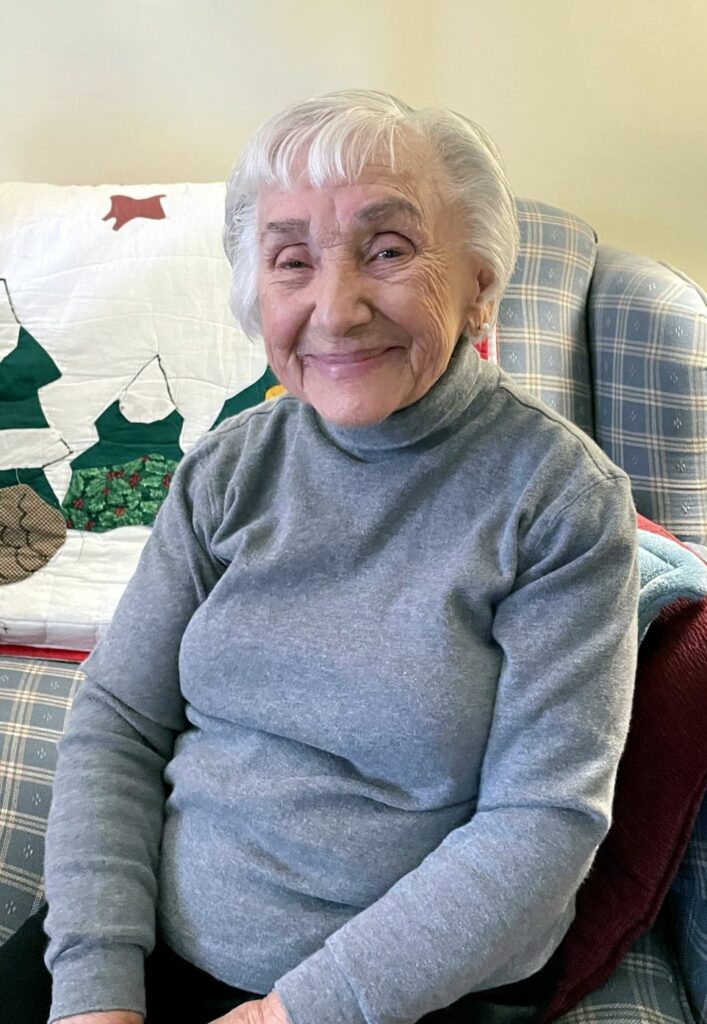
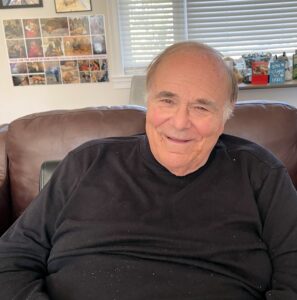
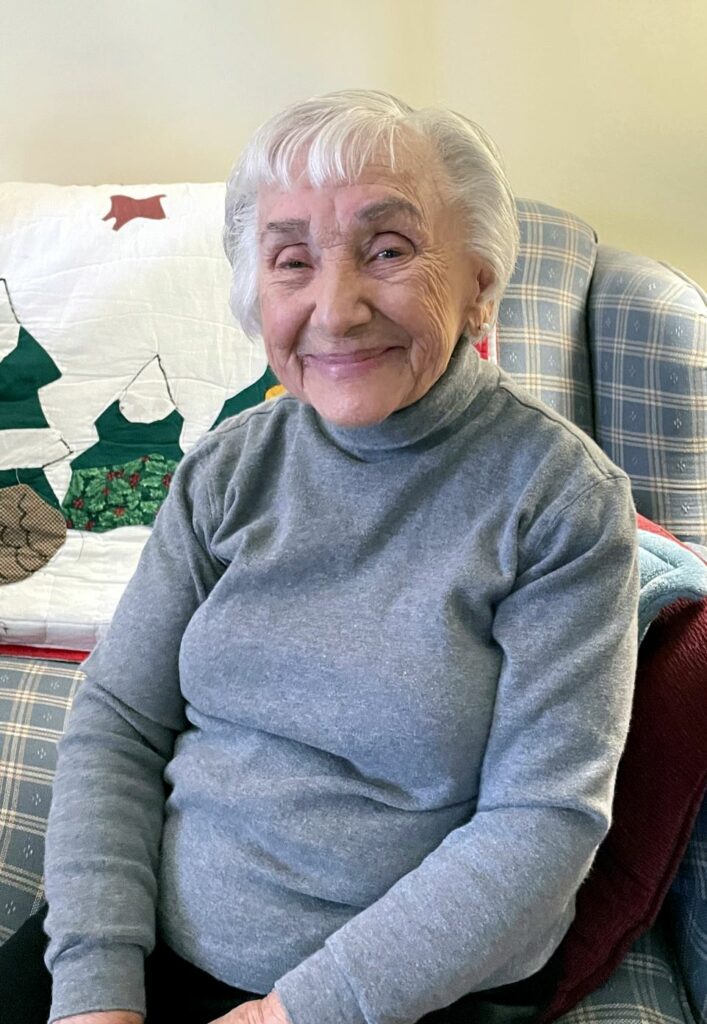
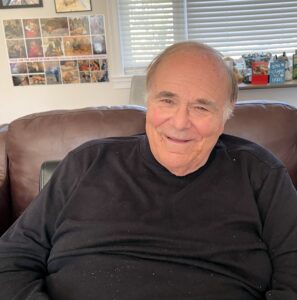
East Falls Historical Society is an active group of volunteers. We present programs and walking tours, we advocate for preservation of our architectural heritages, we hold and preserve unique artifacts, we answer queries about local history. One of our proudest efforts as volunteer historians is our ongoing program of conducting oral histories with Fallsers, both well-known and obscure, to provide insights into life in this community over the last 100 years. We conduct a few interviews per year, and in this column we want to highlight some intriguing quotes from our most recent interviews.
Gus Krebs, who passed away in 2023, lived in a third-generation house on Stanton Street. According to Gus, his “great-uncle worked on the looms to make the fabrics and rugs and whatnot. I understand they made uniforms for the soldiers in the Civil War. My great uncle – Francis X. Mulligan, as a child laborer at Dobson Mills, lost his left arm….He also was, believe it or not, … the caddy master at Philadelphia Country Club – golf club. And from what I understand, he could hit a golf ball further with one arm than most people with two.”
Gus sometimes got in trouble, sometimes without being at fault: “I do remember one time we were throwing rocks – I don’t know – we heard some voices down one of the back alleys in the yards and we just started tossing some rocks. Anyway, an adult came out of there – out of the alley – and he’s holding his head ‘WHO threw that rock!!’ Well, the other guys had run earlier – they left and were gone and I was the last one to leave, so being the last one, he saw where I was and where I had gone – I went right to the house. And this caused quite a stir because my mother happened to be wiping the windows outside and she heard this man saying ‘WHO hit me with this rock?’ Who knows what rock hit who?? So it turned out I got blamed for it, and my mother started giving it to this neighbor: ‘Hey you, don’t you be picking on my son!’ Then his wife came out and started mouthing with my mother. They were all out on the street fighting and I couldn’t say who was blamed for what, but I just happened to be the unfortunate one.”
Inez Ierardi Fletcher lived farther up Stanton Street from Gus Krebs and was about 11 years old than Gus. She, too, passed away in 2023. Her parents owned Joe’s Grocery Store, and maybe Gus’s mom shopped there.
While Inez had a pretty typical East Falls childhood, she did meet and visit the wealthy and prominent Bessie Dobson before her palatial home was demolished to make way for the Abbottsford Homes:
“Two doors up lived a woman named Marian Mathisen. She was President of the Women’s Republican Club and so Bessie Dobson would drive down – her chauffeur would bring her down (to Calumet) in her black limousine – dressed all in black, she’d get out and go in the house and would have meetings. So of course. Betty, the daughter, was my sister Marie’s friend, and she knew Bessie quite well.
“… (She) was a big woman. My sister and I, and, I think, Betty, decided we were going to walk up to Bessie’s house because Betty had to give Bessie a message anyway, so we did. We went inside and, oh Lord, it was big. There was a big parrot sitting right there in the cage when you walked in.
“(S)he lived alone. She was very nice. A very nice woman. When they closed her house, she moved down to the Bellevue. My sister and I were in there once – again for some sort of an audition and she was sitting there and she said she missed her home so much – it was very sad.”
Bessie Dobson was a leader in the faction of the Pennsylvania Republican Party that was aligned with Teddy Roosevelt in the early 20th Century, and this leads us to the more recent leading Democrat, Ed Rendell. In his recent interview, Ed talked about disappointing his neighbors on Warden Drive when he was elected mayor. They were hoping the police would station a car in his driveway overnight, as they’d been doing for Senator Arlen Spector nearby, and provide additional security for the street. But it didn’t work out.
As Ed recalled, “We didn’t try having a police car stay in my driveway, but we let one of the patrol cars go around, stop, and bring a dog up and they would sniff around and make sure everything was OK. So they would come up twice – two or three times – during the eight hours at night. But that even had to stop because our dogs could sense the other dog. They would bark like crazy. (laughter). So the neighbors were upset that we didn’t have a police car.”
Our interviews with Gus, Inez, and Ed all covered a lot of subjects, and all contain lots more vivid recollections and insights. You can check out these and our dozens of other interviews at https://www.eastfallshistoricalsociety.org/oral-histories/. And if you have an idea about someone we ought to interview, please let us know via email at eastfallshistory@gmail.com.
WATER, WATER, EVERYWHERE … AND PLENTY TO DRINK!
by Alan Schindler for the East Falls Historical Society
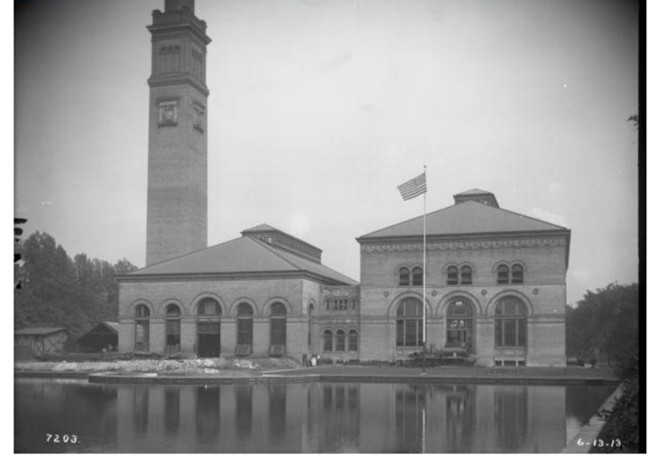
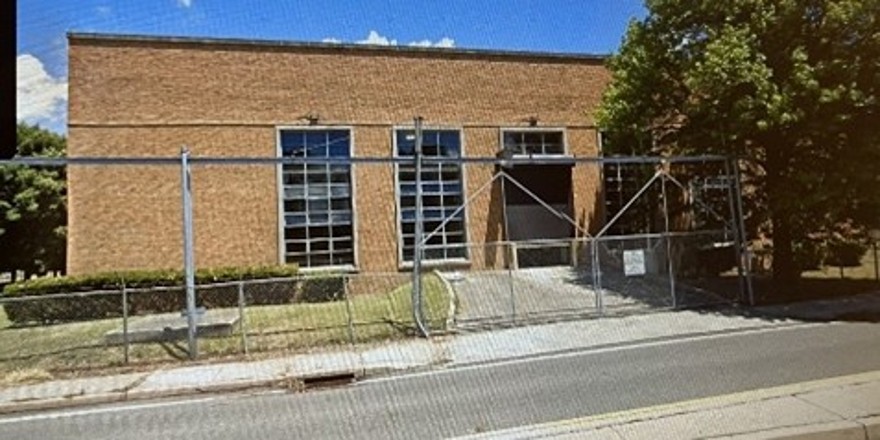
Do you recognize the brick building pictured here that you pass when traveling on Ridge Ave. near School House Ln. toward Lincoln Dr.?
It contains massive pumps that lift raw water from the Schuylkill River to the Queen Lane Reservoir, which provides clean water to East Falls and other neighborhoods. What Fallsers have long referred to as “the reservoir” along Henry Avenue and Queen Lane now forms part of the Queen Lane Water Treatment Plant (QLWTP). With major renovations to the pumping station and the QLWTP in our future, it’s an appropriate time to look back on how these critical pieces of infrastructure came to be. This article focuses on the earliest component, the two basins completed in 1894-95, still popularly known as “the reservoir.”
During the 1800s, Philadelphia neighborhoods, such as East Falls, were supplied with untreated river water pumped directly to homes and industries, not a pleasing situation.
In 1892, the City awarded contracts for construction of the Queen Lane Reservoir on the high ground along the path of Indian Queen Ln. The reservoir would cover 64 acres and have a capacity of 386 million gallons. A pumping station would be located along the river near the base of School House Ln. In theory at least, simple gravity sedimentation in the basins helped remove (sink) undesirable particles, such as microbes.
The project was not without controversy and consequences. With construction already underway, in 1893 the Philadelphia Times reviewed the history of the area, the need for the reservoir, and its effects on the neighborhood. It noted that for “the site selected … there is not a prettier location for suburban homes than on this high ground.”
Residents living along the steep grade from the reservoir down to the Schuylkill River, almost 300 feet below, worried that a rupture of the reservoir wall could cause a disastrous flood.
The reservoir project required the removal of some streets, including Bowman, Crawford and a proposed extension of Fairview (Ainslie) from 33rd (Henry Ave.) to 31st (Fox St.); a portion of Old Indian Queen Ln.; and 32nd St. (McMichael) from Abbottsford Ave. to Queen Ln.
Another casualty was Schuetzen Park, a German-American Shooting Club, developed in 1870 along Indian Queen Ln. In addition to target shooting activities, the Club offered a dance hall, swings, a merry-go-round, stables, a music room and a German specialty — lager beer.
As the reservoir neared completion in November 1894, leaks were discovered. For a year, water was pumped directly into the distribution system, bypassing the reservoir and sedimentation step. The leaks were (mostly) fixed by November 1895.
In the meantime, four pumping engines were completed along the Schuylkill, each one able to pump 20 million gallons a day against the 264 feet elevation from river to reservoir. Even so, two of the engines could not be used because a planned second main from the river to the reservoir had not been funded and built. Thus, only part of the area could be supplied with treated water, with the remaining customers receiving raw water directly from the river.
Between 1901 and 1910, the city built filtration stations for more complete purification of the water supply. A continuing problem with water-born typhoid fever, which was often fatal, drove this massive and costly undertaking. Queen Lane was the last reservoir to gain slow sand filtration, following years of delay owing to discord on City Council. The north basin of the original reservoir was converted to filtration beds and has been covered. The south basin remains a reservoir and may still carry out sedimentation. The Queen Lane Water Treatment Plant is scheduled for a near-complete replacement and modernization once this has been completed for the Belmont plant.
RADIOS FOR EVERY FAMILY: ATWATER KENT IN EAST FALLS
by Alan Schindler for the East Falls Historical Society
Adjoining East Falls, if not truly within it), there arose in the early 20th century major industries along Hunting Park and Wissahickon Avenues. Some offered employment to Fallsers as both Dobson Mills and Powers and Weightman closed their doors in the 1920s. Now through 2026, the East Falls Historical Society hopes to present in the NOW brief accounts of some of these firms – Budd Company, Midvale Steel, Nice Ball Bearings, and the Atwater Kent Manufacturing Company.
Approaching Route 1 North from Fox Street, you can see a tall smokestack towering above buildings that contain Material Culture, the Wissahickon Charter School, offices, and businesses. But have you noticed the fading “KENT” painted on that tower?
In the early 1920s before TV and the internet, Arthur Atwater Kent, a 1902 New England transplant, established himself in Philadelphia as a brilliant and successful innovator and businessman. Among other things he invented an improved engine ignition system. In 1921, his Atwater Kent Manufacturing Company began to produce radio components and quickly moved to manufacturing complete radios.
In 1923, Kent manufactured his first five-tube receiver and in 1926 he was the first to produce radios operating on 110-volt alternating current (house current, rather than batteries). His large-scale efficient production methods continually drove down prices while maintaining quality.
To accommodate the growing business, Kent constructed a manufacturing facility on Wissahickon Avenue in East Falls with South and North plants, on opposite sides of Abbotsford Avenue (before the Roosevelt Expressway). In 1925, the South plant produced a million radios. The North plant completed in 1929, was an immense, three-level building with an adjacent powerhouse containing two coal-fired boilers, providing steam heating to both plants. The North and South plants were connected by an enclosed pedestrian bridge. The powerhouse structure still exists and can be seen from Abbotsford Avenue as you drive south from Wissahickon toward Fox Street.
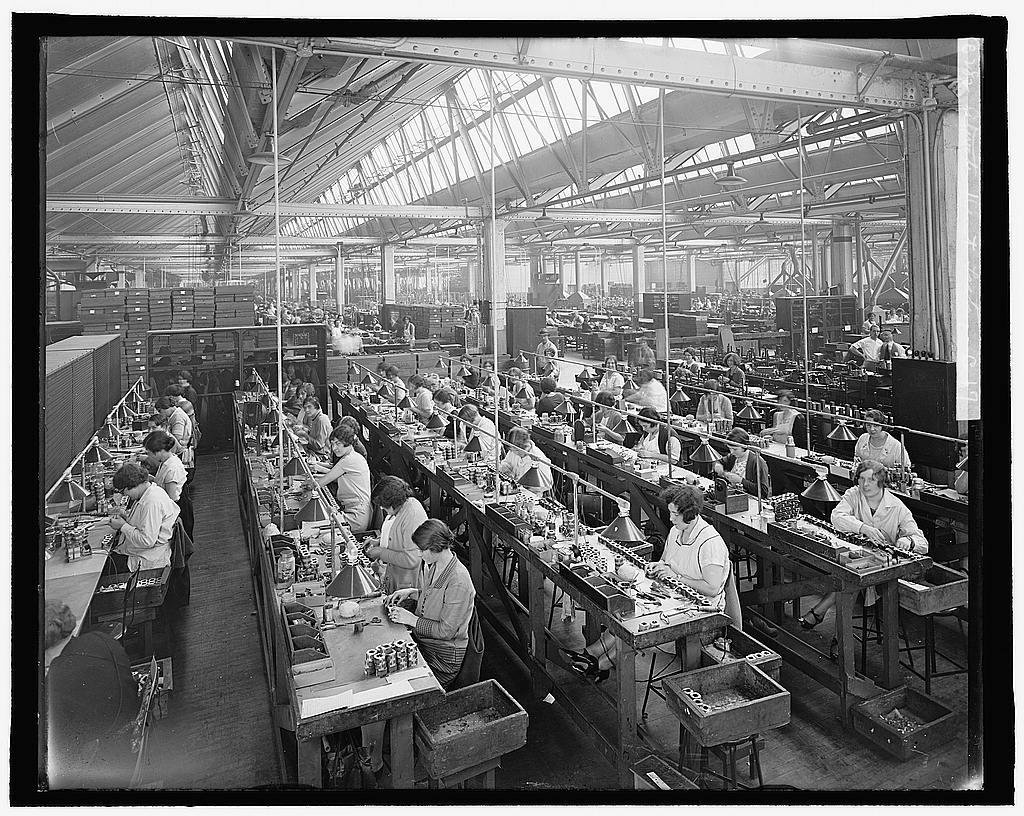
The plants used the Ballinger Company’s “Super-Span Saw-Tooth” roof system with triangular roof sections consisting of a steel truss, north-facing glazing panels, and south-facing reinforced gypsum roof panels. The long open spans eliminated as much as 94% of the usual column requirement allowing greater versatility. The roof system brought in abundant natural light believed to reduce eye strain for the hundreds of bench workers engaged in intricate assembly operations. Ballinger, a long-enduring Philadelphia firm, combined expertise in architecture and engineering.
By 1930 the company employed about 12,000 workers and produced more than 6,000 radios per day, totaling nearly 2.2 million units per year. According to TIME Magazine, “visitors were awed by Atwater Kent’s luxurious general offices, dumbfounded when they peeked through a special window to watch solid gold bars dissolving in acid to supply 14 carat plating for the Atwater Kent trademark” — a fully rigged sailing ship secured to the top or lid of all 1928-29 radio receivers.
After the rapid rise of the company there was an equally rapid fall during the years of the Depression. With competition from other radio manufacturers like Philadelphia based Philco, and despite an unsuccessful attempt to diversify by selling electric refrigerators, Kent was forced to cut his workforce. By 1936 the company had only 800 employees.
In the late spring of 1936, Kent bluntly informed union organizers that, rather than grant any of their demands, he would close the plant and sell the business. He refused the pleas of his top people to let them take over the business. With his personal fortune still intact, Kent dissolved the corporation, and sold or auctioned off equipment.
For a while the North Plant was leased by Sears, Roebuck and Co. as a warehouse and distribution center. Subsequently, the North Plant came under federal ownership and found use by the Veterans Administration and National Archives. It was eventually demolished.
In October 1940 Bendix Aviation acquired the original South Plant for an estimated investment of $3,500,000 to manufacture parts for warplanes. These buildings have been converted as noted above, and are also used as storage for Philadelphia’s voting machines.
While Atwater Kent’s business met a sad end, he had a great impact on Philadelphia while helping to further the spread of radio. He died in California in 1949 at age 75.
Do you have questions about East Falls history, or want to know more? See our growing website at www.eastfallshistoricalsociety.org or contact us at eastfallshistory@gmail.com. We would like to hear from readers who had a family member who worked for one of the Hunting Park/Wissahickon industries. And join! You can do so on our website, eastfallshistoricalsociety.org.


