Angela Berry
East Falls Historical Society Oral History Interview
Interviewee: Angela Berry (AB)
Also Present: Andrea Daly (AD) – daughter
Interviewers: Wendy Moody (WM) and Mary Flournoy (MF)
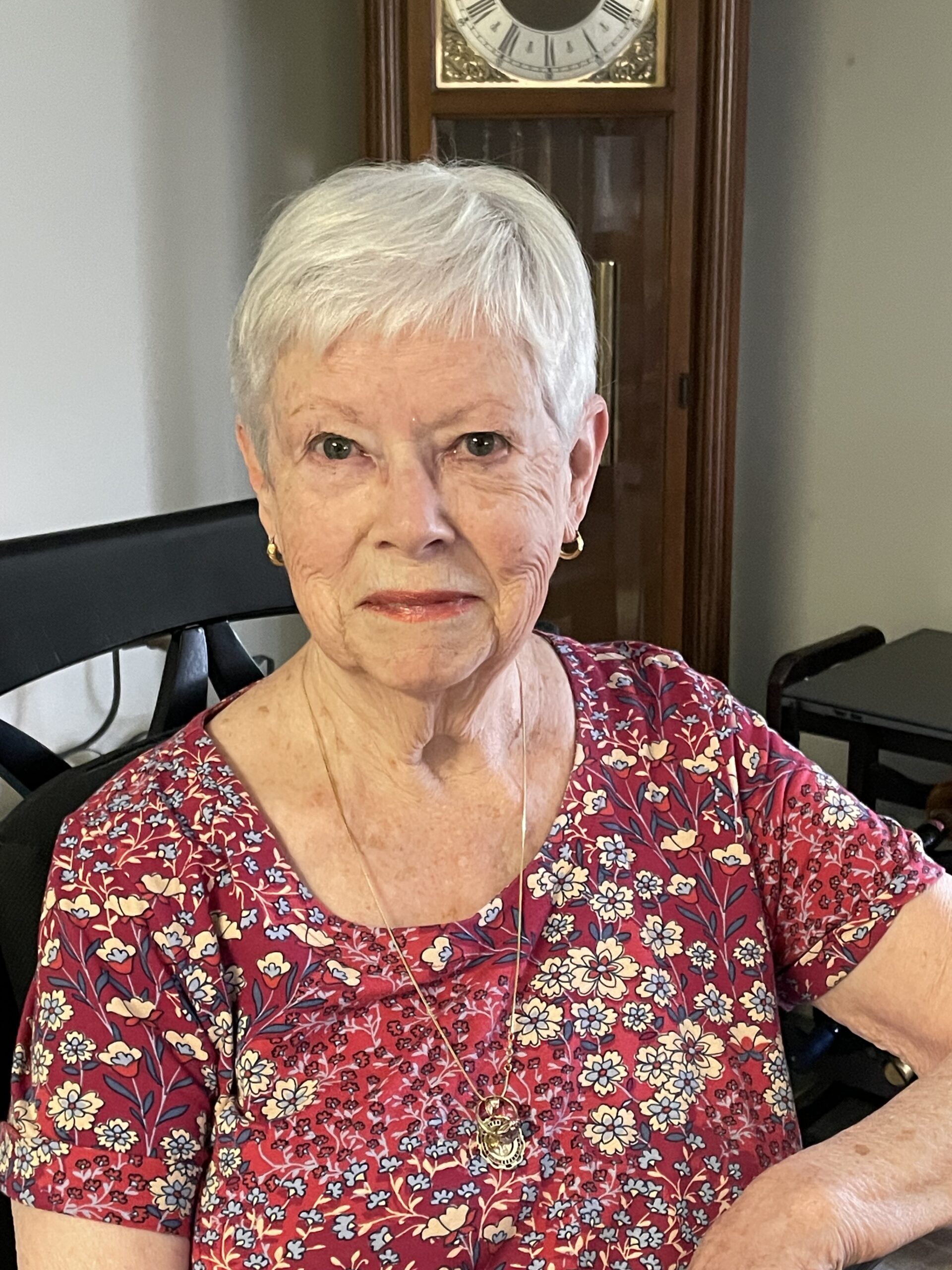
Interview: Nov. 21, 2025
Transcribed by: Wendy Moody, EFHS
WM: It’s November 21, 2025. Mary Flournoy and Wendy Moody, from the East Falls Historical Society, are in the home of Angela Berry in Plymouth Meeting, doing oral history. Good afternoon, Angela. Thank you for agreeing to this. We want to start right at the beginning – can you tell us where and when you were born?
AB: Well, I was actually born in East Falls at the old Medical College, but I lived in Abington, that was my father’s home, until 7th grade, when I moved to East Falls to live with my grandmother on Stanton Street.
WM: About what year was that?
AB: It would have been 1948. About that. Yeah, 47-48. It was 7-48.
WM: What’s your birthday?
AB: May 5th, 1936.
WM: 1936. May I ask what led you to live with your grandmother?
AB: My mom got sick. She needed help. And my dad wasn’t – I mean, he had a full-time job but he couldn’t be a caregiver, so we moved to be with my grandmother – my brother, and myself.
WM: What’s your brother’s name?
AB: Vincent.
WM: Vincent. Is he older or younger?
AB: He’s three years older. He’s deceased, of course.
WM: So you started in East Falls in what grade?
AB: Seventh grade. I went to St. Bridget’s.
WM: Okay. So can you tell us your impressions of Stanton Street? What was your house number?
AB: 3714. I’ll never forget it, 3714. We were the row that had front porches. All the other houses were straight right down to the sidewalks. Very few had porches – well, a few up further on the street did.
WM: So were you down near Ridge?
AB: Yes. That was the last row of houses before the Ridge.
WM: Can you tell us about the house itself?
AB: It was three stories. Big living room. You walked right in. Well, it had a little hallway, but over the years, that was taken down to open up the living room to walk right into the living room. Nice, good sized dining room, kitchen. Three bedrooms and one bathroom on the second floor. And there was – we used to call it the “little room” because when the houses were built, they were built with a bathroom, which was just a bathroom with a bathtub. There were no toilets. It was just a bathroom. And it was one big room. It was the width of the house.
WM: What floor was that on?
AB: Second floor.
WM: What year was the house built?
AB: 1900, no, 1889.
AD: Well, the purchase was in 1903, so somewhere around the turn of the century.
WM: Was there an outhouse originally?
AB: Yes, they had the one on the back porch.
WM: Was there a third floor or a basement?
AB: A basement, yes, and a third floor. There were 2 bedrooms on the third floor, 3 bedrooms on the second. Well, like I said, it was this big bathroom that over the years was divided to a small bedroom and then the small bathroom. And at that point, that’s when the indoor toilet was installed. Big deal!
WM: So that was long before you got there?
AB: No, that was, I was, no, wait a minute…
WM: But when you first got there, was there an outhouse?
AB: Yes. Oh, yeah. I don’t ever remember using it because we were just visitors in and out, but people did. My grandfather never used the indoor bathroom, ever.
WM: But when you moved there in 1947, it already had all the indoor plumbing?
AB: It did. Oh, yes.
WM: Do you remember who your neighbors were?
AB: Mawhinneys were next door on the one side, and Parks, he was the huckster. He was ”Yo Parks”! He’d have the old truck with all the fruit and vegetables. He was all over the neighborhood.
WM: And the other was Winnie?
AB: Mawhinney, M-A-W-H-I-N-N-E-Y. They actually owned the Tavern House on Montgomery Avenue. Oh, yeah, I didn’t know; I only found out that… I knew he had an old Model T Ford that he parked on the street, because very few people had cars in those days. So he had this Model T, and he drove that over to the Main Line every day – not every day, but when he went to work. Who does that? He used to go out and crank it up. We used to help him crank it up. (laughter)
WM: Tell us about your grandparents. What were their names? Were these paternal or maternal?
AB: Maternal.
WM: Maternal. And what were their names?
AB: Well, Patrick McGeough was my grandfather, and Kate O’Dowd McGeough is my grandmother.
WM: How do you spell the last name?
AB: O’Dowd? O– apostrophe D-O-W-D. But McGeough was my grandfather’s last name. And we always thought he was a Scot, but he was actually born in North Ireland. And then, as a young man, because there was no work, his whole family moved to England – no, Scotland. So we always thought he was a Scot, but he was Irish.
WM: And came to America when?
AB: Five brothers. Wow. When did they come? They didn’t all come together, did they?
AD: Between the 1870s and 1880s. There was a wave of them that came, and then continued after that.
WM: So when he came to East Falls, do you know what kind of work he did?
AB: He was a designer – a fabric designer. In those days, they had linoleum, like sheets of flooring. And he was a pattern designer.
WM: Did he learn that skill in Ireland?
AB: I have no idea, actually. I don’t know, but he was in demand. He worked at a lot of the mills in Manayunk doing their designs.
WM: Do you know the names of the mills?
AB: Oh, no, but they were up and down. Oh, man, all you had to do was drive down to Main Street – there were mills everywhere. You could smell them! That was the thing, yeah.
WM: What an interesting career that is.
AB: And then up where the East Falls Projects used to be, was Merck. And they, oh my God, we used to say “They’re cooking up a batch today!” The smell was unbelievable. Whatever they were cooking.
WM: Was it like sulfur smell or what?
AB: Yeah, it was pungent. It would just permeate the whole neighborhood.
WM: So back then, was it Powers and Weightman or was it already Merck?
AB: Merck. Yeah, I think it was Merck. Yeah, I don’t remember that other name. Yeah, Merck.
WM: And what about your grandmother? What was her name?
AB: Kate. She was 12. The story was an aunt had gone to Ireland to bring girls over to work as au pairs or whatever. She wasn’t an aunt. She was a paid person to do that. We found that out later. And Kate was 12 and they were happy to have her leave the family because her family was growing. Every year there was a baby. So anyway, Kate was 12 when she was brought over. She stayed, she worked for a family and was so homesick that when she saved up enough money, $13 it was, to go, for she was only a child – half-fare – she went home. And when she got home, of course, there was another baby, so she wasn’t really welcome. So whatever, I don’t know what time frame that was, but then she came back. So all total, she made five crossings!
WM: Oh my goodness.
AB: From the time she was 12, to when she married at age 20.
WM: Did she meet your grandfather in America?
AB: She did, yes. I’m not quite sure how that worked. They had socials. They had all kinds of gatherings – churches or groups would help people meet one another. You didn’t call somebody and ask for a date, you know. Mixers, they call them today.
WM: Did she work as well?
AB: My grandmother? Well, she did, yes.
AD: She worked at Dobson’s Mills. That’s where he was at the time. She worked in the drum room where they tumbled (note: a drying process). And the marriage license request lists that.
WM: So he was doing the textile design at Dobson?
AD: I believe so, at the time.
WM: How interesting. Did they ever tell you any stories of Dobson Mills?
AB: I don’t think so. I just remember the Dobson’s estate. They had a massive house – a big mansion, up where EPPI is. (note: Eastern Pennsylvania Psychiatric Institute, 3200 Henry Avenue). And we used to go up there. Well, by that time, it was derelict. It was empty. We used to go up there and play. Oh, my God. It’s a wonder we didn’t get arrested! Terrible, terrible, terrible.
WM: What do you remember about that property?
AB: It was just a big shell of a house and then, of course, that was torn down and that’s when EPPI was built.
MF: I thought the Dobson estate was across the street.
WM: There were two. Each brother had one – one was called Bella Vista and one was called Abbotsford.
AB: Abbotsford. Well, no, it would have been on the Medical College side before the expressway was put through.
WM: The one where Bessie Dobson lived?
AB: Bessie Dobson? Yeah, she would have lived in that area. Yeah, Bessie. Oh, Bessie Dobson. Jesus. God, the names. I had an Aunt Mary, and somebody said over the years that they could have been calling her Bessie all those years. And she said, “No, I’m never going to be called Bessie!” Apparently, that was a nickname for Mary.
WM: Oh, I didn’t know that. So tell me your memories of living on Stanton Street. You were about 12?
AB: I was 12. I had gone 7th grade at St. Bridget’s. I had a lot of friends. I mean, but all my friends lived over the railroad. (laughter) I didn’t have too many friends on the Stanton Street side. There were mostly old people. There weren’t a lot of young people. McManuses had young kids, but it was mostly older people. So most of my friends were up over the railroad. And I can remember going up the street and climbing over the wall and crossing the railroad tracks to save the steps going around, going up Skidoo Street. (laughter)
WM: Do you remember any of their names?
AB: Oh, well, hundreds of them. I mean, I had a lot of friends. Crowley’s, Daley’s.
WM: So I had heard stories that back then Stanton Street, or around there, there were divisions between where the Italians lived and where the Irish lived?
AB: Well, it wasn’t definitely designed that way. It just so happened that the Italian families seemed to be at the upper part of the street on the left-hand side, and the Irish were on the lower left. I don’t know. It wasn’t designed that way; it’s just had how it worked out.
WM: The Irish were closer to Ridge?
AB: Closer to Ridge, yeah.
WM: Did everyone get along?
AB: Oh, yeah, it was good. Yeah, we had good times. Then we had the main alley, which I guess you knew about the main alley.
WM: I’ve heard of that.
AB: Yeah, the main alley. It was an alley that went up, going up Stanton Street on the left-hand side, and you had to know which houses you could walk between, and then there was a little diversion, and then you could walk through to Calumet Street.
WM: Is that near where Caruso’s Market was on Calumet when you came through?
AB: It would empty out to where Caruso’s Market is today, or if it’s still here.
WM: Oh, interesting. Gosh. Somebody mentioned there was a little candy store on the top of Stanton called something like Mutta Josetta.
AB: Yeah. She was a tiny little Italian lady, this cute little thing, and she always kept the store dark. I don’t know if they had electric bills in those days (laughter) – I don’t know. But you could walk in, put your nickel or your penny on the counter, pick up your candy, and walk out. Yeah, she was a tiny little lady, yeah.
WM: Where did you play?
AB: Well, I didn’t play. I was serious. I mean, well, they had the Inn Yard, which was the lot across the street on Ridge Avenue. They called that the Inn Lot because, in fact, they used to have dinners there. I have a picture somewhere. There was a big building, and the Knights of Columbus – no, the Holy Name Society, used to have their breakfast there every year. I have a couple of pictures – I don’t know where they are; I’ll have to look.
WM: Were there any swings or anything?
AB: That came later. Yeah, it was a playground. You could go down and play. They used to have baseball, and, I think, they had basketball courts.
WM: Did you do jump rope or what did you do down there?
AB: I didn’t do any of that stuff. I did not. I didn’t do sports (laughter)
WM: Did you go to the Bathey?
AB: Oh yeah, the Bathey – the swimming.
WM: What were your memories of that?
AB: Just that you had certain days, girls’ days, boys’ days, hours. And then, if you were smart enough, you could – you were timed – you had maybe an hour or 45 minutes, whatever., and then if you kept your bathing suit on – well, you would go in with your bathing suit on so you didn’t waste time changing, and then you could go out the door and then back into the waiting room and then slip in for a second time.
WM: So you didn’t have to take a shower on the premises before you went? You could have your suit on and take your shower?
AB: They walked us through the shower before we went into the water.
WM: Any other memories there?
AB: It was always cold! Cold water! It wasn’t a big pool. In fact, the building might still be there. I think it turned into a little restaurant. Is it still a restaurant, or no?
MF: Yes, it’s still there. (Note: It is now Boutique River Falls on Ferry Road, between Kelly Drive and Ridge Avenue)
WM: So did you do other recreational things. Did you use the library?
AB: Oh, yes.
WM: Tell us your memories there.
AB: Well, I just spent a lot of time in the library. I wasn’t sports-interested. I didn’t do all the basketball stuff, so I did spend a lot of time in the library. I remember getting Gone with the Wind, the book, and my mom said “You can’t read that book – it was like this thick. But I said, “No, I want to read it.” Because at that time, at the Alden Theater, they had a showing of Gone with the Wind, and we all went to see it at the movies.
WM: Do you remember who was librarian? Anything about the staff?
AB: I don’t. I don’t remember, to tell you the truth. Oh yeah, wait. Well, there was one lady, a little lady, one of the librarians, and this was later on – this was when I was already married and living on Midvale. And I would walk across, go over to the library, and when she was finished with work, she would come out and wait for the bus at the corner, get on the bus and go. And on one of my days going across, there was a whole pile of books on the newspaper stand, where she must have put the books down to get her money, I suppose, to get her money out for the fare. And got on the bus and forgot the books. So I picked them up because I thought either it’s going to rain or somebody’s going to steal them. So the next day I went over. She was so panicked, I guess, when she got home.
WM: How nice of you.
AB: Well, I didn’t need them. I knew exactly what had happened.
WM: Do you remember when you walked into the library, if the children’s side was on the right or left?
AB: That I don’t remember. It was a good division. You pretty much had to stay in your niche.
WM: Did they have programs?
AB: Not that I remember. I remember Chief Halftown came one year and, boy, did they pack the library with kids!! It was on the first floor that you could go into – the meeting room.
WM: Who was that?
AB: He was a television star in the late 40s, 50s. It was a children’s show. And I don’t even know if he was a real Indian, but he was… Chief Halftown or something like that. (note: Chief Halftown, was a Native American entertainer who hosted a children’s show that aired on WFIL-TV (which became WPVI-TV in 1972) in Philadelphia from 1950 to 1999). (note: It is now 6 abc.)
AB: (to MF) Yeah, do you remember Chief Halftown?
MF: I’ve heard of him.
AB: And he had the big feathers and all that. He would do this (motions) (laughter) and they got him there!
WM: You mentioned the Alden Theater. Tell us what you remember about that.
AB: Well, that was the movie theater in the Falls, yeah. There were Saturday afternoon matinees, which were packed, and it was a free-for-all. I mean, nobody ever watched the movies. It was screaming, yelling, carrying on. A lot of bad things happened in those days. But it was fun, yeah, we had a lot of fun.
WM: Do you remember how much it cost?
AB: I think it was maybe a nickel or ten cents or something like that. I mean, we didn’t have a lot of pocket money. Kids didn’t have money.
WM: Can you describe it inside?
AB: The movie? Well, when you walked in, there was a big lobby across, and then the candy counter was that way, and the bathrooms were that way, and then, of course, the theater was forward. It’s a good size.
WM: Did you have regular seats that you always took?
AB: Not really. Well, pretty much, people, people go to church, everybody sits in the same pew. Yeah, pretty much. If you had a friend, you could sit with them or whatever.
WM: Were there people monitoring the kids? Any ushers or anything?
AB: Well, yeah, there were ushers and they were just as bad. (laughter) Yeah, they cheered us on. No, it was all good.
MF: Is this the theater where Vault and Vine is now?
WM: No, where the bank is.
AB: Yeah, just above the railroad station – railroad tracks, yeah. Goodness, goodness, goodness!
WM: Do you remember any other places you went to play as a kid? Did you ever go to Old Academy?
AB: I did not, and I don’t know why I didn’t do that.
WM: How about McMichael Park?
AB: McMichael. Well, there wasn’t anything in McMichael Park. The only thing I remember going to McMichael Park for was the big Fourth of July picnic every year. And the parade started at the top of Stanton Street with all the kids, and all the grades. And we had our little bucket. That was a thing, you had a bucket. I don’t know what the significance of the bucket was. It was a little bucket you carried. And then we paraded down Stanton Street and then up Midvale to the Park. And it was a huge family affair. I mean, people came from all over for the picnic.
WM: Did the parents march as well or just the children?
AB: No, just the kids. Pretty much the parents were up there, or not, whatever.
WM: Was there music in the parade?
AB: I don’t know, not in the parade, just noise.
WM: So what happened once you got to the park?
AB: Well, they’d have games. They’d have scheduled games for the kids. Food, of course. Just socializing, running around and stuff, you know, kids do.
AD: You’ve talked about going to Laurel Hill Cemetery with friends.
AB: Oh, yeah.
WM: Tell us about that.
AB: If we didn’t have anything to do, we walked down the river drive and climbed up the hill, which was dangerous, because if you lost your footing, you’d be down on the road. We’d climb up and then just go around looking at the headstones. We didn’t do any damage. It was just curiosity.
WM: Did you play hide and seek there?
AB: We may have. I don’t remember that. Possibly. But just an interesting thing.
MF: And was that the hill at Laurel Hill?
AB: Yes.
WM: At Hunting Park?
AB: Yes, but we would have climbed up off the Drive. Amazing, I know. It’s funny we didn’t get killed.
WM: Did you do many things that you wouldn’t want your parents or grandparents to know that you want to tell us?
MF: Or your children. (laughter)
AB: No, I was a pretty good kid, seriously.
WM: Did you ever get in trouble as a kid?
AB: I don’t think so. Not that I, or not that they knew of, anyway. No, I was pretty good.
WM: So do I gather that you were living with your grandparents, but your mother came to live there as well?
AB: Yes, my mom, because she was sick. She had – they used to call it a nervous breakdown. I don’t know what it really was, but anyway, she came and, at that point, my mom and dad were basically separated. So I didn’t really get to see my dad too much. He used to come, every once in a while, and bring us. He’d come down Stanton Street in his car, and he’d call. They had a phone. He’d call and he’d say, “I’m here.” And he would bring us stuff, you know, things.
WM: Did your mom work?
AB: Well, not then, but she did. She went to work with her older sister. They were the ones that worked at Taylor Davis, which is the house at Pencoyd, or the building.
WM: Oh, tell us about that. What did she do?
AB: Well, they were bookkeepers. My Aunt Loretta – she was 12 years old when she actually went to work. And she actually worked with Nelson Eddy, the singer.
WM: How did that come about?
AB: Well, whatever company she worked for, he worked there as well.
AD: It was the lawn mower company, the Philadelphia Lawn Mower Company.
AB: Yeah, you’re right.
WM: Where was that?
AD: Somewhere in North Philly.
AB: It was off Hunting Park Avenue. Yeah, but he worked there and she did too. Yeah, Nelson Eddy, my God. And then he went on – he was discovered – and he went on to Hollywood with Jeanette McDonald, and they made all those movies and all that. Yeah.
WM: You mentioned Caruso’s Market, and I wonder, do you remember what stores your family used or what stores you went into?
AB: Well, at the bottom of Stanton Street, we had the porch front. And at the last house, the lady had made a little store, Jean Hollowell, and she sold milk, bread, candy, just staples, that kind of stuff. So that’s basically where we shopped. And then we had Charlie Parks, who was the fruit and vegetable huckster, so he came to you – you didn’t have to shop. And there was an A&P market on the Ridge, but it was very small. The only thing I can remember ever buying there was coffee. And you had to grind your own coffee.
WM: Oh yes. Was that where the Chinese restaurant is? Where was the A&P?
AB: A&P was on Ridge. It would have faced the firehouse. Is the firehouse still there?
WM: Was there a hardware store in the Palestine Hall, the Masonic Hall? (note: the tall building at the corner of Ridge and Midvale Avenue)
AB: Yes. Oh, yeah, a big hardware store!
WM: Had you been in there?
AB: Oh, yeah, many times.
WM: Can you describe that?
AB: Well, it was a store, it had everything – toys, they had tools, and everything. Yeah. They were nice people.
WM: Did it have a sawdust floor? Somebody mentioned it did.
AB: I don’t remember that. It’s possible, but I don’t remember.
WM: So where would you go to buy clothes?
AB: Clothes. There was a store on the Ridge. It was Jewish. People said, “Don’t go in there. They’re Jewish.” I don’t know why. I don’t know why people thought that way. But there were three stores. It was one building, but three departments: the first was like men’s working clothes, and then the middle store was women’s clothes, and the third one was like children and toys.
WM: Do you remember the name?
AB: Heimlich.
MF: And where was this?
AB: It was at the bottom of Eveline and the Ridge.
WM: Opposite the fire station?
AB: Yes, opposite.
WM: And you would go in there to buy things?
AB: Oh, yeah.
WM: Do you remember a store called Len’s, where kids would buy sneakers?
AB: Yeah, that was up off Conrad Street at the railroad. And he sold, like, working clothes, kids’ clothes. And if you bought a new pair of sneakers there, when you took your old sneakers off, you threw them up over the wire.
WM: Did you buy things there?
AB: I don’t remember. Len’s was mostly boy’s stuff, men’s working clothes.
WM: What about restaurants? Did you ever eat out or were there any around?
AB: Well, Magill’s on Midvale was a fish house, basically. And they did have a restaurant you could go in, because I remember, they had a ladies’ entrance. So if you went to have dinner, like my grandpa, they’d have to go through the alley to the little restaurant in the back.
WM: Which side of Midvale? The side with the funeral home?
AB: Yes.
WM: Before you got up to the funeral home?
AB: Yeah. The first block there. Major Drug was the corner, and then, I think, Magill’s was the next building – the next door up. Yeah, Magill’s. They cooked fish cakes. Because on Friday, you couldn’t eat meat, so there was always a line of people going down to buy cooked fish for their dinner. ([Note: “Major’s” is still on the corner, but it is not a drug store.]
WM: Any other restaurants?
AB: No, not that I can ever think of.
WM: What about doctors – eye doctors or regular doctors? Where did you go?
AB: Well, Dr. Fiedler, well, he was later on, but Dr. Craig Walsh was like the main doctor. He lived up on Fisk Avenue with his family. In fact, he delivered my first two kids. Craig Walsh was a huge man. And the story with him was he was an Osteopath. And so a lot of people didn’t know – well, what was the difference? He was a doctor. But the hospital, every year they had a fair or something and they would have different chances. And two years in a row, he won the Cadillac!! How does that work?? (laughter) Well, two years in a row, he won the Cadillac, yeah. Oh, my! Whoa!
WM: Now, were there two Dr. Fiedlers? Which one was the pharmacist? The father or son?
AB: The father. And he had the store, which actually wound up in the Smithsonian.
WM: Really?
AB: Yes. It was a one-story – when you walked into the store, it had beautiful tile.
WM: Where was it?
AB: At the bottom of Stanton Street. And over the years – by that time he was dead, and Dr. Fiedler, the son, of course, had his practice up on Ainslie Street, and the mother had died, so there wasn’t really any connection. But the Smithsonian took it. They just, I honestly don’t know if they actually took the actual building, but they made a replica of it at the Smithsonian.
WM: How interesting.
AB: I don’t know if it’s still there.
WM: So the father was the pharmacist, and then the son was the medical doctor on Ainslie.
AB: Yes.
WM: Where on Ainslie?
AB: First row of houses up from the railroad – the 3500 block. Big three-story homes, yes.
MF: The stone houses.
AB: Yeah. And the Daleys lived there. There was a big space between the Fiedlers and the Daleys.
WM: Did you use him?
AB: Not at the time. I don’t think we ever had a doctor. I can’t even remember. It wasn’t until we had kids, and then Dr. Fielder took care of the kids.
WM: And how about Caruso’s Market? Can you describe that?
AB: I can’t remember.
WM: On Calumet?
AB: I honestly can’t remember. I remember going there to get candy, going from school. We had a break at school. I can’t remember that we shopped there, to tell you the truth.
WM: Was there a restaurant called the Anchorage?
AB: Well, it was a nightclub.
WM: Oh, a nightclub.
AB: Oh, yes, big time! On the drive – East River Drive. And they used to have parties, really good parties. And one year they had a hypnotist that came. And you remember Marie Kinsinger? She literally was hypnotized. (Note: East River Drive became Kelly Drive in the 1980s and a new apartment building was built on Ridge Ave. in 2025 and named The Anchorage}
WM: Oh, my.
AB: She was. And we kept thinking, “Oh, she’s making it up”. But she wasn’t.
WM: Is that Ellen Sheehan’s sister?
AB: Yeah.
WM: Wow. How far down was the Anchorage? Past Calumet?
AB: Yeah, going towards Lincoln Drive. It was a big rambling building – very dark, dark wood, dark stone. I was there, I mean, we did go there. Sometimes they’d have parties, like even when we were married, they would have different parties you could go to. But it was a club, basically, a membership type thing. I don’t think we were ever members, but if they had a party, you could go.
WM: Do you remember the Falls Tavern?
AB: Well, I remember seeing it. I don’t even think it was open in those days. It was an historic building. I don’t think it was actually in operation then. I have a picture of it.
WM: Great. You can show me later. So let’s go back to school – I want to hear about St. Bridget as a school, and also, your connection with the church. Let’s start with the school. When you began school there in 1947….
AB: Seventh grade, yes.
WM: You were still in the old school?
AB: Yes.
WM: Can you describe that?
AB: Well, I remember the bathrooms were in the basement, and because I lived down the street, if I had to go to the bathroom, I ran home. (laughter) I wasn’t going down to that bathroom!!
WM: And why was that? What was it like?
AB: It was not real clean and all that. They didn’t have good custodial care in those days. I would just run home. I mean, who knew the difference? I was in and out real quick.
WM: So if I walked into the old school, what would I see? How many stories? Tell us about it?
AB: It was three stories. The first floor was, I think, kindergarten, although they had to divide the kindergarten. They had to put some of the children in the basement of the convent. There were so many kids that they had to divide them up.
WM: Were you there in the convent?
AB: No. Well, I’ve been in the convent, but no, we had Sister St. Anthony, and she was this tiny little nun, and she was in charge of construction paper and school supplies! (laughter). Well, she couldn’t teach – she was too old, so they gave her this job. So if the nuns would send you over – “We need crayons or we need….” you’d go over with the list, and then she’d lock you in the closet! And then somebody would come and get you, of course, because you were missing.
WM: Was she being mischievous or what?
AB: No, she was senile. No, that’s not good – she was old.
WM: Who was your teacher in the old school?
AB: Well, her picture is in that book, Sister Alfreda. And then Helen Marie, eighth grade.
WM: How many kids were in your class?
AB: Well, 7th grade was loaded with kids, but by 8th grade, we were in the new building, so there was more space, even though they still used the old building because of the overflow. But 8th grade, 7th grade – I think down to 5th grade, maybe managed to get space in the new building. The rest got stuck in the old building until there was room.
WM: What was a typical day when you went to school?
AB: Prayers. You’d say your prayers. I remember going up those old iron stairs behind the rectory. Do you remember that? I was scared to death.
WM: Outdoor stairs?
AB: Yes. Terrifying. We had to line up on Midvale – the grades – in front of where the rectory is. And then you’d walk down the pathway and then up these iron steps to the school. I used to hate going up there. I mean.
WM: Frightening?
AB: It was. They were high steps. Was there a landing? I forget. There was a little bit of a landing.
They were metal, but you could see through them.
WM: Did you have recess? Do you remember what you did?
AB: I don’t remember even going out. I mainly stayed inside, and then the 8th grade boys used to come around and sell candy. I remember that – candy.
WM: Did you go home for lunch?
AB: I did.
WM: Do you remember moving into the new school? Was there a special ceremony? What do you remember about moving from one to the other?
AB: I remember going from the Mass and then walking up Midvale and then up all those steps to the, in fact, there’s a picture of Father Allen with the Brecht children. They were the first – they were tiny little kids at the time. They were probably kindergarten. Bill Brecht, do you remember him? Well, anyway, it would have been him and his sister. And then we went in and we got our assignments. And then somebody came and took pictures, and that’s how I wound up in the book, because the photographer came and did this.
WM: So what was the new school like?
AB: Well, it was all brand new, nice shiny tile, nice big bathrooms. The classrooms were big. It was beautiful.
MF: That’s the one that’s there now?
AB: That’s still there. And now they’re apartments? It’s amazing.
WM: Any special memories there or anything that happened that was exciting?
AB: Just normal school days. They used to have parties, and the grade school girls would serve the food and all that at the kitchen. They had nice kitchen. I guess it’s still there – well, maybe not. But there were certain ladies that cooked. There were the “cookers” and then we were the “servers” and it was fun.
WM: Did you take a class trip to Woodside Park?
AB: Oh, yes! Well, that was the school picnic every year. We went down Stanton Street from the top of the hill and we walked across over Chamounix and then up into the back.
WM: Over the Falls Bridge?
AB: Oh, yeah. And then there was a tunnel that went – I think the park guards used to do it on purpose – they were mounted in those days. And there was a stream of kids going through this tunnel and he would come through with the horse. And we’d be screaming – it was only wide enough for one.
WM: Screaming with fear or excitement?
AB: Fear, because of the horse! Who wants to face to face with a horse, for God’s sake?? And then you’d get over, and then you’d have to climb up the hill. Oh my God. By the time you got to the park, you’d be filthy. Yeah, seriously, because some days it was muddy, some days it was just dirt. And then Crystal Pool was there. And so mostly you went to Crystal Pool first, and you had to swim or whatever you wanted to do, and then you went to Woodside Park for the amusements.
WM: Did you have a favorite ride?
AB: I don’t remember so much. Carousels were always a big thing. They had the – what was the name of the roller coaster? The Wildcat! And that was like the biggest thing. That was for very few kids.
WM: Were you brave enough to do that?
AB: I don’t think I ever went on the Wildcat. And then there was a smaller one – I forget what that was called – The Alps!
WM: Oh, very good, Angie! And any special foods that you’d eat there?
AB: No, because I think we brought our own food. Yeah, we had picnics. We brought our own lunch.
WM: So during this time, you were a parishioner at St. Bridget Church?
AB: Right. Yes.
WM: Who was the Father, the Pastor?
AB: Well, Father Allen, and I think that’s his picture in the book. Yeah, I think he was the Pastor at the time.
WM: Can you talk about your experience at the church? As a kid and maybe later on too.
AB: I don’t know. I always wanted to be in the choir. I loved to sing, and my mother, for some reason or other, decided that my voice was not good and I shouldn’t be singing in the choir. So she would not let me be in the choir. So of course, when I got to Ravenhill, the first thing I did was sign up for the Glee Club, because I love to sing. And she was okay with that. But all my friends – they did the choir. And a lot of those girls lived in Abbotsford Project, well, I should say Abbotsford Homes. And they would have their practice, and then they’d have to go all the way from the church back to Abbotsford for their lunch and then back to school.
WM: Oh my goodness.
AB: I know, it was tough, really.
WM: Were you active at all at the church?
AB: Well, just Sunday church, whatever. There wasn’t a lot of stuff for kids in those days.
WM: What changes did you see in the church over the years?
AB: Attendance.
WM: Less?
AB: Less, yeah. Well, it varied. It varied. If you liked the priests and the sermons were good, people.
would go.
WM: Who were the different priests that you remember and your impressions of them?
AB: Father Cottrell, I do remember him, and Father Duddy. And Father Cartin. Father Duddy.Oh yeah, Father Cartin. Yes. He was president at Roman Catholic High School. He was tough. He was tough – you know, he had the boys to worry about, so he transferred that over to the people. And a lot of people didn’t like him. He was very strict with everything. But he was, I mean, a priest and that was what they did.
WM: Was one of them particularly good at giving sermons?
AB: I can’t remember that.
WM: Do you remember when Vatican II came in, if that had any, it was no longer in Latin, and how did those changes affect you?
AB: Well, the biggest thing I remember was the priest faced the altar during the Mass. Vatican II, however, changed that where the priest faced the congregation, which was a nice thing. And Masses were different. I just went. I mean, you didn’t have a choice of going to Mass. Yeah, right.
WM: So it was mostly a positive experience?
AB: Yeah, it’s all good, yeah.
WM: I want to ask you, did you go do the May Procession?
AB: They had big May Processions. And there was a Blessed Mother statue up on the hill in front of the convent.
MF: It’s still there.
AB: Is it still there? And the May Queen was selected. God knows how we selected the May Queen, but she was the one who crowned the Blessed Mother.
WM: And you went from there to Ravenhill?
AB: Mm-hmm. Ravenhill.
WM: We’d love to hear about Ravenhill.
AB: Ravenhill was the best experience I ever had, really. Yeah, I loved it.
WM: Why was that?
AB: Well, the nuns were so different. They weren’t like St. Joe nuns.
WM: Now, what year are we talking about?
AB: ’50 or so, 1949 to ’54?
WM: Okay. Was it just in the one old building?
AB: No, there was a new building. It was called Milleret Hall (Note: Now it is Partridge Hall). Milleret was the name of the nun’s family that was made in her honor. But we had classes in the mansion at the old house, which is really nice.
WM: Can you describe Ravenhill?
AB: Well, it’s still there. I mean, have you ever been in it?
WM: I’ve been in it.
AB: It’s beautiful. And the main stairway was beautifully carved, and the seniors were the only ones who were allowed to use the stairway. We had to use the back stairway to go up.
WM: And a different fireplace in every room?
AB: Yes, probably. Well, that was their main source of heating, I guess, in the days that it was built, so probably, yeah.
WM: And when you went there, were there fires?
AB: No, they had central heating. It was totally modernized, yeah.
WM: Tell us your experiences there.
AB: Well, I loved every bit of it. Most of my friends were made through Ravenhill. They’re all gone now, unfortunately. But it was fun. We had small classes. We had a lot of Spanish – we used to call them The Spanish Girls. Well, they weren’t all Spanish. Some of them were from other South American countries. There was one family, Romeros, they had, oh my God, they had a slew of kids, but they were very well off – they had oil. They lived in Maracaibo in Venezuela, and they had oil wells, so they were famously rich. They just had money. But, in those days, you couldn’t bring currency in and out of the countries. So when the mom and the dad – I don’t know, but the dad probably wore a watch – when the mom would come, she would wear fur coats and jewelry and whatever she could put on her body to come in, and then they would sell that when they got here.
WM: Interesting.
AB: It wasn’t that they didn’t have the money, they just couldn’t bring it.
WM: Right. Who was in charge of Ravenhill then?
AB: Well, the Assumption Nuns.
WM: Was there a certain “head nun” – like the principal?
AB: The Reverend Mother, yeah, the Reverend Mother. She was a tough cookie. What was her name? Francoise Joseph, I think. Freshman year, we had a lay teacher, Miss Scarpello, Rachel Scarpello. And by the time we were seniors, she had entered the order. She became a nun.
MF: Interesting.
AB: She made a lot of major changes because she, as a lay teacher, knew what was needed. She sort of brought Ravenhill into the future pretty much.
MF: So the changes were for the best?
AB: Absolutely.
WM: Do you remember any of them?
AB: Well, just not really. I mean, curriculum – I guess maybe they made some changes to that. I don’t remember. We spent a lot of time in the kitchen making cookies.
WM: Did you have a dress code?
AB: Yes. my God, Whalen and Whalen. And they were wool, oh my God, wool skirts, navy blue skirts, and a pale blue blouse, and then the blazer. And then we weren’t allowed to wear the blazers in class. They were reserved for First Fridays only, or if the Cardinal came, you could wear your blazer. Other than that, you wore a Navy blue sweater.
WM: Did the altar boys from St. Bridget come over to give communion?
AB: They did, and Pat (Angela’s son Patrick Berry) was one of them. Dad used to get up and drive them. What was it, 5 o’clock, 6 o’clock? Oh my God. And the Priest, what was his name? Oh my God. We used to call Speedy, something, we used to call him Speedy, whatever his name, I can’t remember. But he used to do – he was a teacher, so he didn’t mind doing the first Mass at Ravenhill. And then you’d get over there with the older boys, and the Mass would be over! He’d be 5 minutes, 10 minutes through the Mass, and he’d be gone, because he had to go teach. And then you’d be, and then they used to give the altar boys, we used to call it a “Assumption tarts” – it was a little pie crust with jellies on it and a glass of milk, I guess, or something.
MF: I think that Rosemarie DiStefano said that Tony was part of that group that came up.
AB: Who was that?
MF: Tony DiStefano.
AB: Oh, okay, yeah.
WM: Do you have stories about your grandparents?
AB: Well, my grandmother used to cook lunch for my grandfather. It was like a fish chowder – some kind of a fish soup. And then he would go – he would totter off down to the bar for the rest of the afternoon. (laughter)
WM: And where was the bar?
AB: Well, one of the bars down, Ridge I don’t know which one he went to, but he had friends, you know, and then my grandmother – I shouldn’t say she never went out, but they said that my grandparents used to go down to the bar. You had to go through the ladies’ entrance down the alley, and then they’d have a little drink or maybe lunch. I don’t know. They had food in those days. But, yeah, they got out. She used to wear those big hats. They were like Halloween. It would be a Halloween type hat now, but it was the style in those days. Those great big hats, yeah.
WM: Any other memories from your grandparents or their siblings?
AB: Well, my grandfather died, I think I was nine when he died. And the day he was buried was the day of the Confirmation at Immaculate Conception, which was in Jenkintown – that was my parish then. So the big decision was what, well, he was still alive when they were trying to figure, where is she going to be confirmed? Are we going to be able to get her up to the church? So they had made a tentative arrangement, which was really nice, with St. Bridget’s, that if my grandfather was still alive, that I could be confirmed at St. Bridget’s. As it turned out, he died, and then the funeral was the day of the confirmation at Jenkintown, so that I was able to go up there to be confirmed with my friends, which was nice.
WM: Let’s go back to Ravenhill. So you graduated in 1954? What happened then?
AB: I went to work. I went to Penn Reel, Penn Fishing Reel. (note: Otto Henze founded the Penn Fishing Tackle Manufacturing Company in Philadelphia (“Penn Fishing Reels”) in 1932 with a vision to create durable fishing reels that could withstand the rigors of saltwater fishing. By focusing on innovation and quality, Penn gained a reputation for producing top-notch reels, favored by anglers around the world.)
WM: You were at Penn Reel?!
AB: Of course, that’s where I met my husband. (Note: Penn Reel is still located at 3028 W. Hunting Park Ave.)
MF: Did the Henzes own it then?
AB: Oh, yeah.
WM: What did you do there?
AB: I was just in the office, you know.
WM: What did you do?
AB: God, whatever they asked me, I didn’t do much. I mean, we sort of played (laughter) There was another girl – I didn’t know her at the time – she had gone to Hallahan, I guess. So we sort of matched up and we just hung out.
WM: What was her name?
AB: I don’t remember. Oh, I do! Her last name was Lorenze, but I can’t remember her first name.
WM: So you were the office staff? You’d answer the phone?
AB: Oh, yeah. Open the mail. Oh, the stacks of mail! Most of it was advertising, selling related products, like fishing reels and fishing men’s clothing. We just – they said, “Don’t even open it, just trash it.” So then you would open letters – bills or whatever, and you’d stack them up, and then you’d divide them for whoever was going to take care of it.
WM: I’m really interested in this, Angie. Can you describe what it was like inside that building – the manufacturing part?
AB: Well, was it a three-story? I can’t remember. It was a three-story building.
WM: This was on Hunting Park?
AB: Yeah, Hunting Park. Allegheny? It was at the triangle – there were like five streets getting together. Yeah. So it was a three-story building. I’m just trying to think. I do remember there was a big area on the first floor where they made repairs. People would come – like if you had a fishing reel, that was yours. I mean, it was your possession and it had to be fixed if it was broken. There were constant repairs coming in. And that was a huge part of their business. Yeah, repairs.
WM: Was Herb Henze’s father in charge of it?
AB: Well, the mom was the brains of the business. okay. And she married Mr. Egly and he was not well-liked.
WM: What about him?
AB: I think he just took over. I don’t know what his problem was, but (to her daughter, AD) do you remember Mr. Egly?
AD: I don’t know Mr. Egly. I remember, I can’t think of her first name, but Mrs. Egly, because she was still there when I worked there.
AB: Well, she was widowed.
WM: I know Herb Henze’s father died young. (Note: Otto Henze died in 1948)
AB: So then when she married Mr. Egly, he pretty much kind of took over things. I don’t know what she did she do with him – did she divorce him? I don’t know.
WM: And then at some point, Herb took over from him?
AB: Well, there were two boys – Herb and Walter. Walter was the older – was he the oldest?
AD: I’m not sure.
AB: He was so shy – a big, tall, gangly kid. and he would come into the office and if he had a message for somebody, he wouldn’t face you. He would turn away – I don’t know if it was maybe Egly’s influence on him. He was just shy, big, tall kid. Nice boy.
WM: So was there manufacturing going on in the building?
AB: Oh, big time.
MF: How many people worked there?
AB: Hundreds. Hundreds, easily. Really. And then later on, they moved the plant out to Lansdale. The business was just flourishing. There was so much business! And then over the years, they phased out the Hunting Park.
AD: No, it’s still there. They ran two operations.
WM: Did they have competitors? Or were they so successful because they were the only one?
AB: I’m sure there were. I know there was a big company in Hawaii, because they went there – I mean, who goes to Hawaii in those days? You had to go by ship. So they did have competitors there.
AD: I think their skill was their technology.
WM: In making the reels?
AD: In the reels, yes. So I think that’s why they did so well.
WM: Were there many women employed?
AB: (to daughter) When you were there, yes.
WM: You worked there too?
AD: I did.
AB: Ask her some questions!! (laughter) Yes, there would have been women working.
WM: So was it an assembly line?
AD: It was a manufacturing production line, yeah. Production line punch presses. They had individual things. They tooled – tool and die. They created all of this – the dies that they needed for. a new part, they did it all in-house.
WM: Were there ever any labor issues, any strikes?
AB: Well, as far as unions, I don’t think there were any, when I was there, never, I’m sure it may have over the years, but it was a family-owned business. They took care of their own – seriously. I mean, it was a good company. It was a good family, except for Mr. Egly.
WM: Was there any interaction between Penn Reels and the other industries there, like Pep Boys or Tastykake? Did you have any connections?
AB: Well, no. First day on the job, me and this other girl – we both started the same day – went to Tasty Kake for lunch. And they said, “This is a one-time only thing.” No, not Tastykake – what was the lunch place? Anyway, it was a chain restaurant down on Hunting Park, and they said, “First time only because you’re new, but it’s not happening anymore.”
MF: Was it Hot Shoppes?
AB: Hot Shoppes! Okay. Yeah, Hot Shoppes. You’re good. We used to go, later, when we’d go in our car – if you were lucky enough to have a car – and they’d bring the food out and hang it on the side of your door.
WM: How long did you work there?
AB: At Penn Reel? Not long. I went there after high school. In the meantime, I had already put some applications out. I had put an application at Bell Telephone – everybody went to Bell Telephone. It was like your first job. I got the call in October that there was an opening – did I want it? I said, “Yes.” So that’s how I started with Bell Telephone. So Penn Reel and then Bell Telephone.
MF: But you met Bill at Penn Reel.
WM: What was Bill doing at Penn Reel?
AB: Bill worked in, – he was basically in repairs and, well, they actually were building their own reels pretty much. He did a lot of that.
WM: And when did you get married?
AB: 1956.
WM: At St. Bridget?
AB: At Bridget’s, yes.
WM: Tell us about the places you lived in East Falls.
AB: Well, when we were first married, we had an apartment there on Indian Queen Lane at Henry – there was a row of brick duplexes, so we had an apartment on the 1st floor there.
WM: Do you know the address?
AB: It was 3307, I think it was. So we lived there until we bought our first house – our first house being on Midvale, 3452 Midvale.
AD: Do you remember the rent that you paid on Indian Queen?
AB: Well, we had a mortgage.
AD: No, on Indian Queen, what did you and dad pay when you first rented? Do you remember?
AB: Well, they wanted $80 a month. They were the sweetest people – Thompson was their name. And the lady said, “Well, if we take a dollar off, would that help?” “Yes!” So we settled for $79 a month. And it came with the garage!
AD: You had to pay $2 for the garage.
AB: Oh, we did. Okay. $2 extra for the garage.
WM: Was that near McDermott’s?
AB: Well, no, McDermott’s was actually on Conrad Street. The drugstore was at the bottom of Indian Queen Lane and Vaux.
WM: I’m thinking of Buchanan’s. Was that there?
AB: Buchanan’s, yeah! Buchanan’s – that was the drugstore.
WM: So you were 3452 Midvale?
AB: Yes, that was the first house we bought. Across the street from the studio homes.
WM: And how long were you there?
AB: (to daughter) You were born there, so we moved out when you were about 8 months old. About 1962. We bought a home out over in – well, depending on what side of the street you lived on – we were either in Wynnewood or Overbrook. I used to say Overbrook, but it was really Wynnewood. My brother had a home a couple blocks down, and he had told us about this home that had come up for sale – “Did we want to look at it?” So dad went out. It was a Sunday morning. He went out and he looked at it. It was a big stone, beautiful home. And he came back and said, “We’re buying that house.” I said, “Okay.”
WM: So you moved out there?
AB: Yeah.
WM: How long were you there?
AB: Not too long. I hated it out there! Absolutely hated it! It was just awful. I mean, the people were nice, but it just wasn’t my neighborhood. You know what I mean? You grow up in a neighborhood and that’s your roots. I couldn’t wait. And then when I called Harry Robinhold – he was the realtor in those days – I called Harry and I said, “I want the first house that comes up for sale on Penn Street.” Because there were big houses on Penn Street. Well, guess what? The first house that came up for sale was the smallest house on Penn Street!
WM: What was that address?
AD: 3111.
AB: Oh, yes, 3111 Penn, yeah. So he called and said ”I have a house for you.” I said, “Okay, Harry.” So we went over and I said, “This is not what I wanted.”
WM: Moving from the big house to that one.
AB: He said, “It’s not going to last too long”. I said, “Okay.” So we bought it, and we were happy there. I loved that house.
AD: Go back to your Midvale Avenue house. When you and dad bought it, that was the first time you were getting a mortgage.
AB: Oh, right. Well, Land Title, whatever, was a company in the big building there in Germantown. And we had to go there for the settlement. And Harry wrote and told us how much to bring. We were getting a mortgage. He said to just bring – I think he said bring $100 – whatever, and he said you’ll go home with change. So we didn’t have a lot of money in those days, and we didn’t have checking accounts. But anyway, we rounded up $100, and we go to settlement, and I forget what happened at settlement, but all of a sudden, we owed more! And the bank was still open. We were upstairs in this building, and the Pennsylvania company was on the 1st floor, so I remember going down and just cleaning out our savings account – whatever was left. I think we owed $90 or something, and then we paid it. It was awful.
WM: Yeah, gosh. And then did you go from Penn Street to Coulter?
AB: Penn to Coulter, yes.
WM: So tell us how that came about.
AB: You mean the big house? Yeah. Well, the Lawntons had bought the Kelly house, Tom and – what was her name – Janet! And he was a stockbroker, but he wasn’t a successful stockbroker. I won’t go there.
MF: So you did not buy it from the Kellys?
AB: No. And he (Mr. Lawton) needed cash, so what we did was, at that time, that’s when we bought the tennis courts. And that was the footprint of the house.
WM: So when they lived there, the tennis court was still there.
AB: Yes.
WM: And they were selling off the tennis court?
AB: Yeah. And we bought the tennis court, and that was where we built the house.
WM: Right. Can you describe it – I’ve never seen a picture of the tennis court – what that was like?
AB: Well, it was big, closed in – it had a big chain link fence around it. It was an open tennis court. The Kellys, the kids, I guess, played tennis there. I don’t remember any of that.
WM: Was it a grass court?
AD: No, it was a clay court. We do have pictures of it.
WM: Okay, so go ahead.
AB: Well, Lawntons, like I said, he was a stockbroker, but not a successful one, so they needed cash. And that was when he put the lot up for sale, and that’s how we wound up buying it.
MF: How did you know it was for sale?
WM: Was it advertised?
AB: Probably Joe Furlong. Joe was the local attorney. I mean, if you needed to know something, you’d just ask Joe. But no, I don’t know exactly how we found out about it, but it worked out. It was a beautiful purchase, actually.
WM: Do you remember what you paid for it?
AB: $12,000.
WM: Do you know how big the lot was?
AB: It was the size of the tennis court. There were actually three lots: The Kelly House here, tennis courts here, and then there was another narrower lot that was really not usable. It was too narrow to build on. I don’t think anybody ever bought that.
AD: It didn’t have a Henry or Coulter entrance. You could only enter it from Cedar Lane, the driveway.
MF: Today that’s part of the Kelly House, I think.
WM: So did you have to take down the tennis court? Was it still there when you bought it?
AD: Bulldozed, dug, and created a basement.
WM: How old were you then?
AD: I was probably 11.
WM: So you remember it.
AD: Oh, yeah.
AB: And the funny story was, word got out that there was going to be a dig, and people came from everywhere. They thought there was stuff buried there. No, nothing! People were lined up. We didn’t even know who they were, but they lined up by McMichael Park, waiting to see if anything was found. Nothing was found!
MF: You mean they hoped for something from Grace?
AB: Some artifacts or something. Yeah, of course. I know, it’s so funny. Rumors, yes.
MF: Do you remember when the Kelly House was built?
AB: No.
WM: Okay. I believe it was circa 1928. Do you have any memories of the Kelly house?
AB: We were in there a couple times. I always was amazed at their kitchen. You know, for such a beautiful home, the living rooms were beautiful, the bedrooms, but the kitchen was a disaster. They had one of these old stoves on legs, and one of the legs was broken. The oven was like this (gestures). Now who does that? And they had a maid, for God’s sakes. (laughter) I mean, would you fix it? Would you not think?
MF: Or put books under it!
AB: Well, maybe they did that too. I don’t know.
WM: So you didn’t really have any interactions with the Kellys because you were buying it from the Lawntons?
AB: Yeah, Mrs. Kelly had already moved out to Alden Park – I think she went to the Kenilworth. There were three buildings there. I think she went to the Kenilworth. I’m not sure about that, but I think so.
MF: So Lawnton was still living there?
AB: Yes. And then we bought, like I said, we bought from Lawnton. Yes. And then, God knows, where did they go? I think they split.
AD: I think they split too.
AB: Well, she had been married before and had a son. And I don’t think he had been married before. I think that was his first marriage.
MF: And did Bill (Berry) design the house himself? ( (Note: Mary lived at 3219 W. Coulter St. in the “Berry House” from 2006-2020 and Angie, Pat, and Andrea and other relatives came to visit her once.)
AB: Well, actually, no. Well, we partially added to it.
MF: I know he bought the bricks.
AB: We bought the plans from Scarborough Buildings. They were building big time in New Jersey, big housing developments up and down the coast. So they agreed to sell us the plans to a house. I forget how much we paid for the plan.
WM: If I can just interrupt, what was Bill doing at this point? He wasn’t still at Penn Reel?
AB: No, He was working for the City. He worked for Redevelopment Authority.
WM: So you bought the plans.
AB: I bought the plans for the house from Scarborough.
WM: Tell us about the bricks – so you did not use Kelly bricks?
AB: We did. Of course.
MF: Well, when you guys came to visit, you brought the original invoice, and it was not Kelly for Bricks.
AB: Okay. Well, I don’t remember then.
MF: No. When our house was on the house tour, I included the fact that the house was built in 1972 on the site of the tennis courts. I said ”The original blueprints and the bill for 10,000 bricks was $784.40 and will be on display.”
AB: Well, I remember going down to Center City, downtown, I should say, and there was a company there that sold building materials. It was just their office, basically. I remember going down and choosing the bricks. And Dad said “Make sure you get some blues in there.” So it was a mix of the reds and the blues. It was a good combination.
WM: It wasn’t a traditional brick color. What did they call that color?
AB: I don’t know, but it was a beautiful mix. You’ve seen the house, yeah.
WM: Can you describe the house inside? How many floors and the features?
AB: Well, we walked in, there was a big entranceway, and there were two steps up into the living room. And then two steps up into the family room. And the family room opened up into this kitchen. And then the dining room was off the living room. And then we had a small powder room. And then a small room in the back. Did my dad live there for a bit on that first floor or something?
AD: Yes, and Gina, too.
AB: And my Aunt Regina, yeah. That was like a bedroom. And then it was close to the bathroom. and that was a struggle to get him to take a shower, push him on the stairs, because we didn’t have a shower (downstairs) – that was a powder room. Right. Older people didn’t take showers in those days. It was like a once in a lifetime.
WM: The second floor had how many bedrooms?
AB: The second floor, in the original house had, was it, 4 bedrooms? Four in the main area. And two bathrooms. And then, at the time when we bought the house, I remember saying to Dad, “What is all that space going to waste over the garage? Why don’t we use it?” And that was when we took that and we made more bedrooms.
MF: And did you put the kitchen yet in?
AB: We did. Later on, we did because we actually rented it out. We had a couple, were they nurses?
AD: Medical students.
AB: Medical students who lived there. And we thought it was nice. It was just a little kitchen. That way they didn’t have to come down and use our stuff.
MF: Right. Well, when I looked at the blueprints, I was struck by how many modern features you put in. First of all, the house is 3,382 square feet, including the au pair or in-law suite. You had a first floor laundry, right?
AB: We did, yes.
MF: The powder room. The room in the back, on the plans, was called the hobby room.
AB: Oh, yes, I remember.
MF: And the fact that the rec room was attached to the kitchen – today we’d call it a Great Room.
AB: Right, it was a great room.
MF: Yeah, that was wonderful. And then you had the attached greenhouse patio, right?
AB: Yes, it was an open brick patio. Bricks came from, God knows, somewhere in Society Hill. I won’t tell you where – pilfered from Society Hill! (laughter) Well, they were digging up Society Hill streets and then… my smart husband grabbed a couple bricks – we won’t go there!
MF: And there was even a water faucet in there for watering plants. And then on the second floor, according to the plans, the master bedroom, which was mine, was supposed to have a fireplace. But I’m glad it didn’t.
AB: We never did. No, we never did a fireplace.
MF: But it had an ensuite bathroom, as they call it today. And then…
AB: A big walk-in closet. Oh my God, that closet was wonderful – my favorite thing.
MF: The bathroom was not in the location that the plans had it. It was moved over, so it really overlooked the Kelly house.
AD: The front part, the part that faces Coulter, that whole front was supposed to be part of the master. That then became a larger bedroom, but there was intended to be like a sewing room there. And it was going to be a sewing room with a smaller bedroom behind.
MF: Okay.
AB: Skipping the sewing room, because I don’t think anybody sewed, made it one larger space. But that might have been where that bathroom was supposed to be then.
MF: OK. Well, in a few minutes, I’ll bring the blueprint out when we’re finished here – I’ll lay it out. And then the fact that the garage was two and 1/2 cars – pretty big for East Falls. And then were there three separate air conditioning systems?
AB: Yes. Three systems – 1st floor, main part of 2nd floor, and the area over the garage.
MF: That’s amazing, for 1972.
AB: Bill wasn’t trained as an engineer, but he just knew stuff. He knew how to figure things out and get it done. He was a good guy.
WM: Do you remember events in the park? You were right across from the park.
AB: Well, going back to grade school days, I remember the big picnics. But over the years, they didn’t do too much, did they, at the park?
AD: No. The first time they did the East Falls Flea Market or Festival….
AB: Oh, the Flea Market. That’s right.
AD: They mis-planned. They didn’t really – it wasn’t really anticipated to be a big, big deal, I don’t think. And I recall that they had some small cookers out, like for barbecuing and everything, but there was so much they couldn’t keep up with the demand, so my parents brought stuff into our kitchen and we were cooking up stuff! (laughter)
AB: And they were coming over for water! How does that work? We were helpful in those days.
MF: Now, you sold the house to the Dzijas, right?
WM: Oh, that’s right – Marcia Dzija.
AB: Right. They lived in Atlanta, Georgia, I think.
WM: What year did you sell it?
AD: 1990. No…I can’t remember.
AB: But anyway, the Dzijas – they were from Atlanta, and I believe he was a teacher, if I’m not mistaken, or some big deal. He had a job at Penn Charter. And that was when they came up, and when they found that the house was (for sale) – they only were there like 15 minutes. And she went down the basement, and our basement was huge. It was empty. It was nothing. We had no junk, no grill. We had a wine rack, but no crap in the basement. And when she saw the basement, she just flipped. And they bought it that day.
WM: When you lived on Coulter, were you still working? How many children did you have?
AB: Well, I wasn’t working at the time, and oh, boom, all of a sudden we had no money, literally. We seriously ran out of money, so that was I went back to work. I went to the bank, and I got a job, enough to pay groceries. Seriously, the grocery bill! Seriously.
WM: How many children do you have?
AB: Four. Yeah. Patrick, Cindy, Andrea, and Megan.
WM: Which bank?
AB: I worked for First Pennsylvania – it was First Pennsylvania at that time.
WM: And what made you decide to move? In what year did you do that?
AB: From Coulter? Where did we go from Coulter?
AD: You went to Lafayette Hill.
AB: Yes, we did.
AD: By then, my dad had cardiac issues, and they were the only two people left in the house. And just things were different.
AB: Right. And then we bought a townhouse, which was probably the worst thing we’d ever done because it was all steps. And he was…
WM: Oh, right. Again, what year are we talking about?
AB: About 1989.
AD: It would have been about 1989; it was before Owen was born.
AB: Okay. So we lived on Mitchell Court and realized it’s not a good fit – very lovely house, but there were steps, steps, steps everywhere. So at that point, we bought a ranch house, over in what they used to call Lafayette Hill, in Whitemarsh Township. Anyway, off the country club, that whole area – they were all built as ranch houses, but over the years, people had raised them and built up, or demolished and started fresh.
WM: And then you went from there to here?
AB: No. Hold on. Yes.
WM: What year did Bill die?
AB: He died in 2004.
WM: So was he at this location?
AB: No.
WM: You’ve done a great job, Angie. Can you tell us, are there any other memories from way back or anything about East Falls that you want to share? You mentioned that when you were in Overbrook, you missed East Falls because it was your neighborhood. Why was that? What about East Falls?
AB: Well, I guess it was just that, I mean, from the time my grandparents, East Falls was our home. And even though, I mean, we moved to Overbrook for a house. And that is not a good idea to do that, because even though we had nice neighbors and all that, it wasn’t…. my brother lived down the street, but his wife’s family was from there. They had roots, and that was his side. For us, we had no roots there. What are we doing here? We just had a house.
MF: Well, we’re glad you moved back to East Falls. (laughter)
AB: I love East Falls. I love East Falls.
WM: What do you love about it?
AB: Just the friendliness; the families. I mean, seriously, over the years, family connections were so important. I mean, people knew everybody’s business, which might have been good or not. I don’t know. But if you knew somebody was sick, I remember on Stanton Street, Anna Gear – she was a couple of doors down – Anna was a single lady and her sister had married and her husband had died young. Anyway, the two sisters lived together. And they basically – you could see them darting from one house to another all the time, taking care of people. And the old Doctor Fiedler – he would come to the drugstore at the corner, and he would have a list of anybody that needed to be seen. And he would go and do whatever he had to do. But mostly, home health care was not known. It was done by neighbors. Neighbors took care of neighbors. Yeah. Seriously.
WM: We had a friend that recently died that lived on Stanton named Gus Krebs. He lived with relatives. I can’t remember their name though. That’s not familiar to you?
AB: No, it isn’t.
WM: Okay. Anything else about East Falls that you want to tell us?
AB: Just that it’s still – it was a great neighborhood and it’s still a great neighborhood. I mean, people like to move to East Falls, but prices are astronomical now. It’s like, whoa!
WM: Are you still a member of St. Bridget?
AB: Oh, yes. Oh, no, St. Philips. I, well, I still, I go back to St. Bridget’s for different things, but St. Philip’s is my parish now.
MF: And that’s here?
AB: Well, it is and it isn’t. I’m really in Epiphany, but I hate to say it, I just don’t like Epiphany. I don’t know why, but St. Philip’s was my parish when I moved, so I’m sticking with St. Philip’s, and I like it.
MF: (to Andrea) Well, what were your memories growing up?
AD: Well, I guess where to start. I just remember East Falls, pretty much my entire education happened in East Falls. I went to almost every school and had kindergarten at Mifflin.
AB: Okay, that’s right!
WM: What year were you born, Andrea?
AD: I was born in 1961. Okay, so kindergarten was Mifflin. First grade, I went to Merion Mercy, second through 8th, I was at St. Bridget’s, 9th and 10th I was at Ravenhill and then Ravenhill closed, and the only time I left the neighborhood after that for school was two years at Hallahan, which I did not enjoy. And then I had four years at Textile. So my entire education really happened there!
WM: That’s amazing!
AB: It is amazing.
AD: And then I married somebody in East Falls.
AB: Yeah, how about that?
AD: Bought a house on Midvale Avenue. And pretty much, we left when it was closer to the time we were thinking about school for kids. And neither of us worked in the City at the time – my husband was in Jersey and I was in King of Prussia, and we were paying all the taxes. So we just left.
AB: I remember going over – they had a house across the street from McMichael Park, -I forget which child it was, but I had to go over to help. I think it was Stephen, and to get him out, we put him on a sled and pulled him down – not the driveway, but the bank.
AD: It was 3230 Midvale.
MF: Because before we moved to Coulter, we lived at 3240.
AB: Okay. Were you there when the Crowleys were there? Bill Crowley?
MF: We lived next to Jean Domanski.
AB: Okay.
AB: Okay.
MF: And then the lady who lived in the single house across the driveway from us, I can’t remember her name, but when she died…
AD: Oh, Gunther.
MF: Tina, Christina Bartuska moved in.
AB: Bartuska. Bartuska. Yeah, Dr. Bartuska. Yeah, of course, yeah.
AD: The woman’s name was Alice Gunther. Miss Gunther. She and her elderly sister had lived there. The home was built by her parents. They were the original family. The sister died, and then Miss Gunther, we always called her Miss Gunther, she used to go down to Center City one day a week. Cab would come pick her up.
MF: She’d get all dressed up, to go to Woolworths.
WM: What was the number of her house?
AD: We were 3230, so she was 3232.
MF: My house had a big driveway and we were a stone twin. This house is a single that faced the driveway. What I remember was we’d see her in her housecoat, and then, one day I was off and this cab came up, and I looked, and then she came out all dressed up with her hat and gloves. And I think she fell.
AD: She did. She slipped and fell outside of Woolworths. And she never came back to the house after that. We used to go to visit her.
MF: Oh, really?
AD: Yeah. We visited her when she was at a rehab location in Chestnut Hill. And then she moved to a nursing home. I don’t think she lived much longer after that. But we actually have some of her furniture. She allowed us – towards the end, she told her family that we were allowed to go in and choose something because we helped her out over time. Yeah.
AB: And what did you take?
AD: The bedroom set that was Nora’s, the big, heavy furniture. And I forget what else, but a couple things. And she was happy just to see them go to another family.
AB: And speaking of furniture, do you have both of those bureaus?
AD: Yes.
AB: My dad’s family had beautiful bureaus. And they were our furniture when we were kids. And they are beautiful. I mean, they’re big, they’re massive, they’re huge. And we didn’t have room for them, so Andrea was happy to, well, we were happy to have her take them.
WM: Can you tell us about the closing of Ravenhill?
AD: Oh, devastating. I honestly say those two years at Ravenhill were the best two years of my growing up time. And a part of me never got over the fact that Ravenhill closed. I was hurt for the longest time.
WM: Tell us why it closed and what your experience was.
AD: Well, it closed partly because the nuns kind of chose a different direction in their mission – instead of education, it became community service, which is lovely, except for the fact that it left behind an entire group of girls that were committed to the school. It was the best education I ever had. I always say I didn’t really learn anything until I got to Ravenhill, which is kind of insane. I always felt like I was being churned through.
AB: They also let you decide what you wanted to learn.
AD: We did what we wanted to do.
WM: So what year did it close?
AD: Well, let’s see. I graduated. St. Bridget’s in 1975. So ‘75-‘76 was freshman year,’76 -’77 was sophomore year. And it was such a gut punch to go start a new school. And I wound up going to Hallahan – I never wanted to go to Hallahan, that’s why I went to Ravenhill. I had a scholarship, earned it, and then of course that vaporized.
AB: And some of the girls, when Ravenhill closed, went off to Merion Mercy. And unfortunately, we did not have the money to spend on tuition, because we were not getting any scholarship money. So that was basically why Andrea had to go to Hallahan.
WM: So who was in charge of the school then?
AD: Ravenhill? I honestly can’t think of her name.
WM: Was there a ceremony at the end, or would you remember?
AB: Rachel Scarpella?They had a Mass.
AD: They would have had a Mass. But the girls who were juniors – when we learned in December of that year that the school was going to close, we knew seniors were going to be the last official class to graduate. The juniors, though, when they came back in January, they started like an accelerated program. Tina (Christina) would have been in that accelerated class, so that they ultimately were able to graduate at the end of the summer.
WM: In June of 1977?
AD: August. They went straight through from January to August and finished junior and senior year in that time. Yeah. But, you know, I’m glad I had the two years there, if that’s all I had. It was just fantastic. Absolutely fantastic.
MF: Speaking of Dr. Bartuska, I believe her brother lived on Stanton.
WM: He did. Right.
MF: The artist.
AB: Yes, he did. And his wife.
WM: Paul Gorka.
MF: He painted an absolutely incredible painting about Doris. It’s over at the college (Drexel Medical) on whatever street it is (Queen Lane). And it’s huge. And the two times I’ve seen it, I would just stand there and cry.
AB: He was amazing.
MF: It featured her in her medical clothes. in other clothes, her husband in his Navy uniform, all of the girls. It’s just incredible.
WM: She was in my tap dance class when she was quite old. I’d pick her up and we’d go to tap dancing.
AB: You’re talking about Doris? And you know what? When she was a medical student, even as a doctor, she wouldn’t even make $20 a week. The doctors were paid nothing in those days. I mean, that’s ridiculous – a full-fledged doctor. She didn’t do it for the money, that’s for sure. Yeah.
WM: Well, thank you very much, Angie. If you think of anything else. get in touch with us.
AB: I’m available. Ask me while you can. But I enjoyed this. Thank you.
Addendum #1:
WM: Do you have any memories of Gustine Lake?
AB: Yes, we used to go ice skating at Gustine Lake!
WM: Can you describe it?
AB: Well, it was huge, first of all. And it used to be a place where you went to swim, but they didn’t have enough lifeguards. The place was huge. I mean, it was a lake, basically. So they only had lifeguards at certain parts of the area where you could swim safely. And then in the winter, it would freeze over and you could ice skate. Yeah, Gustine Lake.
WM: Was it man-made? Did it have a cement bottom or a natural bottom?
AB: No, it was a man-made lake.
AD: You used to take the kids there from Ravenhill, too, in the summer camp.
AB: I was a camp counselor there.
AD: And you would bring the kids down too.
AB: Oh, I don’t remember that. I don’t remember bringing the kids down, to tell you the truth. Okay. It might have been, but I don’t remember that.
WM: Was it crowded with people ice skating?
AB: Oh, in the winter? Oh, yes, it was full of people.
Addendum #2:
WM: Okay, Andrea mentioned that you have some memories that your family told you about digging the basement for St. Bridget’s School?
AB: Well, yeah, I don’t remember it. I just remember talking about it. No, for the church (not the school). We’re talking about the church. Okay. So the men of the parish actually, after, and they worked all day, they worked long days in those times. They would go up after work, and they would dig the basement out.
WM: Gosh. Do you know what year we’re talking about?
AB: When was the church built?
WM: There was the old church on Stanton. Did you ever see that?
AB: Oh, yes. I saw that, of course.
WM: What was that like?
AB: Well, I don’t remember ever being in there, but I just remember it was there.
WM: Do you remember when they took it down?
AB: I don’t remember.
WM: So about what year would they be digging the basement for the new church?
AB: The new church? In the 20s? I don’t remember that, but I’m just saying, yeah, I just remember them talking about it, that the men would go to work during the day. They all had jobs, neighbors, or whatever they did, and then had come back for their evening meal and then go to work digging the foundation.
WM: Any other memory you want to tell us?
AB: Just that growing up on Stanton Street, living with my grandmother, it was all different. My Aunt Regina lived there. She never married. She was challenged. I don’t know how else to describe her. She never worked. My Aunt Lorette always worked. And then my mom, of course, she went up with a job with my Aunt Lorette. We had good years. We had some bad years. I absolutely even hate to say it, and Andrea may not know this, but my mom was an alcoholic. Seriously. And I can remember coming home from school, and we shared a bedroom. And she would hide the bottles in the closet. And I would be coming in after school, and I would, I had a line, I had a pencil or a marker, and I lined the bottle.
WM: Really? So you were aware?
AB: And I would empty the liquor to that line and then fill it up with water. So that way she was only getting half the liquor. Yeah.
WM: That’s a good daughter.
AB: Well, only because I didn’t sleep at night. She’d be up ranting and raving. She kept my brother awake. This was in all different years. Just awful. And then she’d get up in the morning and go to work. How does that work?
WM: Amazing. Yeah.
AB: You would do what you had to do. We didn’t have a choice. I mean, that’s where we lived. That’s what you had to do.
Addendum #3:
AB: (midsentence….) the old cook stoves, the old ones. And my Uncle Tom had died and my Aunt Aggie, she moved down to live with us on Stanton Street. And we’re all sitting around the kitchen table having their breakfast and these big guys come in. These two guys come in and they literally started taking the metal iron stove out of the kitchen! And we had soot everywhere! They’re pulling the stove! (laughter)
WM: You mean to install a new one?
AB: To take it away. Well, we already, Aggie had brought her own little gas stove with her. So we had that to cook with. So the other one was obsolete. It was huge! It was as big as that part of the countertop! Cast iron stove, and in those days, you could sell stuff.
WM: Do you remember when you lived there, was the outhouse, you had indoor plumbing, but was the outhouse still there?
AB: Yes.
WM: Until when?
AD: Probably until your grandfather died, because he refused to use the indoor plumbing.
AB: He didn’t use it, yeah. He died in 1948.
WM: Did a lot of the houses still have outhouses?
AB: I don’t know. If they did, they didn’t own up to it! (laughter)
AD: Because I think when the Water Department came through and did the street work, the deal was you had to get rid of the outhouses.
MF: You know, I just heard Kathy Petrone talking about the house they owned on Stanton. And they were someplace, she said, and they were looking at old houses. And she said to Joe, we have something like that in our house too. And then they looked up and saw how old it was.
WM: She said her house was haunted, her house on Stanton Street.
Addendum #4
AB: Just quickly, when my grandfather died, they took him to where they did what they had to do. And then he brought him back, and he laid on a pallet or something up in the front bedroom. And we kept running in looking at him. I thought, “Oh my God! Oh my God! Oh my God!”
WM: Where’s he buried?
AB: Where is he buried? He’s buried at Westminster. Westminster Cemetery. There’s Westminster is divided by Catholic and non-Catholic, and he’s in the Catholic section.
WM: Is that in Philadelphia?
AD: It’s Bala Cynwyd, just on the other side of Philadelphia.


