Robert Dagney
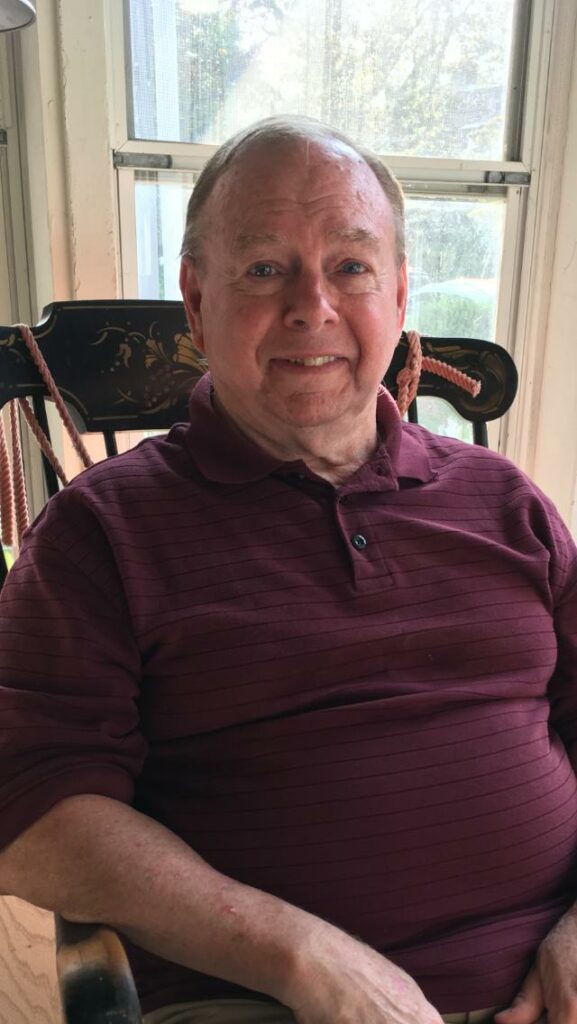
East Falls Historical Society Oral History Interview
Interviewee: Robert (Bob) Dagney, 3340 Tilden Street, Philadelphia, PA 19129
Interviewers: Ellen Sheehan and Lyda Doyle
Transcriber: Ellen Sheehan
Date of Interview: September 28, 2019
So, Bob, you filled out your forms here and we are going to ask you some things about growing up in East Falls. Your family has been here for some time. Could you tell us where you grew up?
I grew up at 3347 Conrad St. on the corner of Conrad and Bowman Street. That was the Casey family house. The Caseys were my father’s family. The Dagneys came to East Falls in 1915, my grandfather Edward Dagney married Ella (Ellen) Casey.
Your parents have been here since 1915?
Well, my grandparents. My father was born in 1919 and my mother in 1922. My grandfather Edward Dagney married Ella Casey in 1915. The Casey were here before that, they came in 1880. They first came to Swamppoodle around 21st & Lehigh. William Casey married Katherine McCarty from Bowman St. When they got married the Caseys moved up here to Bowman St. The McCarthys were pioneers in East Falls. They came from County Sligo, Ireland in 1844. They lived in the poor house in West Philadelphia.
Blockley Almshouse??
Blockley Yes, They came in December, 1844, with their 6 children. A baby, a toddler, a four year old, six year old and two older ones. The baby was James and the toddler was Patrick. They were the two who fought in the Civil War in the Calvary. They survived the trip (from Ireland) and then went to the Poorhouse. As far as I can understand you had to work for your room and board and you could keep some of the money. So they saved and after a while they were able to buy the house on Stanton Street, which was called James Street back then. They were one of the twenty founding families of St. Bridget’s.
So what year would that be?
1853, the year St. Bridget’s was founded. Then the two boys went into the Civil War in 1862.
Edward McCarty married the granddaughter of my second great grandfather Michael McCarty. He was the brother of the two Civil War veterans and the brother of Patrick
Tell me about the founding of St. Bridget’s.
It is really hard to find out how it happened. I went down to the archdioceses and the archives in Philadelphia and the only thing I could find out down there was the land was brought for $200.00. I believe, can’t say for sure, but the people who founded the church built the first church. The foundation of the church, I don’t know who else would have done it. They didn’t have money to pay anybody. They were farmers from Ireland so when they came here all they could do was labor. They didn’t have any skills so they had to work low paying jobs. They worked in the factories and mills in East Falls and Manayunk.
Do you know where they worked?
Well my grandmother Ella Gallagher worked at Dobson Mills. Her husband worked at the mills in Manayunk. Now the Caseys, I’m not sure. On the census they just had jobs – laborers, so they just had jobs not sure where. They always lived 10-12 people in a house. There were people there who weren’t even related to them. In the 1860 census, my grandmother, Ella McCarty was now a widow. Her eight kids lived there and there were four kids with different names living there too. I never found out who those kids were.
Some of those houses were three stories?
Yes, three stories with a back yard. They could grow food back there, carrots, etc., so I don’t know any more about the details of St. Bridget’s other than that. In my book I tried to figure out the best I could.
What is the title of your book?
“Salvation.” I traced them from Sligo to Liverpool to New York. They landed there in 1844. There wasn’t anything in the public record until 1850 when they were at Blockley. I know they were at Blockley in 1850. I presume they went to Blockley right away because they were two adults and six kids, where were they going to go? I have a feeling that that is where they went. On the passenger’s list their destination was Philadelphia. Why they went to New York instead of right to Philadelphia, I don’t know. No way to know for sure or how they got to Philadelphia.
My ancestors came by train.
That’s what I presume. I figure the train station was near the docks. I did find a reference in a book by Charles Dickens that he came from New York by train. It took seven hours and the trains had to go onto ferries. To find out where the trains stations were in Philadelphia wasn’t easy. There were only 2 or 3 and they were all downtown.
There was no church or school here so do you know where they went and what they did?
The church they went to was St. Stephen’s. I don’t know why they didn’t go to St. John’s in Manayunk. That was formed in 1853 or so. St. Stephen’s was in Hunting Park/Nicetown area so maybe they could get a trolley over there. They probably walked a lot. They asked the pastor over there about their own parish. I know the pastor over there in 1865 was Fr. Cullen. He was the Civil War pastor.
So where were you born?
3347 Conrad St.
At home?
No, Roxborough Memorial Hospital. I think my parents were born at home.
Where did your father work?
Budd’s.
He worked there all his life?
Pretty much.
Did your mother work?
Well, she took care of us until my brother and I were out of grade school. Then she went to work at a variety of low paying jobs. My mother didn’t graduate from high school so she didn’t have the skills so she worked low paying jobs like the bank. I was thinking about this, she worked at Fidelity Bank with your mother (Lyda). My mother went to mass with your mother before they went to work at St. John’s down town. I remember my mother telling me that.
What year were you born?
1946. I was the quintessential “baby boomer.” My father came home from Germany in July, 1945.
So he was in the war. Did he talk about that?
He didn’t talk about that. He had a heart defect and they made him a 4F. After D Day with all of those casualties they drafted him. Now, they didn’t think he would be drafted so they got married. Then after they got married he got drafted. He wound up in Germany but was only there for four months. My uncle, Ed, his brother, got drafted in 1940. He didn’t like the Army so he went into what was then the “Army Air Force.” They made him a navigator and he flew 35 missions over France in a B17.
And he came home?
He came home and he came home and was involved in a train crash. He survived but the other guys died in the crash. His wife, my Aunt Peg, they were engaged for three years while he was overseas. They communicated for three years while he was over there. He wrote on letter that said “Pray for me” the whole page. He was a navigator but on one of the flights the pilot and copilot were shot and he had to take over the plane and land it in England.
Your father came home in 1945.
Yes, in July. I was conceived in August and born nine months later in May. The quintessential baby boomer.
You went to school at St. Bridget’s? What do you remember about school?
(Sound of generator from neighbor’s porch)
I always had nuns as teachers. The first three years were in the Old School. We had sixty kids in our class. I was always behaved in school. A few paddle marks on my hands that was all. It was a group paddle. I went to Roman Catholic High School. I had a good experience at Roman. I got paddled once – a group paddle.
Did you play sports when you were growing up?
Oh sure, nothing organized. I played at Dobson Field. Before the expressway was built, Dobson’s was a big field. Every kid in the neighborhood played on the Police Athletic League. They had 3 or 4 games going at a time. It was crowded down there. It was a lot of fun, we had a good time. I was a good baseball player. Tom was a good player (Tom Doyle) I loved basketball. There were basketball courts all over the place. There were lots of outdoor courts and then when McDevitt’s was built there were indoor courts.
Did you use the Bathey for swimming?
Yes, I have a distinct memory of walking down to the Bathey. I was 6 or 7 years old. As boys we had a lot of freedom back then. We would walk down by Dobson’s and there use to be a road that led to the Bathey.
I remember walking down Krail and then Crawford to the Bathey.
We used to swim in the river sometimes.
What about Gustine Lake?
No. Gustine was only about 3 feet deep.
Did you ice skate on Gustine?
I tried it once but my ankles were too weak.
What other places in East Falls did you frequent? The library?
Oh, my father was a great reader. I read The Rise and Fall of the Third Reich when I was 14 years old. My father had a helmet, a luger pistol, and other artifacts from the war. He gave them away.
What about your relative A. J. Chadwick. Did you know him?
He was estranged from us. His sister married Joseph Gallagher who was a strict Methodist and we were Catholics. In those days this was taken seriously and she converted to Catholicism. I knew one of the Chadwicks who became a Navy Seal. So we didn’t have much connection with them.
How did the railroads figure in?
We only lived a block from the railroad tracks. When they built the expressway they dug up all that ground. One day I wanted to go down and play basketball at Dobson’s. I was about 12. You couldn’t go down Indian Queen Lane because they had that big hole so you had to go around. I decided I wasn’t going to do that. I was going to climb on the RR fence and jump down and go that way. I got up there and put my feet between the spikes and one of the spikes when I jumped, it went up my pant leg and I wound up hanging upside down from the fence. It was the only time in my whole life I called out “Help.” So this guy came by and got a big kick out of this kid hanging upside down like that. He lifted me up and got me off the fence. I was carrying my basketball. It fell down and bounced on the RR tracks and fell into the big hole. To top it off it went into a big puddle. I actually went back up on the fence and jumped off a second time, waded in the pool, got my basketball and went off and played ball. Boys will do this kind of stuff. They are different from girls.
What did you do after high school?
I went to LaSalle College. My father wanted me to major in Finance. I didn’t like that so majored in Political Science. It was easier than History. I went there 4 years and graduated in June, 1968. I was a Fort Bragg 6 weeks later. I got drafted. Actually, I volunteered for the draft. I knew I was going to get drafted and you couldn’t so anything while you were waiting to get drafted. I wanted to get it over with so I volunteered and went to Fort Bragg.
Talk about an eye opener. I was a tough guy but that just blew me away. It was brutal. I wrote about it in my book. My experience at Boot Camp. When you got drafted it was for two years. If you enlisted it was three years. I didn’t want three years. I didn’t realize at the time it was for combat in arms. They put me into the Artillery. That was a terrible experience I can tell you that much. It wound up, my brother was hospitalized. He was in bad shape so I got two weeks leave. My mother asked for another week so I got another week and then went back. While I was home, the original battalion I was with went to Vietnam. This was 1968 a very bad time to go.
So I was sent to Germany. It was bad – it was cold. They were shooting off guns. I wasn’t looking forward to it at all. I wound up in Italy. The Army in their wisdom trained me in Artillery and howitzers. Then they send me to Italy and I had to shoot Rockets. They had nuclear rockets in Italy to use against the Soviets. While I was at the Headquarters, the Sargent said, “I see you were in College. Do you know how to type.” “Sure, I know how to type.” I had no idea how to type. It amazed me that they never sent me back. I took all day just to type one letter. You can’t have white out – it has to be perfect. We had carbon paper and I couldn’t keep it straight. I got to the end of the page and you had to measure it so you know where to stop. It was a disaster.
They kept me there and gave me a job driving the Sargent around these missile bases around Italy. I had never driven a “stick.” We didn’t have a car till I was 16. I didn’t know how to drive a stick but I was driving on these narrow Italian roads. The Sargent was scared to death so he said “Get over” and he drove me around. I sat in back looking at the countryside while he drove calling me a stupid so and so. I didn’t do this stuff on purpose, it was just the way it was. You can change your MOS status from Artillery to Clerk. So they made me that.
Because you were a college grad.
Yes, then, I was totally useless. Then they sent me to do more of what I wasn’t trained to do. I was trained to fire Howizters. The Army was so screwed up. The whole organization is a mess. It was so ridiculous. So, anyway, I get a phone call that my brother, Dave, was sick mentally. But he wanted to enlist. My father thought the military would be good for him. Some people thought the military would be good for you and all this kind of stuff but they don’t realize how bad it is. My father was thinking of the Second World Was but they weren’t treated like they treated us. I called my brother Dave and said “No, No” because he had attempted suicide twice. I said, “Dave, boot camp is not a place for somebody who has attempted suicide two times. He wouldn’t listen to me. The sergeant I went to I told him I need to go home. I need to talk to my brother and stop him from going down there. So I get back to the unit and they said “You’re going to Vietnam.” I said “I don’t want to go.” ‘Well you signed up to go.” Just get rid of that request. Just ignore it. Just throw it out. But no, I had to go. What is this bizarre world? They gave me ten days to get to California from Italy.
That’s how you were going to Vietnam?
Yes, later on I came home from Vietnam for an emergency and I went back from McGuire in New Jersey. The first time I went I went out from San Francisco. I took a flight out from Oakland to Fr. Stewart, Washington. I was on the flight going out there to Washington State when they announced we landed on the moon – it was July, 1969. “Can I go to the Moon” everybody was so happy – I didn’t care about the moon. I was worried about where I had to go – I didn’t care about the moon. It was a week of combat training, not jungle training.
It is near Lacey, Washington.
Yes, we were fighting mock battles with troops on their way home from Vietnam. They were just waiting to go home. They were jumping out of trees behind me and I thought “How am I going to get through this,” you know. So I got over there and they put me to work as a clerk. I was worried because I was listed as a clerk and Artillery. I was afraid they would put me in Artillery. We were poorly trained, I can tell you that much. They never put us on a helicopter. If you go over there for artillery they put you on a helicopter. I was scared to death to go on a helicopter, to be honest with you. At least get me used to it because I never had to do it.
There was an Intelligence Unit out there and the worst duty I had was guard duty on the perimeter. There were machine guns out there and everything like that. Nothing happened while I was there. It wasn’t always safe there they had been attached. There were Vietcong there outside the wire. But at the bunker it was pretty scary out there at night. Sometimes you could see the bombing out front, helicopters shooting, or snipers out there shooting, but nothing happened.
I was there for six months and I requested to go home on emergency leave because my brother was bad again. So they gave it to me, so I went home. It was so weird going home. It was 100 degrees over there and back here it was wintertime. Let me know if I am talking too much because I could go on and on.
This is good – it is your memory of wartime.
I have thought about it so many times. I came home for an emergency to do family therapy. It was awful. It was ridiculous. My brother tried suicide three times and they are talking about all this ridiculous stuff. After a couple of times, two or three times, I said I’m not doing this anymore. My father thanked me afterward because he wanted to stop too but he was afraid to.
Then I got the orders to go back to Vietnam. I was home for 30 days when I got the orders to go back. I was at Fort Dix and I was waiting in line to get on the bus to go to Ft. McGuire when I heard my name announced on the loudspeaker “Specialist Dagney, report to the board room right now. “ So I go there and they say, “You’re not going.” I said, “What!” They said you’re not going, you’re staying here.” “I’m staying here?” Yes, we have and order from Senator Schweitzer that you are to go home. My mother had contacted him, my little mom, had called his office and said “Would you please stop him from going over there he needs to be home.” So he put a halt on my orders. I had to go down to the Pentagon to plead my case. Well, of course, my case was not going to work because I had quit the therapy. If I had stayed in the therapy it might have worked but it never occurred to me that I couldn’t go home. “You were in therapy and you quit!” Oh sh.. Nonetheless I was really angry because I want to stay home. I was really comfortable.
At that point I was at war with the Army, I was. That’s a war you can’t win. You can’t win a war with the Army. I came home and then I had to go back to Fort. Dix to leave while I was waiting they put you on what they call a holding company. This holding company – the guys in there were the biggest bunch of crooks, the worst of the worst were in this holding company because they were all trying to get out of going to Vietnam. They were troublemakers. I was there for about a month with these guys and I went AWOL twice when I was down there. Fort Dix was an open base. I could just walk out get on a bus and go home. I got caught once and got punished. They gave me a job cutting up ID cards. When you get discharged you have to give up your cards, you weren’t allowed to keep them. So I was there cutting them up. In fact, I came across Jimmy McFarland’s card, he had just gotten out.
I got friendly with the clerk there and he said your orders are coming down either Friday or Monday. I said can you make it Monday? He said yes, why. I said I’m going home. He said, but if you’re not back here Monday… I said “I’ll be back on Monday. “ So I came back on Sunday night. I was upstairs in bed at 5 o’clock in the morning and I heard him say, “Where’s Dagney? He’s supposed to be on KP this week.” Well I was supposed to be going to Vietnam, what is he talking about KP duty? So I went out. One of the Sergeants said where you are going. I said I’m going for a walk. A walk? What are you doing? I went over to the snack bar for breakfast and to get my orders. He gives me the orders. I go back to the barracks to sign out. The guy there looks at the orders and says, “Your Dagney?” “Yes.” He says, “The Sargent really wants to see you.” “For what?” “To go to KP. You know you were AWOL.”
So I walked in and the Sargent was the nastiest looking person you would ever want to see. “We know you were AWOL. That’s Article 15. And we know you were AWOL this weekend.” “What? I was there.” “What do you mean you were there?” “You didn’t see me – I was there!” He is cursing, so pissed off with me, really angry. “This time you’re going to the Stockade.” “No, I’m not!” “What do you mean you’re not going?” “I’m going to Vietnam.” “So I showed him my orders.” “Get the f… out of here and if I ever see you again I will tear you apart.” He was in a fury. They give you all your records because you’re traveling. I saw where they fined me a month’s pay. I threw it in the trash can – “I’m not paying that.” And I didn’t and they never found out that I didn’t. After it was over it hit me – what did I do? Was I crazy? I must have been nuts. He could have put me in the stockade, beat the s… out of me, but he didn’t. I don’t know why he didn’t. He was so mad at me he just put me out. There the kinds of things. I wasn’t in combat but these kinds of things.
Did you go back to Vietnam?
Yes, I went back to Vietnam for four months, I guess. While I was there we had a Master Sargent. He was awful and he kept threatening to send me to place called Nui Ba Den. It was the most dangerous place in Vietnam on the Cambodian border. They called it Black Virgin Mountain where the Army had artillery on the top, infantry on the bottom and Vietcong in the middle. They could not get rid of them. They bombed and bombed. They did everything they could but they would go into caves. They tried to destroy that place. They wanted to send me there. This one guy I worked with his name was Raul. He told me that’s a warning. You better stop. We just laughed. We didn’t take it seriously. No big deal. You had to get your rifle out to walk around the base on guard duty. So you get your rifle out and there was a whole box of grenades. Years later I thought about that. They make you sign the rifles out but there is a whole box of grenades. Nobody ever counts. I never counted them. Amazing! That’s how screwed up the Army was. It’s amazing how screwed up they were. Finally, I wound up getting an early out. I was supposed to go in June 1970. Because Nixon got us out in May, 1970.
Did you see combat?
No. I didn’t see combat. I was a Perimeter Guard. You could see the Infantry would be out there right in front of us. Once in a while you could see them shooting at somebody. You could feel the mountain shaking. In the pouring rain you couldn’t see a thing – it was just pouring rain. They would shoot up a flare. All that would do was to make the rain lighter. You were supposed to know when the bunker next to you was going to shoot off a flare because it scared the hell out of you. (Imitates flare noise) “Oh what was that?” Why didn’t you tell us you were going to do that? Then we started laughing. I was hysterical like the three stooges!
So you did leave Vietnam then?
Yes, I went out with another guy. We smoked marijuana. Everyone did. You needed a release from the tension. It was rampant over there. (Noise from generator next door.)
I was as calm and composed as I have ever been in my life. I could have sat there as calm as can be. We smoked all the way home. By the time I got there we almost missed our flight back. We got off at Okinawa.
When you came home from Vietnam, were you employed then?
Not for three months. We had money because we were paid but there was nothing to spend it on over there. So we lived off the money we had saved. I went back home and finally got a job at the State Building, trying to get jobs for people collecting unemployment compensation. I quit there and went to Ireland.
What year was this?
The first year I went was 1972. I went over there with Mike Daily from Indian Queen Lane. We were in Dublin in a pub when we got connected with these young people. They told us about a place in Ballykellings. We could go down there and stay for free. It was a farm, a flophouse, an Irish “safe” house was what it was. We didn’t know that. The guy who owned it was McMurphy. He used to talk about IRA. That place was the most beautiful place I had ever seen. It was right near the bay. You walk 50 yards to the bay and the mountains. So I thought this was great – it was really beautiful.
I went back there in the summer of 1973. I wanted to go back. My mother said, “Why are you going back there?” “I don’t know but for some reason I have to go back there. I have to do something there but I don’t know what it is.” Surprising my mother said “OK, you’ve got to do this.”
I went back and stayed there for about four months but I was running out of money. While I was there I met James McCann. James McCann was a drug dealer and gun runner for the Irish Republican Army. He had escaped from the Crumlin Road Jail in Belfast in 1991. So he was a wanted man. He was the IRAs main gun supplier. This was an IRA safe house. Everyone who came to that place they wound up staying there. So there were ten or twelve people there all the time. He found out I was low on money and trying to figure out what to do. So he said do you want to go home? I wasn’t ready to go home. Well, how would you like to make a few thousand bucks? Well he wanted me to go to Belfast. Go through the lines there and deliver the information and then come back.
This sounds worse than Vietnam.
It was. I was in more trouble there than anywhere. I thought about doing it. Actually I went up there in 1992. I went there on a bus. Soldiers got on the bus with arms. Fortunately, I had a romantic relationship with a woman, Madelaine. I told her what was going on. She said, “You’re not going to do it.” She said they are probably using these arms against civilians. Do you want to be a part of that?” I said “No, but what am I going to do?’ She said, “Go home!” I said, “Alright.” But I had to go and tell McCann that I wasn’t going to do it. When I got there he said, “We’re going now.” I said, “No.” “What do you mean?” “I don’t want to.” He was angry. I guess because of what I went through in the Army, I wasn’t afraid of him. I just wasn’t. If he tried to do anything to me there were all kinds of bottles around there, I would just break a bottle on him. He stormed off. “When are you leaving anyway,” he asked. “I’ll leave when I’m ready” – so I stayed another week. So his brother was there and said where are you going. I said, “Dublin.” So his brother said “Well get up, we’re going.”
I guess from growing up, being in the Army, I guess I had a poker face. I got right up and said, “Let’s go.” We got into this little car. It was the most harrowing ride. About 250 miles to Dublin. We are riding on these roads and he’s talking the whole time. At least we didn’t stop on any deserted beach. Anyway, we get to Dublin and he said “Where are you going to stay?” “I don’t know.” “Well I have a cousin here, you can stay with my cousin.” I had to go along with everything he said. I couldn’t say no. I had to do what he said. There was a young guy there about 20 years old. I slept on his couch. The next morning I said I would pay him. He said no. I said “Well I’m going to take off.”” Where are you going? I’ll come with you.” ‘No.” This guy was going to keep an eye on me.
Now, I was in fantastic physical condition. So I said let’s go. I had a back pack and I walked and walked and walked until finally he said “I can’t go anymore.” He sat down on a bench. I found a bed and breakfast. The next morning I didn’t know where to go. Madelaine had said “Why don’t you come to London. You could work on the docks there.” So I really loved Madelaine. When I was in Ballykellings there was a guy there who said you could go to France and pick grapes. So I was trying to figure out where to go.
I was walking in downtown Dublin when a car pulls up and a guy gets out. His name was Paddy. I don’t remember his last name. This guy was a bank robber. He was. He gets out of the car and starts shaking my hand, “Hey, how are you doing?” like we are old buddies. He said “What are you doing now?” In that instant, I made up my mind. “I’m going to France to pick grapes.” If I had said I was going to London, he would put me in that car and made sure I went. So now I had to go to France. It was ridiculous. I couldn’t speak French. What did I get myself into? I found out you had to go down to Rosslare to get the ferry to LaHarve. I thought what am I going to do when I get to LaHarve?
All of a sudden a calming sensation came over me. I see this guy on the ferry wearing an Army jungle fatigue shirt so I said “”Where did you get the shirt?” “I got it in Dublin.” “Oh sure, they sell them there” I said “Where are you going?” “I going to pick grapes.” “Do you speak French?” “A little bit.” “Do you mind if I come along with you?” He said “Sure.” I was so glad because when you get off the boat a LaHarve it is this huge place. We managed to get a train to Paris, a train to Lyon, and we went to the employment house. If you want to pick grapes you go there. So I picked grapes there for several weeks until I had enough money to go home.
I came to New York and found the best way to get home was by limo. It cost $25.00. The limo was better than a plane or train. I knew that from before. He left me off at City Line Avenue. That’s as far as he would take me for the money I gave him. I called my father. The dime I put in the phone (in those days,) it was the last coin I had. Totally broke, my hair was down to my shoulders, I had a long beard and my hands were stained with grape stains, my shoes were falling apart – my father said “Jeez, what happened to my son?” I never told my father what happened there. My mother found out years later.
We are going to stop here – we only do an hour at a time.
END OF INTERVIEW #1
East Falls Historic Society Oral History Interview
Interviewee: Bob Dagney (BD)
Interviewer: Wendy Moody (WM) and Marie Filipponi (MF)
Interview: February 21, 2023
Transcribed by: Wendy Moody, EFHS
WM: Good morning. It’s February 21, 2023. Marie Filipponie and Wendy Moody are in the home of Bob Dagney for an oral history interview. Good morning, Bob.
BD: Good morning.
WM: We do have an earlier interview with you, but we want to expand on that since you’re one of the only people we know who go back generationally in East Falls. So why don’t we begin by talking about your grandparents – when they came to East Falls and their experience here.
BD:My (maternal) grandmother, Ella Chadwick – I’m not sure when they came to East Falls but I think around 1850 – but I’m not clear about that. They came to work in Dobson Mills. My grandfather Joseph Gallagher came to East Falls in 1912 when he married Ella and they lived here. He lived in Manayunk, and when he married her, he moved in with her in East Falls.
WM: Do you happen to know what she did at the mill?
BD: No. I think once she had children she stopped working there. So I don’t know how long she worked there. I don’t have a lot of knowledge about that side of the family; I know much more about the other side.
WM: Ok, why don’t you talk about them?
BD: If you want. My father’s parents – my grandparents – were Edward Dagney and Helen Casey. The Caseys came to East Falls in 1880, I think. The Caseys had come to America in 1846 to escape the Irish famine. That was Richard Casey and his wife – they came in 1846. And then when Helen married – wait a minute – I get mixed up with it too – when she married William Casey, the Caseys moved to….
WM: William married Katherine?
BD: Yes, he married Katherine McCarty in 1880, I believe it was. And the Caseys – they used to live in Swampoodle. He moved up to live in her family’s place in East Falls on Bowman Street in 1880.
WM: The address?
BD: You know where Bowman and Conrad Street is? There on the corner is the big house with the yard behind it. Well, the house up from that is where they lived. The big house (3470 Bowman). They always had a lot of people living there – 10, 11 people. So that was 1880. They all were factory workers, mill workers – none of them were professional people. Katherine McCarty was born in 1861 and she lived until 1941. They lost that house during the Depression and they moved to the house on the corner of Conrad Street and Bowman (3347) where I grew up – there was apartments there. And that’s where my father grew up and I grew up. When I grew up, only my Aunt Marge Casey lived there until 1976 when she died. She was my father’s aunt and my great aunt. Her mother was Kate McCarty, the grand daughter of Rebecca.
WM: Can you describe that house?
BD: Where I grew up? It was apartments – and we lived in the 2nd floor apartment over the Bulletin Depot, and my grandfather, Joe Gallagher, my mother’s father, lived there for twelve years in a one bedroom apartment on the third floor. For several years, I slept up there on his living room couch.
The Bulletin used to deliver newspapers and they had the newspapers right under where we lived. I had relatives (see note) who became dressmakers, and they made dresses and sold them out of that little shop, but when I grew up, that became a branch of the Evening Bulletin. But most of them were seamstresses. (Note: My great great grandmother, Maria Dorsey McCarty, was the wife of my second great grandfather Michael McCarty, the son of Rebecca and the brother of James and Patrick the civil war veterans. Their daughter was Kate McCarty Casey, my great grandmother. James had a son also James who was a veteran of the war in the Philippines from 1899 to 1902. His wife was Helen Bransfield. They lived for a few years on Conrad St across from the brewery. She was also a dressmaker who I think sold her dresses beneath our apartment).
I was born there in 1946 – I’m a quintessential Baby Boomer. My father came home from the War in July of 1945, and I was conceived in August 1945 and born in May of 1946. So I’d like to think my birth was heralded by two atomic bombs! (laughter)
WM: What was Conrad Street like growing up? What stores were there?
BD: Well we actually had two grocery stores in one block – on the corner of Indian Queen Lane and Conrad Street there used to be a market there called Rowlands. And another was on the other side of Bowman Street, where there still is a store. We never shopped there.
WM: Claytons?
BD: Claytons! That was it. So there were two groceries within a block of where we lived. My mother always went to Rowlands.
MF: Was Conrad still Conrad at that time?
BD: It used to be 35th Street, but when I grew up it was Conrad.
WM: Any other stores on that street you remember?
BD: Yes, oh yes. East Falls was a totally different place than it is now.
WM: Describe that.
BD: Well there was a butcher shop – they sold meat – that’s all.
MF: Where was that?
BD: I forget exactly but it was between Bowman Street and Sunnyside Street on Conrad. There was also a hardware store that was on the corner there – now you have the chiropractor. That used to be a hardware store when I grew up.
MF: So East Falls had two hardware stores?
BD: Yeah, there was one down at Ridge and Midvale. There was also in that block a barber –
WM: Do you remember the name?
BD: The barber was Jerry’s. He was actually a Puerto Rican and he had three barbers in there – it was amazing. And they all were busy because everyone got haircuts every two weeks back then. That was all that was there, but if you went up the hill to Ainslie Street, there was a shoemaker – there were several shoemakers in East Falls when I grew up. There was one on the bottom of Queen and Cresson. If you go up further – to Conrad and Ainslie Street, there used to be a little sandwich shop there – like there still it now. It was called Bob’s back then. A lot of kids hung out there – it was a hangout. Across the street from that was a pharmacy – Katz’s Pharmacy. We had at least three pharmacies in East Falls. There was another one on Indian Queen Lane up at Vaux – Buchanan’s was up there.
MF: Now were these storefronts and people lived in apartments up top?
BD: Katz was just a store. Behind them there were people.
WM: Did they have a candy shop in it?
BD: Oh no, I forgot about the candy shop. That was on the corner of Sunnyside and Conrad Street – McDermott’s. McDermott and Fitzpatrick – two guys ran that store where they sold candy, ice cream, comic books, and other miscellaneous items. And they had a phone back in those days – a lot of people still didn’t have phones when I was growing up – and you could call from there. McDermott’s son would up being a dentist, right?
WM: So while we’re talking about stores, give us a walk down Midvale and Ridge – what you remember back then?
BD: On the corner of where Le Bus is now, when I was a kid, they called it a 5 &10 Cent Store –Five and Dime. You could buy everything for a nickel or a dime in there. My mother used to love going in there to buy things you couldn’t get anywhere, like buttons and pins and that kind of stuff. Like the Dollar Store is today. Then cattycorner to that was a hardware store.
WM: The Odd Fellows Hall?
BD: That was a hardware store.
WM: Do you remember going in there?
BD: Oh yeah, I went in as a kid. I forget when it closed. And the Falls Tavern was right there. That was one of the most shameful things that they ever tore that down! I was in there.
WM: Can you describe it?
BD: It was like a bar with big tables – sometimes people came in to eat and drink. My mother used to go there a lot because they lived down near Calumet and Ridge. My mother, when she was a child – her parents lived on Calumet.
WM: Anything else on Midvale?
BD: On Midvale there was Welsh’s Bar. On Ridge Avenue, the Major – that was always there, like a
pharmacy. And, on the other side, going up towards street towards St. Bridget, there were a couple of bars, a spaghetti house…
WM: Pete’s?
BD: Yeah, Pete’s.
WM: A movie theater?
BD: That was further up – the Alden. They tore it down 1968 or 1969.
WM: Did you go in there?
BD: Oh sure.
WM: What are your memories there?
BD: One memory I have- it’s amazing when I think of this – is going in as a little boy and pushing two dimes underneath where they have that thing come down and you put the money in it? I remember pushing two dimes in there to go in the movie – 20 cents it cost to go to the movies – for kids – it may have been more for adults. I remember doing that. I saw quite a few movies in there when I was a boy. That’s another thing I wish was still there, to be honest with you – not that I go to the movies much anymore. It would still be nice to have a movie theater – kids could go on dates. And talk about a different world, people actually went on dates back then, and if someone were dating someone, it was understood they were dating. My father and my mother – I know this for a fact – they dated for four years before they got married. And I know that’s true.
WM: So any other stores you remember? Was the florist there?
BD: Yeah, there was a florist there up across the street – almost across from St. Bridget’s. I think originally that was the Kellys. Ellen was related to them.
WM: Ellen Sheehan was Kelley – her father was a florist. Anyplace else on Ridge that you remember? Was there another pharmacy there?
BD: There was at one time but it was before my time – in my mother’s time. When my mother lived on Calumet – right at the Ridge – there was a lot of stuff there.
WM: Let’s talk about your mother. Born…?
BD: 1922.
WM: At home?
BD: I believe so. And I believe her grandmother delivered her.
WM: Where did she live then?
BD: When she was a little girl, it was a few houses up from Ridge on Calumet. When she was about five, she was hit by a car. She told me she went up in the air and came down. She didn’t really get hurt physically, but the accident left her shaky and worried and afraid. It really affected her ability at school because she always was self-conscious. She couldn’t take tests. And it all stemmed from that accident because it really shook her up. I’m sure, because she went up in the air!
WM” Was she an only child?
BD: No, she had three sisters and a brother. The brother died when he was about 12 – it broke her heart. It broke everybody’s heart.
WM: Where was she in the birth order?
BD: She was the last.
WM: Did she go to St. Bridget?
BD: Yes. She went to St. Bridget. My father went to St. Bridget – they all went to St. Bridget.
WM: People have mentioned that, back in the day, Stanton Street and Calumet were mostly Italian, but your family was Irish…
BD: I think the Irish were there first because they came to East Falls before the Italians did. The Italians came later – I think in the 1880s they came. But I know the McCartys lived there – on Stanton Street – it was James Street when they lived there, and I’ve seen other Irish names. And I’m sure there were other ethnic groups that lived there too. But it was mostly Irish, I think. That was St. Bridget – St. Bridget parish was Stanton Street, Calumet Street, and Cresson and that was pretty much it. That was the parish. It was very small. The church was a very small mission church, really. You’ve probably seen pictures of it. The people of the parish built that church themselves. It took them about twenty years before it was actually totally done. It was there until 1948, 1949 – I never saw it myself. But anyway, back to my mother, she went to St. Bridget but she was not good at school because of all the upsetment she had. So she wound up going to St. Francis of Assisi in Germantown to be a clerk typist – that’s where she learned how to type.
WM: Where was that in Germantown?
BD: I forget exactly, but she went there because she really didn’t have good grades in school and didn’t go to high school (Note: the school was located at 4821 Greene Street in Germantown. It closed in 2012.)
WM: Did she tell you any memories of St. Bridget when she was there…in the old building, obviously…
BD: I started in the old building. myself. I don’t know what grade she was in, but she was the Queen of May for the May Procession. May Queen. You know, a thing on her head. My mother was very pretty – she was, she was very pretty, so she did that when she was a young girl. And that was a big deal back then – the May Processions. I mean, the whole school went, the whole neighborhood came out. I have pictures of it with a crowd all around. The church was very strong back in those days. One of the advantages they had – so many of the people who I know – her family and the friends – they were really good people. They all were. They got married; they stayed married. They worked; they had houses. They did all that. That’s how they lived.
WM: Describe a little bit what this celebration was – the May Procession.
BD: It was always in May. It was dedicated to the Blessed Mother, the Mother of Jesus Christ. They’d start up on Midvale and walk down. Everyone was all around watching them come down, and taking pictures.
WM: Down to?
BD: Down Midvale to go to St. Bridget. The church was filled with flowers and everybody sang and everything. I have very fond memories of it myself. I wasn’t a religious kid, truthfully, but I liked the May Procession. I liked the hymns and all the attention everyone got. We had white suits (laughter) – I see us walking down with a blue tie and a white suit and the girls had these white dresses – almost like they’re getting married and, like I said, the sidewalks were lined with people all over watching. The church was filled, and it was just a great experience. Back in those days, the people’s lives revolved around the church in many ways. They had different organizations that they were a part of – the Holy Name Society, the Sodalities for the women – they would get together during the week and have tea and coffee and all that kind of stuff. So they enjoyed that very much.
My mother met my father at Dobson’s Field. I wish I could get a picture of Dobson’s Field before the expressway came through. I have never found a picture of that. But I have many fond memories of Dobson’s Field and so do my parents, because that was there when they were there, and they met there and started to date.
BD: My father used to play baseball and football there and all the girls would go watch, like they did when I grew up. When I grew up, it was the same thing. I experienced what it was like to live in East Falls like they did when I was a kid. And then they put that Roosevelt Extension through there – that was very upsetting.
WM: Were these casual games or in a league?
BD: Police Athletic League – it was a very festive occasion – you could play three to four baseball games at a time on that field, because we were all little and weren’t hitting them out far. I wouldn’t say the whole neighborhood came out to watch the games, but there were a lot of people there. A big crowd. It was very festive – they’d be cheering on their kids and their families – they’d be cheering and cheering and it was just a wonderful experience.
WM: Did they have stands?
BD: Partially, yeah.
WM: So you remember before the Expressway came in; what was it like on that side. Were people more connected with Allegheny? Did East Falls extend further? We already have your anecdote of when you were caught on the fence (see previous interview), but tell us a little more about before and after that came through.
BD: Well for me, like I said, it was a very festive thing – three or four games going at a time. When they cut it through, that cut it down to two games. Now we could still have games there, but it was different because you had that bridge and the noise – it really diminished the experience. The street where I was on the fence – not sure if that was that Cresson Street or not – they tore all those houses down. Those people had to relocate. It was really a shame for them.
WM: In the early days, did you walk beyond where the expressway was – past Krail Street?
BD: Where the Extension is used to be all grass. It’s hard to believe where all that dirt and grass went – they just shoveled it all out and took it somewhere. That used to be flat grass.
WM: So it wasn’t too developed.
BD: No. It was just fields there and you could play pick-up games. We used to come from St. Bridget. After school we’d go down there, because we were the Baby Boomers, right, so there were all kinds of kids. There were kids all over East Falls when I was a kid.
WM: Going back to your mother, any other memories of her growing up in East Falls? Memories of Calumet, school, or what she did for recreation?
BD: Well unfortunately girls didn’t play sports back then – so they just had to be spectators. She had her circle of friends from school and they used to do things together. They were pretty religious then. They had a thing that they did on Lent – they used to go around to seven different churches in the area and say some prayers and give some money. They all went together – they did that when they were young – but after a while you couldn’t do that – but she had fond memories of that. They used to go down to Falls Tavern and have some drinks and everything. Where I lived on Conrad Street they always had those two bars on the corner – they were always there. McMackin’s, and I forget the other one. The other one across the street was known as the one that minors could get in (laughter)
WM: And what about your dad – where did he grow up?
BD: He grew up initially on Bowman Street with a large family. They lost that house in the Depression and they moved into the apartments on Conrad Street – on the corner of Conrad Street. So, underneath there were apartments; upstairs my Aunt Margaret lived and the Caseys lived, and then there was a third floor. But underneath that, curiously enough, there was a big storefront there. I lived there for 21 years and there was never anything in there. I found out that that used to be an American Store – have you ever heard of the American Store? They preceded the Acme.
MF: Oh, a grocery store.
BD: Yes, a grocery store. The American Store became Acme later on.
MF: Where was that again?
BD: Right on the corner of Bowman and Conrad.
WM: So your dad went to St. Bridget as well?
BD: He went to St. Bridget; then he went to North Catholic, because in those days, they alternated between going to North Catholic or Roman. He went to North Catholic, which was unfortunate for him because he had to take three buses to get there.
WM: Did he tell you any memories of growing up here?
BD: Not a whole lot of details, but I remember him saying he never had a lot of money growing up. It was the Depression, because he was born in 1919, so by the time he was 10 or 11 it was the Depression, right. They were fortunate enough – one of the Caseys – Bill Casey – was a draftsman for Philco and he supported the family during the Depression. But my father never had any money – he did little odd jobs here and there, but he never had any money and he used to say “We lived by our wits” because they didn’t have money. So they used to go down to the Connie Mack Stadium and they’d wait for a bus to pull up with kids from a school to go to the game and they would jump in the back window and come out of the bus like they were part of the school. So they would get in for nothing (laughter)… That’s what he meant by “Living by your wits” – they snuck in the back window and then said “Oh yeah, we’re with them…”
WM: Any other Depression memories that he told you?
BD: No, my mother enjoyed the Depression, funny enough, she did because during that time her mother used to bring in her brothers and all who were having difficulty. One was a tramp – a hobo – one of the brothers of Alexander was a hobo and he used to come to my mother’s house all dirty and hungry and she’d feed him and clean him up until he got back on his feet. And actually Alexander Senior and his wife Jennifer lived with the Gallaghers – lived with her when she was a little girl during the Depression and, like I said, she loved it. I just got something in Ancestry – his obituary – that said he was a traveling minstrel. And it says in the obituary that he was loved by many of the children in the neighborhood.
WM: Interesting. Which makes me wonder, was there any place people went for music in East Falls? Entertainment?
BD: Don’t remember.
WM: So were your parents married at St. Bridget’s?
BD: Yes, in 1945. My father’s brother Edward was first drafted in 1940 and my father tried to volunteer for the Army and was rejected because he had a heart murmur. Which he didn’t even know he had, and it never affected him, but they rejected him twice for the heart murmur. So he figured by 1944 it looked like the war was going to be over so he decided to get married. So they got married and, while he was on his honeymoon, they got home and his draft notice was in the mail. So they had two weeks together and then he got a draft notice. He never talked about that – my mother did – she was heartbroken. But they had such a great time in Atlantic City where they went on their honeymoon – Atlantic City was great back in those days – really it was – and then they come home and they were so happy and there was the draft notice – he had to leave in two weeks. If it were me, I’d be so mad at the Army. He tried to volunteer; they rejected him – even though they didn’t know he was married, nonetheless…that’s when they draft you – on your honeymoon.
WM: Going back to St. Bridget, can you talk about changes you’ve seen there over the years – what it was like as a kid – the church itself, not the school – both physical changes and changes in the philosophy.
BD: It changed a lot in the 1960s with the 2nd Vatican Council – they made a lot of changes. At the time, I didn’t really care – I wasn’t religious – I was at Roman at the time. I didn’t pay much attention to it, but I didn’t like the change from the Latin. I had been an altar boy.
WM: You were an altar boy?
BD: I was, but I got kicked off the altar boys… (laughter)
WM: Oh tell us why!
BD: As altar boys we also had to serve Mass at Ravenhill – at the girl’s school there. Well that Mass was six o’clock in the morning. I became an altar boy in the 5th grade so I was like 12 and we had to go up there six o’clock in the morning to serve Mass. Well I did it the first year – the young guys had to do it because nobody wanted to do it. And think about it …. I used to go there by myself in the dark and never thought a thing about it. Anyway, the next year, a new priest comes in and says “Everybody has to do his turn at Ravenhill.” And I said, “No, that’s not fair – I did my time up there.” So one day I went up to Ravenhill and got to the gate and decided “I’m not doing it.” So I went up to McMichael Park, stayed up there a while, and went home. Well, the priest knew that I didn’t show up so he kicked me off the altar boys, much to my mother’s distress. Well it was her idea in the first place, truthfully – it was her – I didn’t really want to do it. She made me do it.
MF: Do you remember who the pastor was at the time?
BD: Oh it was Carton.
MF: Father Carton.
BD: Father Carton – he was there for so long – my whole growing up was Father Carton.
WM: Did you do that with Tony DeStefano? He said he did Ravenhill as well.
BD: Oh yeah – all the boys who were altar boys then had to do Ravenhill. It wouldn’t have been so bad if it were later, but six o’clock a.m.? And you’re just a little kid. And when it was over, you had to go to school!
WM: That’s a long day. Tell us about the changes with Vatican II – what happened and what was your reaction?
BD: Well, like I said, I wasn’t too concerned about it at the time. Later, when I came back to the church – years later – after I left it for 17 years – I knew there were changes to English, but I hadn’t gone to church in a long time. And I went in and it was so strange to me from what it used to be – it used to be so solemn – so much more sacred than it is now. Quite truthfully it was more sacred than it is now because of the Latin – everyone would say “Why do they use Latin?” But that was the liturgical language – like the Jewish people have Hebrew – well the Church had Latin. I mean, the Priest came out and he didn’t say hello to everybody like they do now – I mean, Father Kelly used to come out and tell jokes at the beginning of Mass before it started. I thought that was offensive. Back then they didn’t say hello – they came right out and started Mass. This was serious business, right? This was no joke. You were not to tell jokes. The Priest is going to talk to God. That’s what he’s there for. He’s facing the tabernacle – not his back to the people – because that’s where God is. He’s not putting his back to people – people say that – it’s not true. At the consecration – they used to whisper it – no one but the altar boy could hear because you were right there with them. Why is he whispering? Because something sacred is happening. God is coming to the altar. This is what we believe. You can believe that or reject that – it’s up to you – but that is what we believe – that God is coming down from heaven into this bread and wine and that’s the body and blood of Christ. That’s what we believe. And now – they still do it- but it’s nowhere near as impressive as it used to be. Then, they would be singing a Gregorian chant – the music was beautiful – and you had to kneel. It was hard – it was hard being an altar boy, let me tell you. The priest came to my house and taught me the Latin, right, and it wasn’t easy to learn, especially at 6:30 in the morning, trying to remember what the words were – you couldn’t have a little cheat sheet – you had to do it by memory…
WM: And only he could give communion then?
BD: Right.
WM: That changed?
BD: That changed. Anybody who wants to can give communion. I mean, it’s convenient for a lot of people. I mean, the other day – Sunday – Mary Ellen came in and gave me communion because I’m considered homebound, though I’m not totally homebound. I can’t make it all the time to Mass because of my back.
WM: Mary Ellen?
BD: Cunningham.
MF: Mary Jean Cunningham.
WM: And what about physical changes in the church over the years?
BD: Well that altar wasn’t there when I was a child. Back then, the tabernacle was connected to the altar, and now the tabernacle is away from the altar but then it was connected and it was very small – a ledge where they kept the books. And behind the altar was a big portrait of the Crucifixion up there – I can’t remember exactly. Then everybody came up and knelt down – the Priest gave communion and the altar boy just held the paten in front, in case they dropped it or something. Like I said, I regretted the changes later when I came back to the Church. But I think because they changed it like that – it changed my idea – I mean, if they can just change it like that – this was supposed to be always the same so it was upsetting that they changed it like that.
WM: That’s interesting. How about changes like air conditioning, painting…were those good?
BD: Of course. Absolutely they were. We used to swelter in there, especially when you were an altar boy wearing a cassock. It was so hot. My mother worried every time I was the altar boy – the altar boy had to take one book, carry it down the steps and take it up and put it on the other side. This is the big book of the Gospel. It was a big book and I was just a little guy – 4’8 or something (laughing) – and coming down the steps with that – being careful you don’t step on the cassock and trip coming down. So my mother said that her heart was in her chest watching me come down with that book and then watching me take it up to the other side. Now it’s not that heavy, but then it was heavy. And then Confession – I still remember my first Confession.
MF: Really!
BD: Oh sure. My first Confession was in St. Bridget Church where that confessional box is now – where they put books and stuff – that’s where I had my first Confession. I remember it there.
WM: And who was the pastor then?
BD: Father Carton was there the whole time I was there. But it was a curious thing – my first Confession – I don’t even remember what I confessed – we used to make things up like “I was disobedient to my mother” – I had to think of stuff because I didn’t do anything – you know what I mean? (laughter) So I had these innocuous sins that I committed. And years later, in that area where the bookstore is, I put my book in there – The Fourth Commandment – and it really was like a form of Confession. I thought, that’s an amazing coincidence that my first Confession was there, and it was minimal, and now later in life it wasn’t minimal and my Confession was in that same area.
MF: Is that book still there?
BD: No, no. Some person took it – I have copies of it. What an amazing coincidence – two Confessions in the same place.
WM: That’s interesting. How about the attendance – did that change over the years?
BD: When I was a kid, the first Mass on Sunday was a 6 o’clock Mass, and there was one at 6, 7, 8, 9, 10, 11, 12. No maybe there wasn’t a 7 o’clock a.m., but there were six Masses every Sunday. And as an altar boy I served – I went to different Masses – and, for the most part, it was pretty crowded. Every time. Every Mass. Some more than others – the earlier ones not as crowded as the later ones. But it was pretty crowded. And there were always guys in the back of church who, at certain times in the Mass, would go outside and catch a smoke (laughter). They’re the ones who didn’t come back to church when they changed it.
WM: Did you ever see the Kellys there?
BD: No. I know she was there but I never saw her there.
WM: What about the school. What are your memories there?
BD: Well my first three grades were in the old school. The new school, which was built in 1948 or something like that, for the rest of the years, I was up there. I remember the first day of school distinctly. We were crowded into this space – there were sixty kids there. Out in the doorway all the mothers were out there. And all these kids were crying. And I’m sitting there thinking “What are they crying about?” I couldn’t understand what they were crying about. I remember my mom waving to me and I’m thinking ”My mom’s out there; so what are they doing?” I couldn’t understand it, you know?
MF: The mothers were outside?
BD: Yeah, they brought their kids.
MF: But they didn’t go home then?
BD: They went home after we got settled in – we weren’t settled in yet – everybody is out there waving and then, after Sister said we’ll start the class, they would go home. And I think I used to just walk back and forth – I never got a ride to St. Bridget. I didn’t know anyone who got a car ride to St. Bridget.
WM: Any other memories of the old school?
BD: It was a blur – I was just a little kid. They were teaching us how to write. Now I’m pretty sure when I went to grade school I already knew how to read, because my parents read to me as a boy. My mother loved reading to me – she was so happy to do it and she’d arrange the book so I could see what she was reading – so it was a phonetic way to learn. So I would look at the page and she would read it. So by the time I started school, on a rudimentary level, I could read a little bit. And I remember trying to write with the Palmer Method – you had to make these circles you know – and I remember writing my name the first time – “Robert Dagney” – and I remember thinking “That’s’ my name! What does that mean?” I had to keep saying it so I wouldn’t forget it. I mean, I knew I was Bobby, but Robert Dagney! I was fascinated!
WM: Do you remember the first day you went to the new school?
BD: I can’t say that I remember. I always had nuns – Sisters. Sisters are the teachers.
WM: Were there any special teachers who left an impression?
BD: No, can’t say that there was really.
WM: Principal?
BD: No. Everyone said they had a favorite teacher – I didn’t in grade school, though I liked some more than others. The one I remember the most was when I was in high school – a priest – I’ll never forget him. He was a religion teacher. I was a sophomore in high school, 16 years old. I was about 5 feet tall and 80 pounds or something. He came in – a big tough guy “We have important work to do.” He gave everyone an assignment. I did it – I finished it – and I thought “I’ll do my geometry homework” so I took out my geometry book and I started doing geometry. He saw me in the first row and said “What are you doing?” “I’m doing my geometry homework.” “What about your religion?” “I did that. I finished it.” He said: “Come out into the aisle.” I thought “Oh man, what is this?” I go in the aisle and he says “Take off your glasses.” “Holy shit.” He slapped me across the face so hard I spun in a circle. I spun in a circle! He said “You’re never finished with your religion!!” I had tears running down my face. He humiliated me in front of my friends because what am I going to do? He’s a priest and a big man. I can’t do anything about it. And I sat down in my seat and I said “Ain’t I? Ain’t I, Father? I’m finished with my religion.” That was my attitude right after that – I remember it distinctly.
MF: You said that to him?
BD: No, to me, myself.
WM: Is that when you left the church?
BD: That’s when I started skipping church, skipping Mass to go down to the train station (East Falls Station). And there would be guys down there smoking cigarettes.
WM: Was that a hangout?
BD: Yeah.
WM: Do you remember the old station?
BD: Oh sure. What a shame they tore that down and put that silly looking construction there.
WM: Didn’t it burn down?
BD: Well yeah, it burned down but they could have repaired it. They had the blueprints. Ellen (Sheehan) had the blueprints and she kept trying to get them to rebuild it the way it was. because it was really nice – you could fit 100 people in there. Good on rainy days – it had a bathroom. Outside it was sheltered where you could sit – they had things on top. That’s the way a train station should be, in my opinion. Now they have this little box thing there. But, yeah, we used to hang out there, sure. You could sit on the bench there.
WM: Who were your friends?
BD: (laughs) “The Angels with Dirty Faces ‘and the “Dead End Kids.”
WM: Do you remember any of their names?
BD: Oh yeah, sure – we all lived near each other. Billy McKeever – his father used to own McKeever Beer Distributor next door to where I lived – where those condominiums are now used to be a beer distributor. Right there on Conrad Street. anyway, he lived there. There were apartments there and his parents lived upstairs. So we knew each other as little boys. And Jimmy McFarland – he lived over near Sunnyside and Conrad Street, and Philip O’Donnell who lived across the street from me. Both those two guys – Philip O’Donnell became a Master Sergeant in the Marine Corps and Jimmy was a war hero. They both were war heroes. And there was Bobby Whitehouse who lived on Crawford Street. He was the tough guy – he was the ringleader of the gang. We were a little gang. We were. And we used to hang out on Rowlands corner (note: Indian Queen Lane and Conrad) and we’d sit there, and all that kind of stuff. We got in all kinds of fights. We got in all kinds of trouble. All of us were arrested more than one time. I got arrested twice.
MF: Who were you fighting with?
BD: Anybody who we ran into who we didn’t know (laughter)
WM: So it wasn’t breaking into places…
BD: No, We weren’t criminals or anything – we really were the Dead End Kids. We were always in fights. We’d beat people up. I’d beat people up. It’s just what we did. We fought each other, and that’s the way it was.
MF: Were they the Italians?
BD: No, we didn’t fight the Italians.
MF: All your friends were Irish.
BD: Yeah, they were, but we had Italian friends in school. Gussie DeStefano – we’ve been friends for years and years. And a few others – the Spinos – Acey Spino – we got along ok. I remember in grammar school on St. Patrick’s Day, the Italian kids came dressed in orange – orange ties and stuff. And I didn’t even know what that meant but they were laughing at it. I didn’t know until years later what it meant. I asked Acey one time years later –“You remember coming in with orange ties on St. Patty’s Day?” And he said “Oh yeah.” And I said “What was that about?” and he said “I don’t know!” It was a reference to the Orangemen who, in Ireland, were the ones who attacked and killed the Irish Catholics. They were Irish Protestants who did that. They were called the Orangemen and they used to have parades and they’d go through Catholic neighborhoods to taunt them, and the Catholics would throw rocks at them and they would get in trouble. But I didn’t know all that then. I knew we were Irish, and the Famine was some vague thing, but I didn’t really know anything about Ireland.
WM: That’s so interesting. Do you have any memories of Hohenadel Brewery?
BD: It closed down when I was a boy. But I remember my Aunt Margaret Casey one day – in front of people – she said “What’s the name of that place?” And I said “Hohenadels” and she said “That’s amazing! He said that word! And he pronounced it properly!” I was five years old. (laughter) She was stunned that I knew how to say the word “Hohenadel.” I remember more of Hohenadel when it was empty than when it was full.
WM: Did you go in it when it was empty?
BD: I never did, but some people did. But we used to play stick ball on Conrad Street against the wall of Hohenadel’s and it was just a ball and a bat – a broom that you cut off the top and use that as a stick. We used to play there. And depending when you hit it – how high it went up – would determine what it was (homerun, single). But one of the things we did, if the ball went down the drain that was nearby – nobody had any money (laughter) – we had to get the ball – we used it until it fell apart, then we’d play half ball. So you’d have to go after the ball…. so they’d get the smallest kid – I think they did it to me once – the big guys would capture you and hang you by your ankles into the sewer to get the ball!
WM: Were you ever successful?
BD: Yeah, you could get it, but of course there’d be some jokester pretending he was dropping you (laughter). You’d be head-first! But it never happened.
MF: It was like kissing the Blarney Stone!
WM: What about Woodside Park?
BD: Oh God. I’m glad you brought that up because I’m writing another story now and Woodside came into it somehow. I was there once – there’s a picture of me there with my mother. I don’t really remember Woodside. It closed, I think, in 1955. Now when I was doing research, until I did this – I had heard about Chamonix, but I didn’t realize what they had there. They had a waterfall. They had a lake where you could rent boats and row out – this is right across the river, close to East Falls. You could easily get there from East Falls to Chamonix. And they had a swimming pool that could fit 5000 people in it. 5000 people could swim in this pool, you know? And the Expressway got rid of that. So my parents – they had a whole life that was there – you could go on picnics there – you could do all this kind of stuff. So they had the whole Dobson’s Field for their enjoyment, then they had Chamonix and Woodside for their enjoyment.
WM: Gustine Lake?
BD: Gustine Lake, McMichael Park. The Wissahickon was close by. I used to go up there and fish when I was a boy. Fished down the river too. And swam in the river.
WM: Did you? Where would you go in from?
BD: Well once we went right underneath the bridge – Falls Bridge – we went swimming in there. Of course we weren’t allowed, but if the cops didn’t see you, you’d be able to do it. It was ok as long as you avoided the oil slicks and the tree stumps.
WM: The current didn’t take you down river?
BD: No, no. and then we’d go up to Miquon – up near Conshohocken. There was a rope hanging down from a tree and you could swing out and go into the river, so we used to swim up there.
WM: You didn’t take annual class trips from St. Bridget to Woodside?
BD: Not that I remember.
WM: Oh, because some people have mentioned that.
BD: Once I mentioned it to Mike Daily and he said he went up there a few times on the carousels. They had three carousels – it was huge.
WM: But you don’t have a memory of that. Just a few more things – tell us about this house (3340 Tilden Street) – when you moved here and anything you know about it – the year of the house? You moved here with your parents?
BD: In 1967 my parents moved to Roxborough to Valley Avenue to an apartment there, because where we were living, there were all kinds of repair problems…
WM: On Conrad?
BD: Yeah. My father wanted my Aunt Margaret Casey to hand the place over to him so he could fix it up. She wouldn’t do it because she said “Your brother deserves half of it too.” So my dad said “I’m not going to spend money and then my brother will get half of it” so they moved up to Roxborough. My father died in 1974, a few years later.
WM: How old was he then?
BD: 53. He had cancer. And my mother bought this house with his insurance policy. She bought it in 1974 for $16,000 with a 6% interest rate. And In 1974 interest rates were up as high as 13%, so she got it at a fixed rate so she got it very cheaply. She fixed it up.
WM: When was it built?
BD: In the 1920s. The McNicholas’ used to live here. Jack McNicholas – his parents bought this house.
WM: He had lots of siblings, didn’t he?
BD: Oh yeah. There must have been eight of them,
WM: He was our mailman.
BD: He died recently.
WM: Oh did he? So you moved in here with your mother?
BD: I did at first. I stayed here a little while with her and then I took an apartment down on Midvale Avenue in 1975. I moved back here in 1977 when I went to nursing school because it was right up here (Medical College of Pennsylvania).
WM: I was going to ask you about your career.
BD: I was a Registered Nurse for thirty years. I went to school up there at MCP. I was in the last class; they closed it in 1980. When I decided I was going to do it, because I thought about it and thought “No! No! No! I can’t be a nurse – needles and blood – no I can’t!” but I felt like I had to. That’s another story I won’t go into now – how I decided to become a nurse.
WM: But I’d love to hear a little bit about your experience at MCP.
BD: I was the last person to get admitted to the last class.so I just got in by the skin of my teeth.
WM: How long was the program?
BD: Two and a half years. It was accelerated because there was a big nursing shortage, like there always is. So they accelerated it from 3 years to two and a half. It was probably one of the best times of my life. I’m serious! It was hard – don’t get me wrong. You know how it is – the instructors were sometimes like drill sergeants.
WM: What made it so great?
BD: Because I was with girls (laughter)
MF: Were you the only guy in the class?
BD: There were two of us.
MF: Two guys and how many girls?
BD: Eighteen or nineteen. Mostly teenagers. They were so cute and they loved me (laughs) and they used to come here – we’d have meals together here and they studied together. I mean, after the Army, to be around girls instead of all these guys (laughter)
WM: And who was in charge of the nursing school then?
BD: Mrs. Aiken. She used to be at St. Bridget. She died; I don’t know how long ago now. After six months I decided I needed money so I was going to work as a nurse’s aide. They gave me the night shift – 11 to 7. I’ll never forget the first night I worked as a nurse’s aide up there. I went in this one room with this guy – they give you about fifteen patients – vital signs and all that stuff. So I go to the first one – the guy was in a coma and I’m trying to talk to him “Sir! Sir!” I didn’t know anything.
MF: What year were you at school at the time?
BD: First year – after six months.
MF: And what year was this?
BD: 1977. I tried to take his blood pressure but I couldn’t hear it. I was thinking “What’s wrong with me?” I can’t hear this thing – I don’t know what to put down. “I’ll take his pulse” – his pulse was moving all around. How do you get the pulse?? “I’ll listen to his heartbeat” so I put a stethoscope on but he was breathing so hard I couldn’t tell the difference between his breath and his heart. He was breathing, and then he had these little breaths – “huh, huh, huh” – “Do these count??” (laughter). The temperature – I put the thermometer in his mouth and it just hung down, so I tried rectally and he pooped on my hand. Finally one of the aides who worked there came in and helped me. I was in there for about half an hour. I was thinking “I can’t even be a nurse’s aide!! How am I going to be a nursing student?” I got home and I’m lying in bed: “No! I am NOT doing this. I am quitting tomorrow. I am not going through this! I can’t live my whole life doing this kind of work!” but then I thought “Well, what will I do if I don’t?” Because I had a bad work history in the Army. I had been on unemployment for two years, so I needed to do something different. So I stuck it out. I’m glad I did, I really am. I liked it, actually. I like taking care of people – I didn’t realize it at first. I wasn’t into it, but then I saw the condition these poor people were in and my heart went out to them. I thought “This is awful – these people are so screwed up. My God, this is awful” so I got into it, you know?
MF: So when you graduated, did you stay at MCP?
BD: For almost a year I worked in Adult Medicine, because in nursing school they said if you work in Adult Medicine you can do anything afterwards. Because if you can do that, you can take care of a floor and everything. You can do anything. Some went right in Intensive Care. I didn’t like Intensive Care – it was only one or two patients, but there were so many things you had to do with them – all these IVs. “No, I don’t want to do that.” And in the Emergency Room – the rotation down there- I didn’t want to work in the ER – I mean people would come in with half their heads shot off…
WM: So where did you go after that?
BD: Children’s Seashore House, down at CHOP (Children’s Hospital of Philadelphia)
MF: So you worked with children?
BD: For eleven years. I worked down at Seashore House for three. At that time I was on the 5th floor of CHOP. I don’t know what the situation is now, but they built their own hospital next to CHOP. They got the name from when they were down in Atlantic City – Seashore House was for kids with asthma and stuff like that. When I worked, it was on the 5th floor of CHOP and it was like a step down from ICU and rehab. So they were really sick kids.
WM: So I wanted to ask you two other questions. I understand that St. Bridget is having its 170th Anniversary – can you talk a little bit about that?
BD: Well the 170th Anniversary was my idea in the first place. Because I was writing my book about the McCartys in the Civil War and the McCartys were one of the 20 founding families. I found that in the Chadwick Papers actually. But first, my Uncle Ed died and I went to see his wife down in New Jersey in Somers Point. They had the Casey family Bible down there. It was an 1875 Bible. It was falling apart – maybe before you leave I can show it to you – I’ve got to put it back together again.
MF: The one right there?
BD: Yeah. I’ve got to put it back together. It was falling apart when I got it. Well, inside the bible was this article from 1932 from the East Falls paper and it told the story of Rebecca McCarty – it started off with “Rebecca McCarty is known as one of the kindest people in East Falls.” They came here from Ireland in 1844 on the ship Hottinguer. She had eleven children; she buried eight of them. And it got into the two sons going to the Civil War. So when I saw that I thought “I gotta find out.” I didn’t even know who they were. Who’s she? I must be related to her because she’s in the Bible but I never heard of the McCartys. So I said “I’ve got to find out what this is about.” And it said some unbelievable things, like she went to Washington to Grant’s headquarters to get a pass to see her son Patrick who was in the hospital. Well, my first thought was that I knew enough about the Civil War to know that Grant’s Headquarters were not in Washington – he was always with the troops. He couldn’t have been in Washington, so that’s not right. And then, she got to City Point (Virginia) when a mine explosion upset everybody – I’m paraphrasing – a mine that blew up in front of Richmond, and this is City Point. Where are these cities connected to each other? Well Richmond City is about 30-40 miles from City Point. How could a mine blow up – because I thought a mine is something you put under dirt that a soldier steps on, or you throw it in the water and a ship runs into it – so how would a mine blowing up create confusion someplace? There’s got to be something wrong with that. And there were other things in there that I said “I have to find out how true this story is because some of it doesn’t look right to me.”
WM: And that’s when you researched your book?
BD: Right.
WM: And the name of the book?
BD: Well I first wrote it in a book called Salvation – a biographical book. When I found out they left Ireland before the famine in 1843 – in the winter with six children – a six month old baby and a two year old, right? And they made that journey across the ocean in the wintertime – across the Atlantic- in a sailing ship, right? And they all made it. I thought “Man, phew.” I’ve been to Ireland five times before that, so I knew a lot of the Irish history, but I wanted to write the history to show why they left Ireland in the first place. Because they left before the famine. So why did they leave then? Why did they leave in the winter?
WM: What’s the short answer?
BD: Well I couldn’t find out why they left early, but when I wrote the capsule history of Ireland –Ireland was always a dangerous place for Catholics. I don’t know how much you know about Irish history, but the British invaded them in the 12th Century. They dominated them. They took their land. They took their people, over and over again for centuries. They did, for centuries.
WM: So the second book had to do with her two sons in the Civil War. And the name of that book?
BD: The McCarty Boys. I call them the McCarty Boys because I found, over in Germantown (Historical Society), there was a history of East Falls in the Civil War. How it wound up in Germantown instead of the library here – well I found out why. Alexander (Chadwick) sent that manuscript – it wasn’t a book, it was a manuscript – over there because the guy over there supposedly was very knowledgeable about the Civil War. So I found it over there and it talked about all the people in East Falls who were in the Civil War – there were a lot of people in East Falls in the Civil War.
WM: The last thing I wanted to ask you – you’ve been here 76 years. What changes have you seen in the neighborhood? Any impressions or feelings about East Falls?
BD: Well, like I said, it was much better when I grew up, and it’s not because I’m nostalgic for the past. Because there were all these small businesses around the neighborhood – I mean, you could live here in East Falls in those times and make a living without even leaving the neighborhood. There were enough opportunities for jobs, and the mills – my father worked at the Budd Company. It was close by (Note: Located in Hunting Park, Budd produced stainless steel, revolutionizing rail car and automobile manufacturing).
WM: What did he do?
BD: He was a time keeper. He went around to the machines and counted how much work they did. He got the job from my mother’s father, Joseph Gallagher who was a crane operator over there. He used to move the chassis of cars – he’d pick them up and move them across the room with all these people there! You don’t want to drop it – so it was a very high paying job. He worked through the entire Depression. That’s why my mother has good memories of the Depression, because they always had somebody working.
WM: So it was an independent neighborhood.
BD: Absolutely. We had butcher shops, I don’t know how many grocery stores – two on my corner and Whittaker’s was on Crawford Street. There was one up on the middle of Ainslie Street.
WM: Any clothing?
BD: No, they had tailors but no clothing stores. I got my first suit in Germantown. Germantown was also a very good neighborhood back then. They had movie theaters, and it was just a few miles away. So, a movie theater here in East Falls, the playground, the park, the Wissahickon, the river to play. For a young person, it was just like a big playground. It was great. It was, until the1960s. The ‘60s changed everything. In the middle of the ‘60s everything went bad. That’s when I started getting in trouble – I don’t know what the cause and effect of it was, but it seemed everything got nasty.
WM: Did it have to do with the housing developments?
BD: It didn’t help. The one down here on the Ridge – it was very dangerous to be down there at night. Abbottsford – I mean, East Falls people didn’t want the project at Abbottsford for white people – I mean it wasn’t a black thing. They just didn’t want a project. Projects are no good – the high risers are awful.
WM: But it wasn’t just that?
BD: No it wasn’t just that. I don’t know how to explain it. There are political reasons that I learned about that I didn’t know back then, or for a long time.
WM: Any other last impressions of East Falls?
BD: It’s still a good place to live, as far as I’m concerned. This street (Tilden) is very quiet, very peaceful. There are a lot of good people in East Falls. I’m glad I’m here. I wish it was like it was fifty years ago, but it’s not. I’m glad I’m here and that I lived here.
WM: It was a great interview, Bob. You gave us a lot of the details of growing up.
MF: You remember a lot of what was here – the stores…
BD: Cause we were always walking around. We were always around – we had free reign. When I was little, of course, we couldn’t cross the street, but once that was lifted, we were free to go anywhere.
MF: And you had a lot of places to go.
BD: Seven and eight years old, we were going down to the river.
MF: You probably didn’t even need a car; you probably didn’t even need a bicycle.
BD: I didn’t have a car until I was sixteen, so everywhere we went, we took the bus or we walked. Like I said, we could go anywhere at seven or eight years old. I took the train downtown to Leary’s Bookstore when I was 12 years old – never worried about anybody doing anything. And, like I said, there was a lot to do. McMichael Park – we’d play games up there. It was great. You could go anywhere you wanted. Of course my parents didn’t know we were playing on the railroad tracks and swimming in the river – we never told them that!
WM: What did you do on the railroad tracks?
BD: Just smoke cigarettes
Addendum – World War II and Vietnam:
BD: I think in East Falls only one person got killed in action in the Second World War. His name was Bob. They had a VFW Post named after him.
WM: Laudenbach?
BD: Laudenbach! Bobby Laudenbach. He was the only one I know who got killed in the Second World War, and a lot of people were in it. I know my Uncle Ed – he was a Navigator on a B17 and made 32 bombing missions over Europe, including two over Berlin and one over Poland, and he got shot. And on the way back from Poland – 11 hours in the air – his co-pilot went unconscious from the wounds, and Uncle Ed took over the plane. He flew the plane and crash landed it in England. They all survived it. He received the Flying Cross.
WM: And what about Vietnam?
BD: Glen Adams got shot in the chest and he became a paraplegic. He lost his lung and he took about two years to die. He was in one of those nursing homes for Veterans. Jimmy McFarland got shot. Philip McDonald got shot– he was the first one to be shot. Jimmy got shot there.
WM: Did they die?
BD: No, the only one who died over there was Ricky Whitehouse, Bobby Whitehouse’s brother. He got blown up by a hand grenade. I don’t think anyone else died there, but there were a lot of us who were all messed up for a long time, myself included. It just disturbed so many of us. It was really a terrible experience. That’s all, but it seemed it was more than that. We had a lot of people there and we all had troubles afterwards.
END


