Frances Foley Jueds
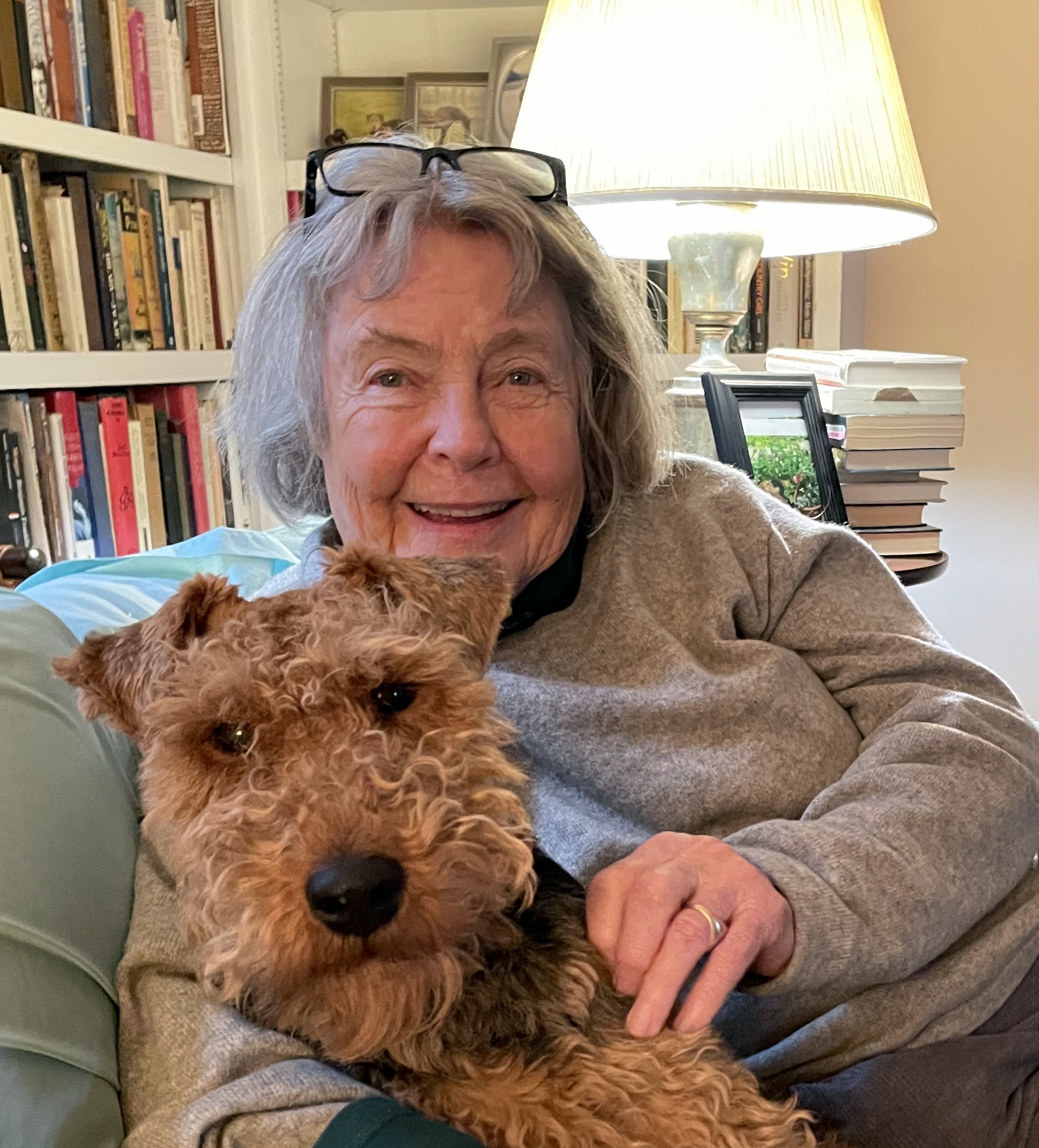
East Falls Historical Society Oral History Interview
Interviewee: Frances (Frankie) Foley Jueds (FJ)
Interviewers: Kathy Woods (KW) on 9/6/2024 & Wendy Moody (WM) on 2/16/2025
Transcriber: Wendy Moody
(Note: Two separate interviews have been combined, by topic)
KW: It is September 6th, 2024. And why don’t you tell me your full name?
FJ: Frances Campbell Foley.
KW: Where and when were you born?
FJ: I was born May 12, 1939, in Philadelphia.
KW: How about your parents? Where and when were they born?
FJ: Mother was born in 1904 in Philadelphia. She grew up in Frankfurt. My father was born in 1887 in Norristown.
KW: How did they happen to come to East Falls? Do you know when they came?
FJ: When my father came, he bought the house on Warden Drive from McClatchy the builder, so he was the first owner of the house. I assume that was about 1929. I think he just was looking for a place close to Midvale Steel, where he worked.
KW: Interesting. Do you have brothers or sisters?
FJ: I have two half-brothers, both dead. Gerard Foley was my father’s son by a first marriage. His first wife died. John Fuller was my mother’s son from a first marriage, and then that ended in divorce.
KW: Tell me about your father’s work.
It was interesting. He came from a family of coal miners from Ireland. His father died when he was two and he went to Girard College. He had a couple of jobs after he graduated and then, probably through relatives, he found himself working in the blast furnace at Midvale Steel, where he attracted the notice of a man who was working in research. He thought my father was promising and took him on in the Research Department. He then grew up with the very new science of metallurgy, and he became quite a prominent metallurgist.
KW: Did he stay at Midvale Steel?
FJ: He became a very valuable employee. Midvale was the largest steel company in the country during World War II. But soon after that, I suppose Midvale Steel lost out to foreign companies who could perform more economically and my father then went to International Nickel in New York and commuted.
KW: Oh, he commuted.
FJ: When he worked at Midvale Steel, he drove. For International Nickel, he took a train that was called The Crusader. It left from Wayne Junction, as I remember. He rode it for years and he got to know all the conductors and, I guess, some of the passengers, too, who commuted. He enjoyed the commute. He refused to move to New York (laughs). He really loved Philadelphia. He loved the Phillies and the Eagles and the Athletics.
WM: We’re very interested in your dad’s work at Midvale Steel. Can you elaborate on what he did there?
FJ: I can read to you from his obituary in Wikipedia that will tell you much more than I can remember, I’m afraid. “In 1907, Francis Foley was employed by the Midvale Steel Company in the Nicetown neighborhood of Philadelphia, from which his father had been laid off 21 years earlier.
His first job was open hearth clerk for a melter…. Foley was recognized as unusually capable by the head of the melting department, Radclyffe Furness, a Harvard-educated chemist, and Foley educated himself in metallurgy and crystallography with Furness’s encouragement.
Following this, Foley taught metallography at the University of Minnesota, after which he was employed by the National Bureau of Standards and headed the iron and steel division of the U.S. Bureau of Mines. In 1921 he worked at Henry Marion Howe’s private laboratory in Westchester County, New York. Howe and Foley investigated the hardening of steel and the formation and tempering of martensite. When he returned to Minneapolis he undertook a study of the blast furnace, supervised the Experiment Station at the Missouri School of Mines, and, in 1924, took the position of metallurgist for the Lucey Manufacturing Company in Chattanooga, Tennessee. In 1926 he returned to the Midvale Company to organize and direct a new Research Department.
Midvale Steel had a long history of producing high grade steel forgings and castings for guns, armor, locomotive tires, and large forgings, first from acid openhearth steel and later in electric furnaces. Francis Foley kept Midvale successfully producing new corrosion resistant alloys, and alloys for use at high temperatures. In 1949, Midvale was merged with a Pittsburgh steel company. Foley felt that the new company would no longer be in the forefront of metallurgical development and resigned to take a position with the International Nickel Company in New York.”
WM: Do you remember any anecdotes that he might have told you about Midvale Steel?
FJ: Well, he didn’t tell me very much because I was mostly too young to understand the work he did, and I’m sorry about that. But I do remember one story that amused him greatly, in retrospect. When he was hired away from the blast furnace to take the job in the research department, when he handed in his first paper, which he’d written in green ink, it came back with, written in the margin, “Green for Irish ignorance.” He thought that was very funny.
The only other story I remember was to his personal credit. A man who had recently served a prison sentence was looking for a job and he was highly qualified, but they were reluctant to hire him. But Daddy did hire him, and he turned into a wonderful employee and was very devoted to my father, which was a nice story for us.
WM: When he moved from the furnace to research, was he trained on site?
FJ: Yes, on site. It was the beginning of Metallurgy as a science, and he grew up with it. He had a very good, analytical scientific mind and really thrived.
KW: Did your parents share any memories they had of East Falls?
FJ: Not really. My mother moved to East Falls when she married my father, which was in 1938. They both loved the area and loved the neighborhood. But no, I don’t remember any particular memories that they brought up.
KW: Where did you go to school?
FJ: I went to Greene Street Friends, from three-year old kindergarten through 8th grade, and then I went to Springside from 9th through 12th.
KW: What were things like in school then? What did you do for recess? Did you stay at school for lunch? Did you pack a lunch? How did you get to school?
FJ: First, getting to school is something of a mystery to me. My mother never drove. My father left the house very early and could not have taken me. I remember going with my best friend Abby Huberman’s father. He drove us for many years. But when I was really little, like three and four and five, I don’t know. The school might have had a little bus that picked us up? And then when I got to be ten or so, I took the J bus, which stopped at that little triangle at the bottom of Vaux and Warden Drive. It stopped there, and I got on and it took me to Germantown and Chelten, and then I walked to Greene Street. Yes, we definitely had recess. The playground would probably be considered very dangerous now. It was all concrete and the swings and the merry go round – we called it a maypole – were all made of metal, and we all constantly had skinned knees. I loved the maypole – it was a big, big thing to do on the playground. We didn’t have any playing fields at all, so we didn’t really do regular team sports. We played our version of field hockey, I regret to say, in the little graveyard in front of the meeting house. We played jacks, we played on the swings, we played tag and stuff like that.
KW: Did the girls play separately from the boys?
FJ: There were no boys at Greene Street Friends in those days.
KW: Oh, I didn’t know that.
FJ: I think they were allowed through 1st grade, but then just girls. Of course, Springside was all girls too. Springside was big on sports. There was field hockey, lacrosse, and basketball. I had never learned how to play any of these, so it was all a big mystery to me.
KW: But did you play any of them?
FJ: We all did, but I wasn’t on any of the varsity teams. But yeah, we did it all in gym. We had an English Gym teacher who put the fear of God in me. I don’t know what she made of me because I wasn’t athletic; I wasn’t on any of the teams. But once we did some relay races, she said “Oh, I had no idea you could run so fast!” And we had posture marks, I remember. Miss Vare, the gym teacher, had a look at us every day when we would come into assembly in the morning. If we weren’t standing up properly, we would get a posture mark on a chart.
KW: What did you do after school?
FJ: During the Greene Street Friends days, I came home and there was a very nice gang of children that lived near me, within a block or two. We often got together after school and played outdoors or indoors if it was raining.
WM: Who was in your gang?
FJ: Well, the older ones, the regulars – some people came in and out like Joan McIlvaine’s husband, John Mclvaine, who appeared mostly in basketball season to play basketball with us. The oldest ones were Johnny and his friend Harry Reger (sp?).
WM: Where did he live?
FJ: Can’t remember, but right around here. Maybe on Warden Drive. Then there were the Beecham children. The father was a doctor, who actually was my mother’s doctor. He was quite respected in the neighborhood. I played with their children – Dickie, Jackie and Nina.
WM: And where did they live?
FJ: They lived at the end of Warden Drive – it might have been in the Harrison’s house, come to think of it – by the top of Warden Drive, just before Henry Avenue. Then there was my other best friend, Ellie Gallagher, and her little brother Tommy, who was probably the youngest. They lived across the street from us. I’m trying to think, who else were regulars? I guess that was the basic group.
WM: So both genders and different ages. What kind of commonality did you find that you could do together?
FJ: It was all outside stuff. We would play softball in the summer at the bottom of the sledding hill at Ravenhill. And I guess the bigger boys – they’d bring in friends of theirs, if it was a really good game, and we had scooters and bicycles, and the boys rode what they called “Flexies”, which were Flexible Flyer sleds, but on wheels. They would crouch, stomach down, on these things and ride them down Warden Drive, which had very little traffic in those days. We played in the street all the time. Girls rode scooters, and we all rode bikes. The younger ones jumped rope. We just sort of did everything all at once, and the younger kids wanted to do the stuff that the older kids did, and the older kids teased the younger kids. We played what we called “50-50 All Scatter” which was a kind of hide and seek, and “Baby in the Air” and basketball. We just used everybody’s backyards and driveways, as if it was communal property and nobody seemed to mind.
WM: What was “Baby in the Air”?
FJ: You’d throw the basketball up in the air and then somebody catches it and calls out a letter “B” and then it throws it up again, until somebody until somebody misses or then …. I’m sorry, I can’t think, but if you get BABY spelled out, you win; I think anyway.
And we sang a lot. A lot of this gang that we had were boys and they were slightly older than me and there was a lot of singing military songs – you know, the Air Force song and the Army song. So we were quite aware of this war that was over, but it was still sort of a large part of life.
KW: Where did they all go to school?
FJ: I had two best friends. Abby went to Greene Street Friends with me, and Ellie Gallagher went to Ravenhill, which really fascinated me. The nuns and Reverend Mother I thought were so, so exotic. And they had a lot of nice things going on at Ravenhill. They did a little horse show every spring up at the top of the hill where Jefferson’s buildings are now, and they had a wonderful Christmas bazaar, so I went along with Ellie to all of those things.
The boys went to Penn Charter, mostly. And we all played. The youngest was a little boy, maybe three years younger than I, and the oldest was my brother Johnny and his friends who were 9-10 years older than I, so it was a mixed bag.
KW: During the war, you were so young.
FJ: Yeah, I don’t remember very much. After the war, I remember playing jacks with Ellie. And she showed me this photograph that the government had sent her parents of her uncle, who had been in the Bataan Death March. I remember how shocked I was to see this. He was emaciated and died. So yeah. When I went to college, Freshman Week, we didn’t have to do this, but we had the opportunity to go see the films of the freeing of the concentration camps, and we did. I went and so yeah, it was. It was even then it was very forefront.
WM: Do you have any recollections of your brother Johnny during the War?
FJ: He was a young teenager, so he was quite caught up in it. My father spent the War years working in Washington for the government. He would come home on weekends, but Johnny did go several times to Washington to see him and have dinner with him, which must have been a great experience because there would be fairly fancy people there – metallurgists from Europe and sometimes some generals. And I think he loved that; he was very interested.
I remember the night that Roosevelt died – well, the day, I guess. Johnny was listening to the radio downstairs, and they announced Roosevelt’s death, so he came upstairs to tell my mother who was reading me a story. And I remember being furious because then she stopped reading and went down to listen to the radio. And I thought Johnny was really putting on grown-up airs to get so worked up about this.
WM: Did you have a Victory Garden?
FJ: I think we may have, yeah. And he collected scrap metal, I remember, in a little wagon. I can remember my mother had heavy blackout curtains that she hung up. And I remember Doctor Fisher coming around checking. I remember my father using teeny Saccharin tablets instead of sugar. I remember the book of ration coupons in the kitchen drawer.
WM: Did you have a television?
FJ: No, I don’t think we did yet, so all the news we got was by radio. I think that’s really all I can remember.
WM: So your brother Johnny was eight or nine years older…
FJ: Nine years older.
WM: So tell me a little bit more about him. He went to Penn Charter?
FJ: He went to Penn Charter. He walked to school, so he was much more familiar with the area than I was. In those days, we didn’t have organized activities after school. You just came home basically and played. I think he had a lot of fun. He knew people a little farther away than some of the gang members. He was friends with Grace Kelly’s younger sister, Lizanne. And he was friends with – what’s the name of the family that lived in what they call White Corners?
WM: The Levys?
FJ: Yes, he was friends with Bobby Levy, and I remember he would come home very impressed because the Levys would order crates of Coca Cola. He had a variety of friends around.
WM: Did he ever get into trouble or was he a good kid?
FJ: Yes, he did get in trouble. I remember once he had a slingshot, and he loved shooting it at things and once he shot a slingshot – I don’t know what he shot out of it – maybe little stones? – at a truck driving by. The truck driver was incensed, and he got out of his truck and came up and yelled at my father about it. Johnny was very sorry. And he used to shoot the heads off my mother’s rose bushes. Of course I told on him. Yeah, he often got in trouble; he was quite naughty.
WM: Did he have stories about Penn Charter? Do you remember?
FJ: He didn’t talk a whole lot about school – at least not to me. He got to be like a lot of teenage boys – very private about whatever he was doing. I’d say “Where were you?”and he would say “Out” and I’d say “What were you doing?” “Nothing.” I would say he kept his private life very private. Ellie, Abby, and I were intensely interested in his dating life. We’d creep up the third floor stairs, trying to listen when he was on the phone, trying to find out what girls he knew and what was going on, but he was so private.
WM: Do you know where people went on dates?
FJ: Well, movies are all I can think of.
WM: In Germantown?
FJ: In Germantown, you know there were two movie theaters in Germantown – the Colonial and the Bandbox. And then there was the one down Midvale Avene, the Alden.
WM: Did Johnny use any of the local institutions – McDevitt Playground, the Bathey, or the library?
FJ: I’m sure he must have used the library. I certainly did. As soon as I was old enough to walk half a block, I was there a lot.
WM: Tell us what you remember.
FJ: Well, oddly enough, with apologies, I don’t remember the librarians at all, except for one woman who was rather cross, and I always had this feeling she would rather I didn’t take any of the books. But I loved the library. We would go down there to check out books, but we’d also sit there and read sometimes. It was very comfortable, very quiet, very welcoming, and it had a very distinct smell, which I suppose was old books. I just loved it; I really loved it.
WM: Did they have programs back then or was it mostly just books?
FJ: I don’t remember any programs at all for children or grown-ups, but there were tons of books, and Ellie and I in particular just devoured all these. And when we were a little older the series, like Sue Barton, Student Nurse – there’s Army Nurse, Visiting Nurse, whatever. Johnny makes so much fun of that!
WM: Did you go to Old Academy?
FJ: No, we didn’t. I started to go when Lizzie Fuller, my sister-in-law, started to be in plays. But before that, no I didn’t. Don’t know why not.
WM: Did you ever meet anyone in the Kelly family when we were growing up?
FJ: When I was a little girl, yes. We have a very faint connection with the Kelly family through my father’s nephew, who married Grace Kelly’s Godmother. So we did occasionally see them. The only time I can remember is when we went to Ocean City one day, just for the day – my mother and father and me, when I was maybe about eight, and the Kelly parents were there, and Grace, and probably other of her siblings. I only remember Grace because my father took a lovely picture of her and then he enjoyed showing it to people and he’d say “Now, who do you think this is?” So that’s the only time I could remember.
WM: So she must have been about 18. She’s about 10 years older than you.
FJ: Yeah. Lovely looking, and very sweet and nice. I was very aware that they lived here and I guess maybe I might have seen some of them on the sidewalk coming and going. They used to have a tennis court.
WM: Oh, do you remember that?
FJ: Yes, I mean, I vaguely remember people playing on it. And I know that some of the Kelly children would go to the Levy house to swim, since they had a pool, and I think my brother did too. Very vague, these memories.
WM: Going back to your early years on Warden Drive, I wonder if you could try to go up and down the street and remember who lived in what houses? I realized you were just a child, but do you remember?
FJ: Well, there were three quite well-known Philadelphians who lived on the street at one time or another. One was the head of the Philadelphia Museum of Art, HenriMarceau (Director from 1955 to 1964). I’m not sure if I can remember the exact house, but it was near the sledding hill – that side of the street. I don’t know if this is a silly story, but my mother used to be so amused because Marceau would come home from work – I don’t know how she knew this – but when he came home, his wife would say “Oh, Henri! I have missed you so much!” – wonderfully French and romantic! He had a daughter who was my brother’s age and they hung out a little bit together.
And then Mayor/Governor Ed Rendell lived on the street – across the street from us in one of those houses, and also Senator Arlen Specter on the other side of the street on Warden Drive. When he lived here, on Warden Drive, he had a police guy there every day, who used also parked in front of our house. I used to think when I was little that everybody had a policeman parked in front of their house.
Otherwise, I only really knew families who had children our age. There was one family named Meyers who had a son we called “Frenchie.” He lived on my side of the street a few doors down. There was a family named Hayes – Roberta and Johnny Hayes played with us. Johnny was famous because when we were sledding, he sledded out into the street and ran into a pole and broke his arm, which was very traumatic.
Right next to us, sharing our driveway, was. Doctor Herb Fisher, who was our dentist. It amused my mother that he kept lecturing Johnny and me about not eating too much sugar – bad for our teeth – but when he came to dinner, he’d always have large helpings of dessert!
WM: Where was his office? Do you know?
FJ: The office was in Center City; I don’t know exactly where. He was the Air Raid Warden for Warden Drive during the war. I remember being so startled when he appeared in his Air Raid Warden costume with a helmet.
WM: So this was in the 40s, so Ed Rendell and Arlen Specter lived there? I hadn’t realized they lived there then.
FJ: I would have to look up the years; I’m sorry.
WM: You left there, when?
FJ: Well, I went away to college in 1957, so I just would have been home for summers and vacations, and then I left there for good to go to work at various places in about 1963.
KW: So I’m trying to figure out what was your neighborhood?
FJ: The radius, right? Well, I don’t remember that it was ever spelled out to me, but it was always very clear I was not allowed to cross Henry Avenue or Midvale Avenue. I could walk down Midvale as far as the Alden Theatre, which was sort of where the railway tracks are. I couldn’t cross School House Lane, so it was really confined to, what would that be, a two or three block radius? We were perfectly free to come and go, wander around, but I didn’t venture any farther.
KW: What was your feelings or thoughts about outside the borders? What was out there like? Were you aware of the projects? Schuylkill Falls or Abbottsford?
FJ: Yeah, I guess mostly it was just sort of unknown territory to me. I didn’t go there, and my parents had no particular reason to take me. I remember going down to Ridge and Midvale with my father because there used to be a hardware store there that we would go to. The project I certainly was aware of, but I had no contact with anybody from there except for two rather strange memories I have. One is of a group of elderly, I think, Italian ladies all dressed in black who would come periodically and pick dandelion greens from people’s front yards. And the other was Halloween. Some older boys would come from the projects and they’d say “Trick or Treat” and they’d do the treat – they would put on a play in the living room.
KW: What?
FJ: Yes, I do remember those plays. They were very short, but they would take different roles and we’d sit there and watch. And that’s really to tell you the honest truth, all I know about it.
KW: They would knock on your door and you’d invite them in and they would perform?
FJ: Yes, I don’t think my mother really loved this, but she did it. Although we had a lot of freedom in the sense that there weren’t a whole lot of activities set up for us, and we wandered around by ourselves, but, on the other hand, it was very confined within just these few blocks.
KW: Well, didn’t the project used to be white, and then turned black?
FJ: In my day, as a little girl, it was white. And I just assumed, because of these elderly ladies, that there was a largish Italian population, but that could be wrong.
KW: Was that where Don Powers lived? I think it was.
FJ: I believe so, I think it was that one.
KW: I think Abbottsford was black. And when did they tear the project down?
FJ: Oh boy, when I wasn’t living here. Some time ago; I don’t know when that was.
KW: Now you said that you don’t know where you were born, right?
FJ: I can find out. Women’s Medical, maybe. I don’t know. I can find out because I’ve got my birth certificate somewhere. I’m sure I was born in a hospital because I was a Caesarean baby.
KW: Were there trolleys on Midvale? Did they have buses?
FJ: The 52 trolley went up Midvale.
KW: And you took the bus to school.
FJ: We took it from the triangle. I’m not sure what route it took. It must have gone back up to Henry Avenue and then from there to School House Lane?
KW: And then you would take the bus over to Germantown. Sound like Germantown was kind of the center of things.
FJ: Germantown was kind of it for shopping, Allen’s and Rowell’s.
KW: Did you go downtown much or at all?
FJ: Occasionally. We went to Wanamaker’s at Christmas time to go on the Merry o Round.
Not much, no, I think we did most of the shopping in Germantown. And then when I went to Springside, I took the J bus to Germantown and Chelten, and then I got the 23 trolley that went up Germantown. But, yeah, there was a trolley on Midvale Ave. I’m pretty sure it was the 52 trolley.
KW: That’s funny that you remember the number of the trolley.
FJ: Yeah, I do remember the trolley, and my mother took the train into town a lot because she never drove.
KW: So she would go to the East Falls station?
FJ: She did.
KW: She’d walk over, I guess? She probably wore heels and dresses?
FJ: Always, always. She always wore heels. The only time she wasn’t in heels would be at bedtime, in bedroom slippers. And she usually wore a hat and gloves, and she had matching handbags for her shoes and whatever she was wearing. It was very formal.
And my father too. The only time I ever saw him not wearing a jacket and a tie was when he played golf. He loved East Falls. He absolutely refused to move, so he took the train, and he had a great time commuting. He got to know all the conductors. He had a special seat that he always sat in, and one time when he got on, the conductor said, “Well, Mr. Foley, some fellow sat in your seat and I said to him, “You better not sit there. There’s a fellow who sits there and he’s a real S.O. B.!” It was a very nice growing up, I have to say. Very, very.
KW: You said your father loved the sports teams. Did he go to games? Did he go to Connie Mack Stadium?
FJ: Oh yes, and he took me. Mother went to Penn, so he was interested in the Penn football team. He would take her, and then she got sick of it, and then he took me to all the games which I loved! I had a great time. I loved the Penn football games.
KW: You mentioned the theater – was there one movie theater on Midvale?
FJ: Yes, it was called the Alden Theater., and as soon as I was old enough, certainly 10 or 12, we went there frequently. They had a lot of matinees, cartoons and stuff. When we got to be about 12, Ellie had a huge crush on one of the ushers, so we had to go every Saturday when he was working. And I remember one time, I think it was a quarter to get in, or maybe fifteen cents, anyway, we didn’t have quite enough for both of us, so we stood on the sidewalk out front, and we said loudly “Oh, this is so sad. We only need another nickel to get in and we don’t have it.” So, of course, some nice guy walking by would give us a nickel. But yeah, it was fun. I remember there were several movie theaters in Germantown that we needed a ride to, if we were going to go to those. But I remember having to stand for the “Star Spangled Banner” before the movie was shown, and there were newsreels. And this was well after the war, but there were newsreels of, I guess, post war Europe, so we were very aware of World War II.
KW: Were there any other commercial buildings or stores that you were aware of in the neighborhood?
FJ: Rowell’s and Allen’s on Chelten Avenue were very nice department stores, and I often got taken there by my mother to get clothes and shoes. There was a shoe store – the kind where they would X-ray your feet, which we really loved. Germantown and Chelten was a very bustling little commercial area.
KW: So you and your mother would go by bus?
FJ: Yes, we must have, because she didn’t drive.
KW: How about East Falls? Were you aware of any stores in East Falls?
FJ: Yeah. Mother went to Clayton’s, the butcher.
KW: Where was that?
FJ: I’m not sure where Clayton’s shop was. It was probably up by Tilden Market somewhere.
Clayton himself used to come by and sit at the kitchen table with my mother and discuss what was good that day, and then it was delivered. I guess Tilden Market was there, I think it was. I’m not sure. Anyway, I think she did.shop there. There was a good drug store in Germantown called Darrow’s that we used. A lot of these places – all of them, I guess, delivered, because my mother didn’t go out and come back with bags of shopping. I’m sure that things were delivered to the house, which is certainly different. So, yeah, I was aware of little shopping areas in East Falls.
KW: You never went to the candy stores and things like that over on Conrad, or that would be forbidden, I guess, to cross Midvale?
FJ: It would have been forbidden unless I was with a grown up. Mostly, I remember Darrow’s. They had wonderful milkshakes. But I’m not sure how we got there either. We used to go to Horn and Hardart’s at least once a week for dinner, also in Germantown. I don’t remember going out to meals at all, other than that, when I was really little. Then Mary Ann Fellaticocame to Greene Street Friends and her father had the only Italian restaurant, as far as I know, in the whole area, which was in Germantown. And the great thing was when Mary Ann would invite us to her house after school, we could just go to the kitchen of the restaurant and eat whatever we wanted. It was wonderful. I had never had Italian food before. I loved it.
WM: Did you ever eat in the restaurant at Alden Park?
FJ: Yes, I did. It was very nice, fairly formal. Food was very pleasant. You know, kind of basic, home cooking kind of thing, not fancy.
WM: So non-residents were allowed in?
FJ: Yes, and I remember missing it when it went away. There was nowhere else around here to eat out.
KW: So after you graduated from high school, what did you do?
FJ: I went to Radcliffe, where I was very happy. It was a whole new world. Men in class. I never realized you could really have a male friend. And obviously wonderful professors and wonderful fellow students. It was very exciting.
KW: What did you study?
FJ: English, and actually, I guess you’d say I minored in Classics. I took Ancient Greek and it was just fascinating. There were requirements; I think there still are. We had to take a natural science and a social science and a certain amount of history, and so I took a bunch of classes that were out of this field. It was just fascinating; it was really very exciting.
KW: How did you get to college?
FJ: Train. I stayed after college; I stayed on in Cambridge to work for a while and then I graduated to flying, for speed.
KW: What kind of work did you do?
FJ: It was really all to do with various kinds of editing. My job in Cambridge was grading papers. Actually, though, that’s a form of writing, I suppose, editing at the Harvard Business School. I worked for the Saturday Evening Post when they were in Philadelphia, but that only lasted a year because the Post then moved to New York, and I was not ready to move to New York yet. I enjoyed all my jobs.
KW: When you came back to Philadelphia, did you live at home?
FJ: I lived at home, worked at the Saturday Evening Post.
KW: How did you get to work?
FJ: How did I get to work? I can’t remember. I have no idea. I loved that job. I also worked at the Insurance Company of North America – that was my first job – because my father had known the President of it at Girard College, and got me that job, which I must say I did not love, but it was a start. And then I went on to the Post, which was great fun.
KW: How did you get that job at the Post?
FJ: I think I just applied. They had a bunch of girls just out of college who worked in what they called the Research Department. We checked captions and we did some research for articles. For instance, I remember once the magazine printed a Picasso print, and they weren’t sure which was the right way up. So, since we didn’t have the Internet, I was sent to the Philadelphia Art Museum, where they had this painting and looked it up. So things like that were fun. We had a good time.
KW: So what was it like living in East Falls as a young adult?
FJ: I really only did that for two years after college. I saw a lot of my college friends, either in New York, or a few of them did live in Philadelphia, so we’d get together. And that was my outside of work life really. I had a bunch of people that I knew my age and it was quite lively.
KW: How did you meet your husband?
FJ: We were set up by friends. I went to spend a weekend in Pittsburgh with a childhood friend who moved there with her husband, and they had a cookout, invited their next door neighbors, who were lovely – a guy in the Army and his wife. And by then I lived in New York and he said, “Oh, my college roommate works in New York and he is just the greatest guy ever. Can I give him your name?” So I said, “Sure.” And then I thought it was very smart of Bill – he asked me out to lunch, which was pretty safe because if we hadn’t got along, we didn’t have to spend the evening. So that was it.
KW: How long did you date him?
About a year, I think. Dates are a little fuzzy in my head through that period, but, yeah, I think it was a year, and then we got married and we lived in New York for only about a year. And then he came home one evening and said “How would you like to spend a few months in Florida?” And since it was the middle of winter, I said “That sounds great.” So I took a leave of absence from my job, which was with an editorial company, a small company, and we sublet our apartment, and then we ended up staying in Florida for seven years. So that was the end of that job. And then we moved just about every seven years.
KW: What did he do?
FJ: He did financial work for Exxon, and then eventually he was made President of Exxon’s Captive Insurance Company, which is the job he had when we were in England. And I think he really enjoyed that because he was his own boss, which was very nice. And then came the Valdez and he took early retirement because he differed with Exxon about the insurance policy, which had been drawn up with Lloyd’s, which was used to settle the Valdez disaster. Exxon wanted the policy to be read in a certain way, and Bill disagreed and said that it had not been the intention when it was drawn up, and he wouldn’t give in, for which I admire him greatly.
KW: I forgot to ask you about religion. When you were growing up, did you go to church?
FJ: Well, in a matter of speaking, I did. My father had been brought up Catholic, but he left the church when he was quite a young man. My mother was an Episcopalian – she never went to church after she was an adult. So when I came along, a bunch of my friends did go to church, did go to Sunday school, so I guess I suggested that I might like to do this. So, sure enough, my parents very kindly looked around for something, and we ended up at the Unitarian Church in Germantown on Lincoln Drive. And I went to visit the Sunday school, and apparently the nice teacher said “Well, we’ll see you next week, dear?” And I said, “Well, I’m not sure, because we’re just shopping around.” (laughter). But we did stay, and I wish I had been old enough to appreciate this – it was like going to a seminar or a college course. They had the best-known theologians around come to speak: Reinhold Niebuhr came, and a Scottish man named Cleeland. My parents, and their friends, were just fascinated. It was really an excellent theological kind of education – I’m not sure how spiritual it was. So I kept on going there all the time before college, and then Bill and I were married there, so that’s my only tie.
KW: I was just thinking about what your mother’s life would have been like. She didn’t drive. She was a homemaker?
FJ: Yes, I think she did regret that she never had a job. She was really, really bright and active and interested in lots of things. She had many interesting friends who were career women sort of ahead of their time. She did work briefly for a friend who had, I think, a jewelry shop and then it went bust and that was the end of that. She did a lot of volunteer work. She was treasurer of the Temple Women’s Auxiliary for years, I remember. It’s sort of like a women’s little fundraising kind of organization. I don’t know what they actually did do. But she was quite busy with that, and other volunteer groups. She traveled a lot with my father. A lot.
KW: What kind of travel?
FJ: Well, originally it was mostly in this country. He gave a lot of talks and went to a lot of seminars that had to do with metallurgy and she would go along. I would go with them a lot too, when I was little. We took the train across the country twice when I was a little girl, which was fascinating. Loved it. Later, he also went to Europe for various conferences, and she would go with him when it was possible. I did one European trip with them, which was fantastic. Four months.
KW: Four months.
FJ: Yeah, I took almost two months off from school. It was fascinating.
KW: You went by boat?
FJ: Yes, we did. My mother was not very fond of flying and we took the old Queen Mary one way, and the other way we took The Media, a Cunard Line, smaller ship. It’s wonderful, Absolutely wonderful. I remember it vividly.
KW: Let’s see. Holiday traditions. You talked about Halloween. Anything else, like Christmas, Easter, New Year’s 4th of July, in East Falls?
FJ: They were very traditional. There was a 4th of July parade in East Falls that I enjoyed.
KW: Where was that?
FJ: I think, as I remember, it went down Midvale Avenue. We used to go to the School for the Deaf on Germantown Avenue for fireworks. That was wonderful. We’d all sit on that huge grassy area. That was the 4th of July. Christmas was very much at home. When I was really little, my parents put up the Christmas tree and decorated it after I’d gone to bed Christmas Eve, which I think is just hard work. Yeah, I remember one year the tree fell over, which was a great crisis. So after that, my father put some sort of a hook in the wall and fastened it into that. My younger half-brother would come home, and it was very familyish and really lovely. Sometimes we went to a friend, a very old friend of my mother’s, for Christmas dinner. Easter, you know, the usual – we had an Easter egg hunt.
KW: Where would that be?
FJ: Around the backyards near me. Nothing very extraordinary. It was all very traditional, very nice, very fun.
KW: So you did a lot of traveling in your life, lived a lot of places.
FJ: Yes, it’s been great. I’ve been very, very lucky to have that.
KW: Seven years in Florida. When did you have Tori and Kasey?
FJ: Both were born in Florida. They are the only native Miamians that I know. They were both born there and that was fascinating, too, to a little northeastern girl, that was like another country as well. It was not really experiencing living in the South because a lot of transplanted New Yorkers, even then, lived in Florida, but it was really very interesting – different plants, different smells, having the ocean so close. I met some very nice people. Really, I’ve liked every place we’ve lived.
KW: Where did you go after Florida?
FJ: Then we went to New Jersey. Bill went back to work in New York, and we had to find a house in two weeks. So Bill’s mother came to stay with the girls, and I just house hunted every day, not knowing anything about where I was, except that we thought we’d like to live on the southern side of New York, because my mother was still alive in Philadelphia. So we ended up in Short Hills, New Jersey. We just found a house. Schools were good. Commute to New York was good. And we lived there for seven years.
KW: So you were visiting your mom at that point? How about your dad?
FJ: No, he had died just before we left Florida. He died in February, and we moved in the summer, so she was on her own and she spent a lot of time with us. She would take the train from Philadelphia to stay with us. And then she died just before we moved to London, and we were there almost seven years. Yeah, it was really nice, because it was a long enough time everywhere that you would really get to know a place and feel quite at home there, even though we were always aware we were not there forever. But it was long enough. It was interesting. I enjoyed it. I’ve had a very lucky, lucky, lucky spell.
KW: So after London?
FJ: Then we came back to Short Hills. We had rented the house. We meant to sell it, but a very nice older couple came along, and they liked the house, and they wanted to rent it. So they rented it for all those years. It was sort of a shock to come back because the plumbing was absolutely shot. We had to get two new bathrooms and a new kitchen. A bunch of our friends were still in that area, so it was fine. And then came this whole Valdez thing. Bill left Exxon and it must have been really hard for him, and I don’t think that I was enough aware of it. I mean, I was certainly aware of what was happening, but I don’t think I really knew how hard it was for him, but then he took up being a personal financial manager which he really enjoyed – he liked figures and financial stuff, and he advised just a bunch of friends, really basically, on investments and so forth. He had a great time with that, so turned out all right.
KW: And you stayed in New Jersey then? And then you lost him much sooner than you thought you would. He became ill?
FJ: Yes, it was a very nice thing in the end that he did leave Exxon early because we had 10 years when he had more flexibility, and we could do a bunch of travels. We enjoyed it a lot, and I, of course, thought this would go on for many more years. Then, yes, he got pancreatic cancer very suddenly and died when he was 64. And then I came back to East Falls.
KW: Why did you decide to come back?
FJ: Well, I did not want to stay in Short Hills without him. A bunch of our friends had moved on. It’s a lovely town, but there’s not much there if you’re not working and commuting, or don’t have children in the schools, a lot of people just move on. I didn’t have a whole lot of friends left there, and it was just too sad. The obvious thing was to move back – my brother was still alive in East Falls, and I had roots here, for sure, and I’ve always liked it a lot. I thought this was the obvious answer.
KW: And so you came back and bought Ann Land’s house?
FJ: Several months after Bill died, my brother was sort of looking out for me, and he said, “You know, there’s a nice house just around the corner (3418 West Coulter St.) from us for sale.” So I came and looked at it, liked it a lot, and thought “Yes, I can manage fine here. This would be great.” And then somebody else bought it! But shortly thereafter, Johnny said “Well, you know that house you liked? The financing has fallen through.” I came back a couple of months later and bought it. It was great being close to him. He was a huge, huge help to me. Really wonderful.
WM: What have you become involved in during your twenty or so years since you moved back?
FJ: Well, I guess I started with the Unitarian Society in Germantown – the church on Lincoln Drive – because that’s where Bill and I were married, and I did volunteer work in the office there for quite a few years – the first years I was back. I got in touch with my Springside classmates who were still living here, so I got back into the alumni stuff. Then I met Wendy, and I guess slowly I got connected with the library and began to help with the book sale in a very small volunteer way.
WM: As Co-Chair.
FJ: Wendy invited me to join East Falls Village. She was invited early on to help with the Social Committee, so I ended up working for the Social Committee for years and years.
WM: And became Chair.
FJ: Well, we were told we had to have a chair – we were doing just fine without a chair, but we thought we had to have one, so I was nominal chair.
WM: And what do you do on that committee – still do?
FJ: Well, I think what I enjoyed most, which may continue, we had an East Falls Art Show. I think we had four of them total so far, which was really fun because there’s a lot of talented people who live here in all ways – music, sewing, painting, drawing, sculpture. Wonderful. Making models. It’s really fun. And we did stuff that is still going on – lunches out, visits to museums and historic houses, and so forth. It’s a good group. very good. So I did that. And then I started in, again, taking painting classes, which I love. I’ve done that off and on practically all my life. At Woodmere. I guess that’s it.
WM: And you’re in the same book club that your mom was in.
FJ: Oh, I’m sorry, I forgot about the book club. Yes, very sweet. The book club ladies invited me to join early on which was helpful, because the first year or two were sad since my husband had just died, and I think they felt sorry for me and wanted to be thoughtful and it was very sweet.
WM: Did your mom ever talk about Book Club when you were growing up?
FJ: Oh Mother, yes. She was very involved with Book Club. I used to love when it was in our house because then we got the leftovers sandwiches.
WM: So it was the same menu back then? Tea sandwiches?
FJ: Same, same. Yeah, she talked about it quite a lot. Her friends from the neighborhood were all in it and so I got to know them through that, and just being in the neighborhood. Yeah, she was very active, and she loved to read, so it was fun for her.
KW: Was your mother one of the founding members of Book Club?
FJ: I should maybe look that up to see if there is any record of it. She certainly was a member during World War II, so she was early on, but whether she was a founding member, I don’t know if there’s any record of that. A lot of the paperwork to do with that book club has disappeared over the years, so I don’t know.
KW: So you had two half-brothers?
FJ: Yes, the older one – we never lived in the same house. He was 21 or 22 years older than I. He, at that point, first lived in Ohio and then moved to New York City towards the end of his life, to be close to his son, my nephew, who is actually my age, so I did see quite a bit of him when I came back here to Philadelphia. He and Johnny died not too far apart.
KW: So Johnny always stayed in the Falls?
FJ: Always did. Yeah, always did. He was really, really rooted here. And in the same house for most of the time on Vaux Street.
KW: What did he do?
FJ: Well, he worked for Acme for a long time, and he was really being prepared, more or less promised, that he would be a Senior Management person there. Then Acme was sold. Johnny had opposed the sale, so the people who bought it brought in their people and he and the old guard were let go. Then he did a bunch of things. I’m not even sure if I know what all they were – they all to do with finance. I know he taught a course at what was then Philadelphia University, which he enjoyed doing. So he did a bunch of smaller type jobs to fill in until he was retirement age.
KW: When you think about your life in East Falls, what kind of thoughts do you have? How’s it affected you?
FJ: Very fond. I think it’s always been a wonderful neighborhood of caring people. Nice, nice people to know, with a very neighborly feeling. I mean, there are always a few exceptions, but it’s been remarkably comfortable. My childhood was just about as comfortable and reassuring and calm as you can imagine. I know I was one of the very privileged few to be able to live like that. I never remember worrying about a thing. We had air raid drills when I was at Greene Street Friends, and we’d all go down to the assembly room, which was kind of a semi basement, and sit along the walls. We were told that way if the windows shattered, they’d fall over our heads – the bits of glass. We just thought it was fun. I never remember feeling frightened or the way I have as a elderly person lately with world events. I never remember living in a state of fear. I just thought everything was calm and reassuring, and it always would be. My home life was happy. I was really, really fortunate.
KW: How has East Falls changed?
FJ: Oh, I think for the better. As far as I can see, in every way, it’s become much more diverse. It could still use being more diverse, maybe yes, but much more diverse than when I was growing up. I’m not sure about economics, but I have the feeling that there are more levels of economic status, too – maybe young families that are just sort of starting out. I just think it’s doing better and better as a place to live. My father used to say East Falls was a very well-kept secret, until Grace Kelly. And then he said all the taxi drivers knew where East Falls was. Now, of course, people don’t remember who Grace Kelly is(laughter) but since then, it certainly has become better known and for good reasons, I think. I can’t see that it’s doing anything but getting better. Maybe that’s rosy glasses, I don’t know.
KW: I tend to agree.
FJ: Schools are a problem. I’m really hoping, and I think there’s some excellent signs, that maybe Mifflin is going to get better and better and that more and more neighborhood kids will go there. I was sorry when St. Bridget’s closed because I just don’t know how people could afford Penn Charter, and even the Friends schools, which are a little better, I guess. It’s out of sight. Terrible. So that’s the great problem. But I guess that’s more than an East Falls problem it’s a citywide, countrywide problem. Otherwise, I think it’s a great place to live.
KW: It really is. You don’t remember, I guess, that East Falls used to just be a white community? 100%?
FJ: Yeah. I think the only divisions would be maybe there would be a more a more Irish area and a more Italian area. My closest friend was Jewish. But at Greene Street Friends we had several Jewish girls in my class, no black children, no children of color. Kind of the same at Springside. So yeah, that’s been slow. It’s been slow. That’s true.
KW: Were you ever aware of any anti-Semitism or racism in East Falls?
FJ: Racism, yes. I mean this makes me sound so privileged, and this was not the case. We were far, far from rich people, we really weren’t. We were certainly OK off, but the same with our neighbors. East Falls was not a rich area, but the only black people I really met up with were servants. And I was very, very fond of the black people. I just thought they were lovely, but I can still remember how shocked I was when I must have been about six or seven. I was with a bunch of our gang of kids, and the father of one of them, who was a very respected neighborhood guy, was a doctor. He said to us all that he thought that all black people should be put in a rocket and sent off into space and I was shocked, to put it mildly. I can still remember how I felt to hear that. So yeah, that’s the only example I can remember of hearing such talk but I must have been aware that there were no black people living in the houses around me.
KW: I don’t know where they would have been living, I wonder. I don’t know when the projects changed from white to black.
FJ: I don’t know. I don’t know that. In a lot of ways, looking back, I can see I was pretty oblivious to the problems that were all around me.
KW: Did your family or your neighbors have household help?
FJ: Yes. My mother, when she married my father – along with her came the very wonderful maid who had worked for her father in Frankfurt, and she stayed with us till I was about 10. She lived in. She took care of us when my parents were away, which was a lot. They traveled a lot, and she’d stay with Johnny and me. She cooked. She was there all the time.
KW: Did she cook a lot of your meals, even when your mother was there?
FJ: She made them. Yeah, she had a day off every week. But otherwise, she would cook the meals.
KW: I wonder how that worked. Did she and your mother sit down and come up with menus?
FJ: I think so, yeah, although I think mother probably left all of that pretty much to her. It’s just so weird to remember this. It’s such another life. We also had a wonderful woman, a lovely lady, who lived in Willow Grove, whose husband would bring her every Thursday to do the laundry. We didn’t have a washing machine or dryer. And when I was a little girl, I thought that she lived in the basement and only came up on Thursday (laughter). Can you believe? It’s just unreal. But I was so fond of these two women, really, really, really loved them. I spent a lot of time with Mary, in particular – a lot of time.
KW: Mary was the live-in maid?
FJ: Yeah, she would sit in the kitchen reading the paper, and I’d sit there too. We had long chats, and she and my brother teased each other unmercifully. He was very, very fond of her. We were both kind of devastated when she left for a factory job which paid much better, I’m sure.
KW: I’m trying to picture what your house was like. What number? What street?
FJ: 3418 Warden Drive, middle of the block – where Chris Coxe and Kathy Regele live now, so I’ve been in with them, which is fun.
KW: I haven’t been in that house. What’s it like? I know it has a basement. Did you have a wash tub or something in the basement?
FJ: Yes, a washtub, and she hand washed things and ironed everything.
KW: Did she hang the clothes on a clothesline in the basement?
FJ: There was a clothesline, as I remember. Yeah, but she did a lot of ironing, goodness. She was just lovely, and then her husband, Mr. Johnson, would come pick her up at the end of the day. He was lovely too. Just the nicest people; so kind.
KW: That was in the basement. Then what was the first floor like?
FJ: A lot of Warden Drive houses, some of them have been altered a bit, but living room, dining room, kitchen. That’s it. A hall. A coat closet where the telephone was when I was a teenager. I spent hours sitting in this closet talking on the phone! And then upstairs on the second floor, there were three bedrooms and two baths, and the third floor, there were two bedrooms and a bath.
KW: Is that where Mary stayed?
FJ: Mary had one bedroom and Johnny had the other. And I had a room on the 2nd floor, as did my parents. Then there was a guest room. And it’s much the same layout now, though I don’t know if Kathy and Chris did this, or somebody before them, but the kitchen, which was, goodness, I guess it was a 1940’s – 1950’s kitchen, was made much larger. They included the garage with it and made a big room with lots of lights and it’s terrific. So that’s quite different. The houses were kind of basically the same. Biggish.
When I moved back, which is now, my goodness, 20 years ago, there were several people who still lived in the houses they had been in when I left as a young woman. But mostly it turned over, and now there’s quite a bit more turnover, which is great. I love having the younger families come and the kids.
KW: I don’t know how they can afford it now that things are getting so pricey.
FJ: I don’t know either. That worries me. I think that is a concern.
KW: Any other thoughts?
FJ: Maybe that’s the only bad thing, at the schools, that’s happening.
KW: East Falls is becoming more diverse, that’s for sure. Meg Greenfield tells a story about being told that the house was not available, you know, because she’s Jewish.
FJ: I’ve heard stories like that, but I never encountered that, but maybe I just wasn’t tuned in.
KW: Yeah, it’s getting better. Well, thank you.
FJ: Oh, Kathy. Thank you.
……………………………………………………………………………………..
WM: Frankie, you’re a fervent dog owner. Did you have a dog growing up?
FJ: No, I used to beg my parents for a dog, and they said no, and they were absolutely right. My father traveled a lot and my mother traveled with him. We had, really, no suitable area to fence in for a dog. And nobody would have been available to walk it, and I was really too little.
WM: But you knew people with dogs?
FJ: Yes, there were a few dogs in the area, in the neighborhood. And they were mostly just allowed to wander around because there was almost no traffic. Our next door neighbor had a dog, a collie, named Lucky, who used to go around with the mailman.
WM: Oh!
FJ: So Reggie and Lucky were a pair. And Reggie was really like a member of the family. He used to come in and chat, and I remember once he read a postcard that a friend of mine had sent me from Russia that said, “Slaves, throw off your chains!” He thought that was very funny.
WM: Well, thank you, Frankie. You’ve really enhanced our understanding of growing up here in the 1940s and 1950s. We appreciate it.


