Terri Tarpey
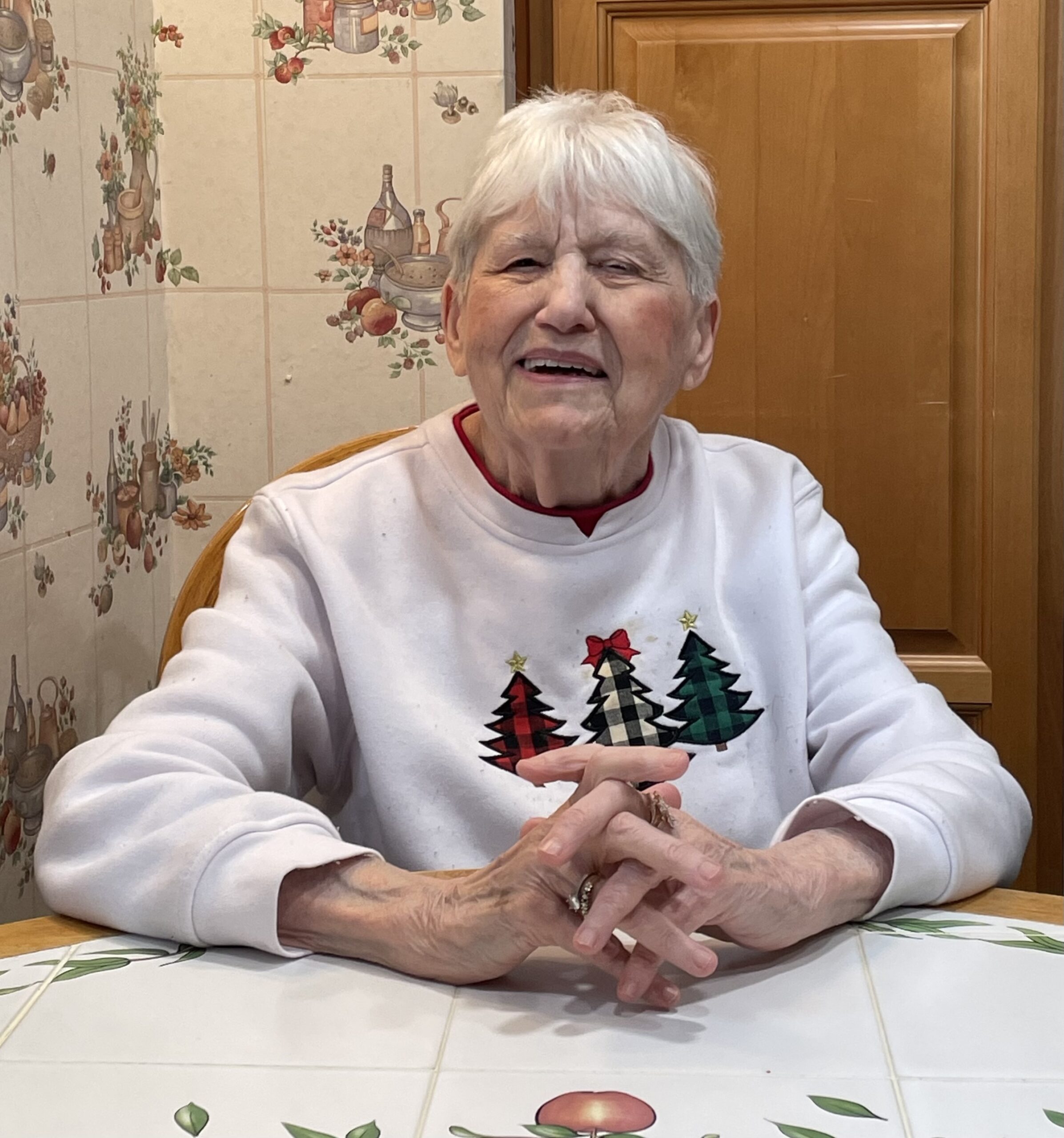
East Falls Historical Society Oral History Interview
Interviewee: Theresa (Terri) Mongan Tarpey (TT)
Interviewers: Wendy Moody (WM), Kathy Woods (KW), and Frankie Jueds (FJ)
Date of interview: January 7, 2026
Place: Terri Tarpey’s home (3420 Ainslie Street, East Falls, Philadelphia)
Transcriber: Shayna Nagle
WM: It’s January 7th, 2026. We’re in the home of Terry Tarpey. Frankie Jueds, Kathy Woods and Wendy Moody are interviewing you. Thank you, Terry, for your willingness to do this. Why don’t we begin by you telling us when and where you were born?
TT: I was born in Philadelphia, October 19th, 1938, and I lived mostly in North Philadelphia, where my grandmother was. We lived in Corpus Christi – that’s 28th and Allegheny – Corpus Christi was the church – the Catholic parish down the street. People identified where they lived by the parish. I moved here when I was ten years old.
WM: To East Falls.
TT: To East Falls.
WM: What made you move to East Falls?
TT: Well, I think because my mother bought a house here on Tilden Street, and I don’t know why. We lived with my grandmother during the war and all that, so eventually we moved here.
WM: Do you remember the number on Tilden?
TT: Yeah, 3430 Tilden Street. And I’m considered a squatter because I’ve only been here 77 years! Or 78 years, because I moved here when I was ten. (laughter)
WM: So what was life like on Tilden Street? You were ten years old?
TT: Wonderful! I met the girlfriends that I had all my life. Ronnie Walker lived across the street – the Walker family. Her mother was a McCoy, and Mary Murphy lived there. We were like a triangle. Peggy Kelly lived down the street. And we all went to Saint Bridget’s together and high school together. And I don’t remember ever seeing police. It was just a safe, wonderful neighborhood. We went to Saint Bridget’s, and we were involved in everything in the community. Saint Bridget’s at that time had a Mardi Gras, like a roast beef dinner, before Lent. And all these things we were involved in, and Mrs. Kelly, Grace’s mom, was very involved in Medical College. And so at that time when, I think it was high school, maybe early in high school, she would run a fair or a fete.
WM: I’ve heard about that.
TT: Up outside the Medical College. And she asked us to work for her and sell tickets at the fete. And afterwards she gave us a tea at her home. So we were invited to Grace Kelly’s home and we had a tea with Mrs. Kelly.
WM: How lovely. What was Mrs. Kelly’s personality like?
TT: She was lovely. I don’t remember her being, like, pushy or anything. Just a nice lady.
WM: What was your job at the fete?
TT: Well, we’d sell tickets. We did whatever she asked us to do, and then, as a reward for, you know, for working for her, she had us in her home for a tea. And so that was like a highlight – we were at the Kelly’s home.
WM: Did you meet her children?
TT: Well, I saw Grace in church, and she was beautiful. When somebody turned around and she was in the aisle, like with Rainier, I thought, “Oh, my God, she’s gorgeous in person.” She was gorgeous.
WM: Wow. Ever talk to her?
TT: No, no, no, no. But I did teach at Ravenhill, and she did go to school there for a while.
WM: I would like to get to Ravenhill, but let’s go back to growing up. So what did you do for recreation?
TT: Well as a kid we went to all the dances all around. Well, there was one at Saint John’s. They had a high school then, and we would go to their dance – they had an outside dance. They had it at a high school then, during the summer, and it was on a basketball court. I remember being outside, and Saint Joe’s over in Allegheny, and the big one was Holy Family up in Manayunk, and we would go to all these dances and Saint Mary’s, and they would have really big entertainers like the Four Aces and different people.
WM: No kidding.
TT: Yes. So we really had a wonderful childhood.
WM: But when you were younger, you said you moved here at ten. What did you do as a kid? Did you go to the playgrounds or the library?
TT: We used to take lunches and go walk back the creek. You know, walk back the Wissahickon creek.
WM: And how did you access the creek from here?
TT: Down the hill, by Textiles, and we go down the hill and along the Wissahickon.
WM: Back where, by the bridge?
TT: Yeah. Back to the Rittenhouse. Like where the ducks are and everything.
WM: Wow. Did you use the library?
TT: Yes.
WM: Any memories?
TT: Oh, yes. Love the library. One would read a book and then tell the other one, and then we’d go and get the book.
KW: Did you remember the stores? I hear about the stores. And did you go to any of the stores?
TT: Right down the street where the Petronesare, there was a little bakery. Rosie ran it. I think she had the bakery delivered from Haas’s Bakery. And we would all go in there and buy donuts and everything. And then there was Bob’s at the at the bottom of Tilden Street. It was like an ice cream store. And we would hang out there. It was like a soda ice cream store, and Peggy Kelly lived across the street on Conrad Street, next to where Apollo’s is now, but that was a drugstore at that time (Katz’s Drug Store), and we would sit on her steps, and her mother used to say, you’re all going to get hemorrhoids. You can’t sit on that cold step!
WM: So what was the name of the bakery?
TT: We called it Rosie’s.
WM: You called it Rosie’s. Do you remember any other stores on Conrad? Any grocery stores?
TT: It was called Caldwell’s, like a grocery on Conrad. And then there was the Tilden Food Market up there. And next to it was the drugstore, Al’s Drugstore, which never opened after he closed.
WM: Next to Tilden and Vaux.
TT: And Loves, which was on the corner of Sunnyside and Vaux. It’s a home. But at the bottom part was…
WM: What was it called?
TT: Loves. The family was Loves.
WM: What was that?
TT: It was like a little grocery store. Because I lived right across on Tilden, the whole block here was fields. There were no homes there.
WM: Really?
TT: So we would play on those fields across the street from where you live (i.e. Kathy Woods, 3456 Ainslie St.). It was all fields.
WM: Oh, my.
TT: There was the big house, the Garrett’s.
WM: Yes.
TT: And we thought that it was haunted house.(laughter) We used to come and we said, “There’s a witch in there.”
WM: Do you remember who lived in the Garrett house at that time?
TT: The Garrett family.
WM: It was the Garrett family. Did you ever go in it?
TT: Not then, but there were several different owners. Yeah, and at one time there was a cabin there before they built the house.
WM: I’ve heard that.
TT: Yeah, yeah. But we played on the whole lot. I think there were the two houses, the Garrett’s, and there were the two older houses – and the Speddings and Mary Bullardlived in those two when I lived here, but the whole other part, all the way to another older house, was all lots, and that was wonderful. We just played there.
WM: Do you remember when the houses were built?
TT: I forget.
WM: What did your dad do?
TT: My dad was… How can I say, he did everything. He papered wallpaper. He did taxes. He was a jeweler.
WM: So was he self-employed then? People would call him for different jobs? Did you, if I can ask, did so did you live comfortably or did you struggle?
TT: No. We lived comfortably, you know. We weren’t rich, but we weren’t poor.
WM: And did your mom work as well?
TT: Yeah, my mother worked. She always worked.
WM: What did she do?
TT: She did sewing at a sewing place over in Germantown, and she did waitressing. And my grandmother – I don’t know whether you want to get into my story – because my two grandmothers… My grandmother, Rose O’Reilly came from Ireland and she was very religious. All she ever did was go to church and raise nine children.
WM: And what was her name? Rose…
TT: Rose O’Reilly. And the family joke was one time they talked her into going to the Charlie Chaplin movie. And before she got into the rows, she genuflected. (laughter)
WM: Was that your mom’s mom?
TT: That was my dad’s mom.
WM: Dad’s mom, okay.
TT: And then my mother’s mom, Helene Polkaska, came from Poland, and she had an arranged marriage. Her sister was here and sent for her to marry my grandfather. And she didn’t like him, but she had seven children. And because she lived on the farm in Poland, her hands were like gold. I mean, I’ve never tasted anybody that made…she would skin her own kielbasa and everything, and make feather beds. In this country, we had 20 years of Prohibition, and because she could make good liquor and booze, she actually was, I guess you would have to call her, a bootlegger.
WM: A bootlegger!
TT: Because people came to her house on Apple Street and knocked on the door.
WM: That’s wild. Did both of your grandmothers live in East Falls?
TT: No, no. One lived in Manayunk. The other lived in Corpus Christi, 28th and Allegheny. She would tuck the money away, and she opened a bar in Manayunk, and left him and took the seven children. (laughter). The bar was called Grove Café – the nickname was Third Base – “Third Base” before you go home! My maternal grandfather was a weaver and came to Manayunk because of the factories. My mother was a waitress at Third Base – they had a good lunch business – all family-run.
WM: Oh my goodness. Wow, quite something.
TT: It’s Ryan’s Pub now on Main Street. But the whole family lived there. The two boys were older – the twins. They did the bartending and everything, but she was the one who owned it.
WM: Was she really?
TT:She’d sit upstairs with her apron – she never had an accountant, but she knew… she knew.
WM: So let’s go back. You went to grammar school at Saint Bridget, right? Tell us your memories of Saint Bridget’s.
TT: Well, when I moved here, I was in fifth grade.
WM: Okay.
TT: But I finished.
WM: In the old school?
TT: No, I moved here, and I finished fifth grade at Corpus. I got the bus down, because it was near the second half of the year. I started Saint Bridget’s in sixth grade, and it was the new school. And I remember thinking, oh my goodness, it was so modern.
WM: Had it just opened?
TT: Yes; it had green chalkboards.
WM: This is about what year? 1950?
TT: 1950. I got involved with all the people and, you know, made a lot of new friends and was very happy.
WM: Were the teachers all Sisters or were there lay teachers?
TT: No, they were all Sisters. Sister Charles Margaret I had for sixth grade, and seventh grade was Sister Rose Olivia. Eighth grade, I think was Sister Helen Marie.
KW: Do you remember how big your classes were?
TT: They were big. Probably around 60 or more. Yeah.
WM: Were the nuns strict?
TT: Some were more strict than others, but it depended – they weren’t too strict with me. And I had my report card – I got all A’s!
WM: Of course you did!
TT: And all 90s and all 95s in every subject. And I was so proud to show both my grandmas!
WM: Did you have any special memories of anything that happened when you were at Saint Bridget’s?
TT: Yeah, we used to have, for the May Procession, to crown the Blessed Mother. And they would get a couple of girls who they would select to be angels. And I was selected to be an angel. And in the choir, I remember practicing for the choir. And my mother bought me a like a fur muff and like a fur something I thought I was the cat’s meow. I thought I was a princess!
WM: What did you do as an angel at the procession?
TT: You walked in the procession. You wore a white robe.
WM: Nice. Did you take any class trips when you were there?
TT: We used to go to Woodside Park, but we walked there. We would walk over the [Falls] bridge and a path that went under. I don’t I don’t know how it is now, but it was like a part that you went under and we would walk to Woodside Park.
WM: Tell us about that.
TT: That was fun. It was the end of the school year and we were so excited. The whole school would go and we would walk there and, you know, spend the day going on rides and being so excited to go on the amusements and everything.
WM: Did you have favorite rides or favorite foods?
TT: I’m sure. Probably the roller coasters, or all of them, probably.
KW: Now, Frankie, this is a little aside. Did you go to the amusement park?
FJ: Do you know? I don’t know, we’re almost just the same age. It’s amazing that we didn’t cross paths, but I knew about Woodside Park, and I did go once or twice, but I think I went with, I don’t know, my parents, my older brother. Maybe the school didn’t go. I went to Greene Street Friends.
WM: Terry, you went to Little Flower High School?
TT: For years, we (St. Bridget students) went to Hallahan, but there were five years that they sent us to Little Flower. I didn’t care that much because my name is Theresa, and the Little Flower is Saint Theresa, but Peggy Kelly hated it and the other girls, my friends did, because a lot of their older sisters and relatives went to Hallahan, so they were switched.
WM: Did you go with Sister Dorothy?
TT: Yes, she was in my class.
WM: I remember when we interviewed her, she said she went to Little Flower.
TT: She was in my class, and Sister Pat was in my class. So the two of them were down at Saint Bridgets. But she wasn’t from East Falls, Sister Pat.
WM: So anything else before we leave your childhood? Anything else growing up that you remember that happened here in the neighborhood?
TT: I just remember, like, walking into people’s houses. We used to dance in Ronnie’s house across the street and, you know, jitterbug and practice dancing.
WM: This was on Tilden.
TT: On Tilden. And then Mary and I were trying to gain weight so bad that we would have dinner at my house. Then we would go over her house and have dinner!
WM: Those were the days, right? Wow.
TT: And also, we didn’t have any of the modern equipment – setting our hair and then opened up the oven and put our head back in the chair to get our hair dry. (laughter)
WM: Oh my goodness. Did you have a local doctor or dentist?
TT: Doctor Kent, right up the street – the last house on Ainslie was his office. He was my doctor.
WM: So what happened after high school?
TT: After high school? I worked. When I lived on Tilden Street, 3420, next door to me was a couple and he was Sigmund Freud’s son, Oliver Freud. I was in their house – they lived very simply.
WM: I’ve heard about that. I heard his sister [Anna Freud] was here. Is that right?
TT: She was the psychiatrist that lived up the street also. But his wife [Oliver Freud] – they were very simplistic. I remember being in their home. He was like that movie – A Beautiful Mind. I mean, he was such a genius. He was in the Today magazine as being the mathematical genius – his name was Oliver Freud. And she (his wife) had told me that they were smuggled out of France in a rug to escape from the Nazis, and, I think, their daughter – I remember something about a convent. I think I was around in the eighth grade when she told me this. And she asked me if I would sit – she was an artist and she wanted to paint my portrait. I kind of thought that was weird and I didn’t do it. I’m so sorry I didn’t.
WM: So Oliver Freud was Sigmund’s son. Did you hear that his sister [Anna Freud] also lived here?
TT: Yes, but I kinda thought it was her sister, on Tilden, but maybe it was his. I don’t know, I think they moved after I was in eighth grade. I was in high school when they moved.
WM: It was Freda Gowling who told me that Anna Freud lived here. After high school, did you go to work?
TT: After high school, I went to work. I had a job for the Bell Telephone in telephone service or something, but my girlfriend Peggy worked on Arch Street, downstairs, but up on the third floor there was another company, a small company, and she said “We could go to work together.” I’m sorry I didn’t go to the Bell, but I went there to work. I only worked because I was saving to go in the convent. At the time, when you went to high school, they didn’t have the Peace Corps, and, in high school, you’re so idealistic, and you want to do something for the world. My Irish grandmother always said, “You’re going in the convent! You’re going in the convent! I’m buying you your trunks.” As a young child, I always thought I wanted to go in the convent.
WM: What year did you go into the convent?
TT: I went in the convent in 1959.
WM: Is that when Sister Dorothy went to? I’m just curious.
TT: She might have been one a year ahead of me. We went in different orders. She went in to Saint Joe’s and I went into the Immaculate Heart of Mary Immaculata – Father Dowling said I should go there..
WM: And how long were you there?
TT: Four years. Beautiful years, and beautiful people. I never regretted it. But when I was teaching, I thought, “I want my own children.” I think I had a partial vocation, but I’m glad because it polished me, gave me an education, you know.
WM: Was that hard?
TT: It was. In the canonical year, you heard no music, no news; you were away from the world.
WM: Cloistered.
TT: Cloistered, yeah.
FJ: Could you see your family?
TT: You could see your family, but you could never go home to your home. But it’s changed now, very much so. But in those days, when you were in the canonical year, it was more like a cloistered year where they could come and visit maybe, maybe a couple times a year. But you were more like intensely doing spiritual things and things like that.
WM: Was it after that that you went to Textiles [Philadelphia College of Textiles and Sciences]? What was your next job?
TT: When I came out of the convent, I went to the gas company and got hired. I worked in telephone service, and I worked there until I got married. A very good job. A lot of men got that job after working on the streets, so there were only a few females. I had a great job.
WM: Where did you meet your husband?
TT: I met my husband at a restaurant in Allegheny.
WM: What was his name?
TT: Tom.
WM: Tom. And did you get married here in East Falls?
TT: Yes, got married at Saint Bridget’s.
WM: In what year was that?
TT: That was 1965.
WM: And when did you go to Textiles?
TT: After I got married, I worked until I got pregnant, and I worked up till maybe six months or whatever, and then I stayed home to be a mother and, you know, full time housekeeper, mother.
WM: And where were you living then?
TT: Here.
WM: So when you married Tom you bought this house?
TT: We bought this house before we were married.
WM: What year did you buy the house?
TT: We bought it in May of 1965 and we were married in October. But we didn’t live there. My father did paper the whole house, and he was handy.
WM: Was it a brand new house, or someone had owned it before? What is the year of these houses?
KW: Well, mine down was a little earlier, 1898 to 1902.
WM: Really! Do you know the year of this one?
TT: No I don’t. I probably did.
KW: Was Tom a Fallser?
TT: No. He lived In Corpus Christi. They used to call him the Mayor of East Falls. He knew everybody!
KW: Yes he did!
WM: Oh, so you met him?
KW: Yes I did!
WM: Do you remember what you paid for the house?
TT: $8500? I think $8500.
WM: Wow. How many children did you have?
TT: I had Thomas, I had him, I got married October 1965. He was born the following October, 1966 and then Timmy was born in 1969.
WM: Was it after Timmy that you went back to work?
TT: After Timmy I gradually went back to substitute teaching. They would call me. I taught at Saint Bridget’s, Holy Family, and St John’s.
WM: Did you need to get any degree or qualification to sub?
TT: Because I had my practice teaching and everything.They knew that I could teach because I taught.
FJ: And Ravenhill, did you teach there?
TT: Well, all the jobs I had at that time, when they were in grammar school, were around the neighborhood. And it was funny. I never got a job on the computer. I just would go in person; they’d hire me. So I went to Ravenhill and they hired me as a teacher’s aide. I went in one day and they hired me that day.
WM: What year was that?
TT: I’m trying to think. The kids were in grammar school.
WM: So in the 70s?
TT: I guess, but they hired me. And then, gradually, they made me a teacher because I was taking, not the Montessori, because I didn’t have that, because I was structured, the boys were getting to a point where they needed more structure, so I knew that, so Sister Anne Joseph had me go into teaching. And then, at that time, I think they were losing money because we were taking all kinds of children that we shouldn’t have taken.
I had a student who was completely deaf, and I couldn’t understand him. But by reading with him every day, I got to understand by hearing how he talked. And he loved it because he would run to me and he would tell me jokes and I would understand them. So anyhow, then Mr. Cabrey was the Headmaster and he asked me to be his Administrative Assistant.
(pause)… We were thinking of moving to Queen Lane and Henry Avenue – this was around 2021-22. I went and saw the house and then, one day, I walked up there. All that traffic and all that noise and that corner to have to shovel and take care of, and I said “What am I crazy? It’s so quiet here on my porch. Why do I want to move here with traffic and fumes and everything?” So we didn’t.
KW: Your Tom would be out on the porch, and I knew him more than I knew you because of that.
WM: What did he do for a living?
TT: He was a policeman, a Philadelphia policeman.
WM: Okay, let’s go back. Were you first at Ravenhill or first at Textiles? [Philadelphia College of Textiles and Sciences, now Jefferson University]?
TT: I was first at Ravenhill.
WM: So I had heard that there, the Montessori program was co-ed, and then as you progressed up, they only had girls. The boys would go off to another school, and then parents would think, “Why am I sending my kids to two schools, so they started losing enrollment. Is that accurate?
TT: That could be, yes.
WM: What was your experience?
TT: I was only there for maybe three years before they closed – I’m trying to think – and I loved it there. Oh, the conservatory! I loved the nuns. And I loved the children. But we were getting children that really had psychological problems. They would lay on the floor and have tantrums. And we were taking people that really we shouldn’t have been handling.
WM: Were they taking them because they needed the tuition?
TT: They needed the tuition.
WM: Who was in charge then?
TT: I guess it was Mr. Cabrey, the Headmaster.
WM: Was he a good leader?
TT: Well, the funny part is, when he asked me to be his Administrative Assistant, Sister Anne said, “No way”. So Mary Murphy, who lived on Coulter Street up by McMichael Park, was my best friend growing up. So I said to Mary – her kids were in school and getting older – I said, “Would you like a job?” and she went and she worked for him. And then when she got a job at MCP with Dr. Pocky, who was her next-door neighbor, she called me and I worked for him with her. So I always worked around the neighborhood.
WM: We’re keenly interested in that. But just going back to Ravenhill, so you were there when it closed?
TT: Yes.
WM: Can you tell us about the ending of Ravenhill?
TT: Well, I think it was sad that, I guess it was summertime, at the end of the school year we knew it was over. And I remember Sister Anne, they were going to another convent, and it was being sold – it was up for sale and everything. But it was sad. But the writing was on the wall, I guess. But it just ended as a school year and wasn’t reopening.
WM: About how many students were there then?
TT: Oh, gosh, I forget. The Montessori – they had small numbers. I remember when I was the aide in the Montessori lower classes. Very interesting – Dr. Montessori – how she taught through the senses. You had to go to France at that time, or some place to learn her philosophy. But she found out that, I think she worked children that were [intellectually disabled], but she found out that instead of abstract things, they learned better by feeling. They would get letters, and they would trace sandpaper letters, and they learned by senses, and it was very interesting to see how, with little ones, I’m talking about 3 and 4 year-olds.
WM: About how many are we talking about?
TT: Maybe 20?
WM: And then in the rest of the school?
TT: I had like, I guess it was a transitional grade – it was coming from Montessori. I remember teaching the math and the (multiplication) tables. It’s probably about third grade or fourth grade.
WM: And it went all the way through high school?
TT: For the girls, it did. They used to have people from South America that boarded there. And they were very, very affluent people. And they would pay for it, but I think they started to lose those girls who came for boarding also.
WM: That’s interesting.
TT: I hated to see it close because it was so pretty.
WM: Which was the school building, the pretty old building, or was that a residences?
TT: Yeah, the school building. You can see it, like a school building. But the old place with the chapel, the conservatory, and the main building that you’d come in, that’s where, like, Dr. Caprey’s office would be, like on the second floor of the old building.
WM: So the children weren’t really in that beautiful old building that much?
TT: No, they were in the school.
WM: Can you roughly say what the enrollment was when it ended?
TT: No, I can’t.
WM: Maybe 100 students?
TT: Maybe. Not big.
WM: And so then tell us a little about your experience at Textile. Which building were you in and who did you work for?
TT: I was in the office. I went to Textile for Continuing Education and somehow or another in that office there was a job and they hired me for it. I worked there for a short time, because then I think I got a job at the Medical College. But I remember there was a lot of work I was doing there at the office of Continuing Education – a lot of people coming to school at night for continuing education. I did general office work.
WM: Which building were you in?
TT: I’m trying to think. It was like the main building – it wasn’t in the back – it was there on Henry Avenue.
WM: It probably wasn’t as built up then. Did you go into a lot of those other buildings on campus?
TT: We used to go in the back and have lunch. Some of the people I had lunch with had worked in the other buildings.
WM: And who did you say you were working for there?
TT: It was Continuing Education Office.
WM: Do you know who was Headmaster at that point, Dean?
TT: No, I don’t remember, I didn’t stay there too long. It might have been six months.
WM: What made you move over to MCP?
TT: I think I got a job there, I think maybe through Mary with Dr. (George) Popky in Radiology. He was the Professor and Chairman of Radiology (in 1976). I worked for him and Tina Bratuska, she worked for him. She worked right next to me. Her mother (Doris Bartuska, M.D.) was a doctor there and Tina, who lives on Midvale across from the [McMichael] Park, worked with me. You’re bringing back a lot of memories, I’ll tell you! (laughter)
WM: Was it called MCP [Medical College of Philadelphia] then, or Women’s Medical?
TT: Well, I worked there in high school, did typing there as a part-time job after school at MCP. When I worked for Dr. Popky, it was MCP. My husband got cancer and I stayed home for a while. And then I took the test and I worked for the City of Philadelphia. And then Karen Lee, who was then the Head of Radiology, asked me if I would come back and work for her. So I left the City and went back, because I thought it was close to home instead of getting the train down there. So at that point it wasn’t MCP, it was Tenet, I think.
WM: About what year was that?
TT: I was 66 when it closed and I said I wanted to retire. But the professor and chair then asked me to go to Mercy with her. Karen Lee, they had let go. They had so many directors. I worked for six different directors.
WM: This is at MCP?
TT: This was Tenet, when they were going through this. They let Karen Lee go. I worked for Jim Cella. I don’t know, I can’t remember all their names. There were many that they hired and fired. But then at one point, when they didn’t hire anybody, I ran the department – and didn’t get the money because they were losing money. The Radiology Department was closing.
WM: You ran it? Wow, that’s amazing. Do you know why there was so much transition? And why they kept firing people? What were they looking for?
TT: I don’t know. All I know is that the turnover was terrible.
WM: Did that affect the work?
TT: I don’t think so. It just kept on going until, I mean, we had JCHO [Joint Commission?], and I would do all the typing. I would order for every– I had so much work, I don’t know how the heck I did it, now when I think about it. Do the minutes, go to all the meetings, and type up the minutes and do all this.
WM: Was that the point where Margaret Kelly was still a factor or she was long gone then?
TT: She was long gone then.
WM: So it went from MCP to Tenet to?
TT: I think it went to another, there was another name then, Tenet. I think it went from the Women’s Medical College, to just the Medical College, and then Tenet, something like that.
WM: Tell us more about your life at St. Bridget Church, your memories of the different Fathers that were there.
TT: When I went to school there, I think the Pastor was Father Cartin, and then all the different pastors, so I forget them all. But then, of course, when I went away in the convent, I wasn’t here. I was living at Immaculata.
WM: So Father Cartin was there when you were young? I heard he was there a long time.
TT: Yes, he was.
WM: And do you remember, what was his personality like?
TT: Just…I just remember being, I guess, in awe because he was the Pastor. I don’t remember being like in communication with him or anything.
WM: So were you there when Vatican II came through and there were changes in the church?
TT: I forget.
WM: Some people have mentioned that when Vatican II came, that the priest no longer faced the altar, he faced the congregation. Do you remember that happening?
TT: Oh, yes.
WM: How did you feel about that?
TT: That was all over – it wasn’t just in St. Bridget’s. I liked it.
WM: And [the service] wasn’t in Latin anymore, and they took away the railing?
TT: Yes.
WM: So you felt these changes were all positive?
TT: Yeah, I thought they were all positive.
WM: Do you remember when that was?
TT: I remember it was on our honeymoon. We went to see the Pope in New York. (laughter) My husband and I, yeah. A lot of memories. You’re stirring up a lot of memories.
WM: Do you remember anything else about St. Bridget? Any celebrations or any crises or anything?
TT: We used to, when we were in, I guess, high school and 8th grade, we used to have designated streets and we would collect, was it once a month, like lottery tickets? And I would have Bowman Street and I had New Queen Street. And I loved it because if I had a winner, I won $25. So sometimes – six different times, I had six different people that won. They won the prize, but I got $25.
WM: Oh my gosh, so they weren’t collecting for the new school. They were collecting for the maintenance of the church?
TT: I guess it was, yeah. It was just like a lottery. They still have a lottery, Joanne sells it.
WM: Do you remember any special celebrations or anniversaries?
TT: They had that Mardi Gras that I talked about. That was always a lot of fun. They had a roast beef dinner and different chances and different games for the kids. That was always fun – that was before Lent. The May processions, the trips to Woodside Park at the end of the school year. And then my grandchildren went there – of course, I raised them. They had so many shows, really good shows.
WM: Oh, that’s great.
TT: They were really good Broadway shows that they had.
WM: Do you remember any of the other pastors that were there?
TT: Oh, gosh, there were so many. I’m trying to think. There was Father Kelly, Father Devlin, Father Feeney, and then Monsignor Oliver. And there were so many of them; I can’t go back to all of them.
WM: Did you adjust to all of them?
TT: Oh, yes.
WM: What do you remember about St. Bridget closing?
TT: I remember my son Timmy, and Mr. Brady, who lived on Warden Drive, fighting so hard to keep that school open. My son was a lawyer. I think they got in touch with a canon lawyer or something. And they were determined, because where they wanted it was Holy Family. And the location of Holy Family was very, very bad with the snow. They had narrow streets to get in, and it was like two-way and it should be one-way. Where at St. Bridget’s, we had the parking lot, the train station. It was really a better location and they wouldn’t listen.
KW: Did Timmy and Tommy go to St. Bridget’s?
TT: They both did, yeah. And then Tommy went to Roman, and then Timmy went to Roman, and then he left to go to Penn Charter, yeah, He went to Penn Charter freshman year and then graduated, and then went to Villanova. And won a full scholarship, which was like hitting $1,000,000, like a lottery, because it’s so expensive. And that was room and board and everything.
WM: Isn’t that wonderful.
TT: And Timmy is thinking about running for judge. So I hope I’m going to have to talk to people at the Village to vote for him. And not just because he’s my son, but he was chosen to be Assistant District Attorney under Lynn Abrams, and he worked there for seven years as a prosecutor. But then he opened, he’s always s0 goal-oriented, he said after the stipulated time, he was going to open his own law firm. So he’s a defense lawyer now. And he’s thinking about running for Judge in ‘27, I think.
WM: So talking about the DA, you mentioned that you would see Arlen Specter? Tell us about that.
TT: I would get the train every day, and he would be there, Arlen Specter, and we just knew him as a lawyer that lived on Warden Drive, you know. Didn’t really talk to him except “Hello” or something like that, you know. And he always looked like he was either reading or busy. Probably as a lawyer, he was always, I know from my sons, they’re always with their head in the book trying to catch up to what they’re doing.
KW: That was before he was DA?
TT: I guess.
WM: Can you describe that old train station?
TT: Yeah, it was so nice. You would go in there and you would get your ticket and everything and you could get out of the weather. It was nice to have that to buy your ticket.
WM: Do you remember when it burned down?
TT: No, I don’t. I remember that we didn’t have it. And I think there was like a temporary something for a while. And there’s nothing now. So many changes happen. I often think, is anybody going to open the Tilden Drugstore? It’s been vacant for years.
WM: Yes, Which drugstore?
KW: The one on the corner next to Nouveau.
TT: That’s been vacant
KW: That belongs to somebody who lives on Queen Street.
WM: Okay, so can you talk a little bit about – we’re just ending with the closing of St. Bridget’s. Is there anything else you wanted to add about that?
TT: Well, it was heartbreaking for all of us. And my grandchildren – I’ve been raising them – their father died, and I’ve raised them since they were three and five, really. But they had to go to other schools, and I think the Archdiocese chose Immaculate Heart of Mary. So I think Thomas went there from like the 4th grade Sophia, maybe from the 6th or something. So they graduated from grammar school up in Andorra, IHM. But having the plays and being part of the neighborhood, that’s something that we did have.
WM: What was a big, big change. Did you ever have any interaction with the other schools when you were growing up with Mifflin or Penn Charter?
TT: Well, I had friends that went to Mifflin. And I had friends that – Penn Charter, a couple of people we knew went there, but not too many.
WM: So in your years, what kind of changes have you seen on your street and in the neighborhood?
TT: Oh, big changes! The corner house (Garrett Estate) is going to be sold. And the houses are going to be over $1,000,000. So what a big change. Yeah, but I live next to Mrs. Kindon, and she was a Saint. I had beautiful neighbors, and I still have good neighbors, so I’m very lucky. As far as changes with neighbors, they’ve all been wonderful, really. So that I can’t say that it went down or anything like that.
WM: No, but did it get more diverse in who moved in?
TT: Yes, yes, it has been more diverse.
WM: And in what way?
TT: Well, in the ways that, like two doors up, I have Norelle, and she is a pediatrician at St. Christopher’s, I forget which one, and she just made Pediatrician of the Year. And she is a Black, lovely, lovely lady who is a real good neighbor of mine too. And Timmy has been in court with her. I think she represents children who are being abused too, as a doctor. So I see that, and I see I just think that it’s more diversified. It’s like, I think people, we have people of different, different ethnic backgrounds and different races, which is good. I think that’s very good.
KW: And that sure wasn’t the case when you moved here and when I moved here. It was an all white neighborhood.
TT: Yeah, I think that’s wonderful. And I think the neighbors are, fortunately, the old neighbors and the new neighbors are great. The prices have changed. It’s been really different. But as far as the location and everything – this is something that people like here, the location and things.
WM: Great location.
TT: I’m so glad that it’s still like – Thomas, he has good friends and they all grew up all together. And they still go out together and they go down the shore together and they go up the mountains. And they just had a party last night. Gus DiStefano’s grandson, Andrew, and Nick, and the Markeys lived on Sunnyside Street. They’ve been involved in sports together. And even though they went to Germantown Friends, I guess it is, they went to different schools, but still played sports.
WM: And did they play down at McDevitt?
TT: They played at McDevitt and then Thomas, he played baseball. So he played in different leagues, and we traveled to all those, and he was the best in baseball in high school, and that was his thing.
WM: Did you happen to remember when Route 1 (Roosevelt Extension) came through?
TT: I might have been away. I might have been in college.
WM: How about the two housing developments? Were you here when Schuylkill Falls and Abbotsford [public housing projects] were built?
TT: Yeah. I was here when we went to school with people who lived in Abbottsford. And I knew a girl who lived, a couple of people, who lived in the Falls one (Schuylkill Falls), in grammar school.
WM: And did that go okay?
TT: Well, at that time it was okay. But then the project down at Ridge Avenue got very crime ridden. It was – that changed. But thank goodness it’s beautiful back there now.
WM: Did that affect where you went in East Falls when that?
TT: Well, I never went in there, of course, you know. But I guess you didn’t shop down on Ridge Avenue, really.
WM: What other kind of changes have you seen here?
TT: Well, I like that Wissahickon Brewery. I love where we meet for coffee. I think that’s a great place. You can bring your dog and it’s more like, I think, a European thing instead of like a bar. It’s kind of like a nice connotation of meeting people and, yeah, I like that. I think that’s something good in the neighborhood. It seems nice that we have that college that’s successful too. And, I think the neighborhood is good.
WM: Those are all positive changes. You’re talking about any negative changes.
TT: Well, the negative is the stores, like that store that’s vacant. That’s a negative to me.
WM: Do you use Nouveau?
TT: Yeah, occasionally, but, you know, when I’m buying a lot, I send Tom shopping or I go shopping to the Acme. But when I need something that’s good, I can go up there and get it. And I’m glad to have it.
WM: And any dynamics when you were growing up between the Irish Catholics and the Italian Catholics?
TT: Not that I’ve ever seen. No, I don’t know about over at Stanton or Calumet. No, but not that I’ve ever encountered.
WM: Kathy, any questions?
KW: I don’t think so.
WM: OK, anything you want to add, Terri?
TT: No, I’m just glad to live here, and I’m glad that I have my life here, and I’m glad my children were raised here, and my grandchildren. I’m very happy in East Falls. My husband and I did a lot of volunteering in the East Falls in the 1970s.
WM: Thank you so much. You did a great job.
TT: I’m so glad for our library. Although right now, they’re sending me audio books. So, I don’t have to use it as much because I can’t read. But that’s definitely something. I used to love to read. Yeah, I read a lot. I miss reading, but aside that, I’m still here.
END


